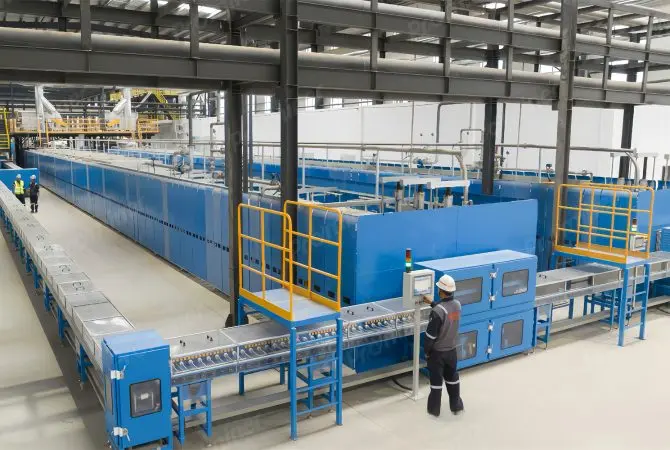
Tunasambaza suluhisho kamili la utengenezaji wa vifaa vya anode vya grafiti, ikijumuisha kusagwa, kuunda umbo, na kusafisha…


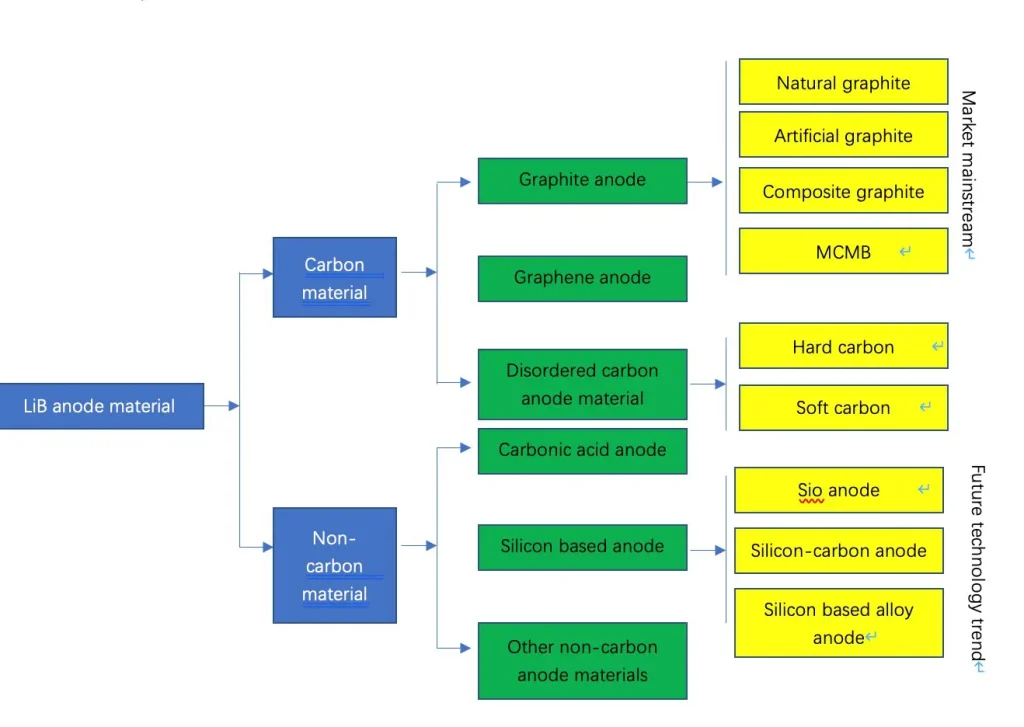
Nyenzo za anodizinagawanywa katika makundi mawili: nyenzo za kaboni na nyenzo zisizo za kaboni. Kaboni inamaanisha mifumo inayotokana na kaboni, ikijumuisha miji ya mesocarbon, grafiti ya bandia, grafiti ya asili na kaboni ngumu. Kwa sasa, vifaa vya kaboni vinavyotumika zaidi ni vifaa vya anodi vya grafiti, ambapo grafiti ya bandia na grafiti ya asili zina matumizi makubwa ya viwandani. Vifaa visivyo vya kaboni vinaunga mkono nyenzo za silicon, nyenzo za bati, lithium titanate, n.k. Kati yao, nyenzo za anodi za silicon ndizo vitu vya utafiti vya wazalishaji wakuu wa nyenzo za anodi kwa sasa, na ni mojawapo ya nyenzo mpya za anodi zenye uwezekano wa kutumika kwa kiwango kikubwa katika siku zijazo.
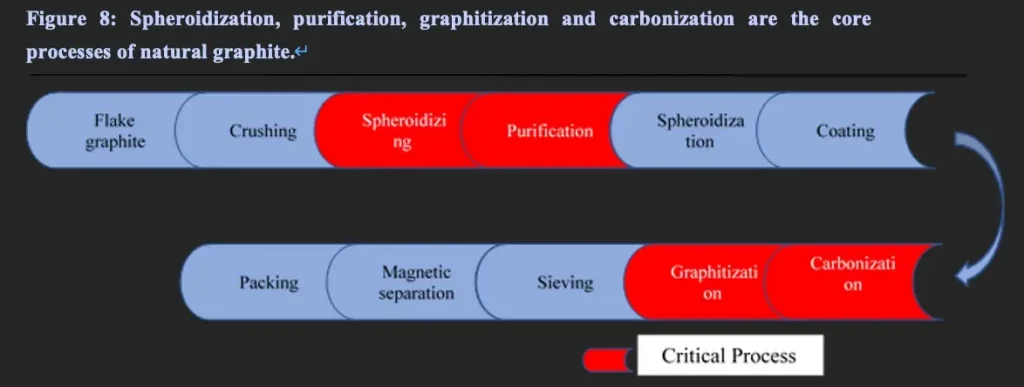
Uchakataji wa Grafiti Asilia
Nyenzo za anodi za grafiti asilia ni grafiti ya majimaji ya asili kama malighafi, baada yakusaga, kupanga, spheroidization,kusafishwa, matibabu ya uso na michakato mingine iliyotayarishwa kutoka kwa nyenzo za katodi.
Mchakato wa Maandalizi ya Nyenzo ya Anodi ya Grafiti ya Bandia
Artificial graphite manufacturing process can be divided into four steps, more than ten small procedures, granulation and graphitization is the key.
Mchakato wa uzalishaji wa nyenzo ya anodi ya grafiti ya bandia unaweza kugawanywa katika hatua nne:
1) matibabu ya awali
2) granulation
3) graphitization
4) mchakato wa kusaga na kuchuja.
Among the four steps, crushing and screening are relatively simple, and granulation and graphitization are the two links that reflect the technical threshold and production level of the anode industry.
Specific to the production process, firstly, one or more of the coke and conductive particles, carbon nanotubes, carbon black, acetylene black are premixed, and then the mixed material and carbon are sintered and coated once, and the prepared particles are graphitized. Graphitized materials and resin materials for secondary coating; Surface treatment with solvent, centrifugation, precipitation and other methods to separate solid particles from the solvent, and then carbonization, 5-20um particles, to obtain a high rate of carbon anode material. In this method, by mixing and fabricating particles, the particles are coated twice to fill the inner shell of the material, so that the internal structure of the material is stable, so that the carbon anode material has the advantages of high rate performance, high pressure compaction, high specific capacity and so on.
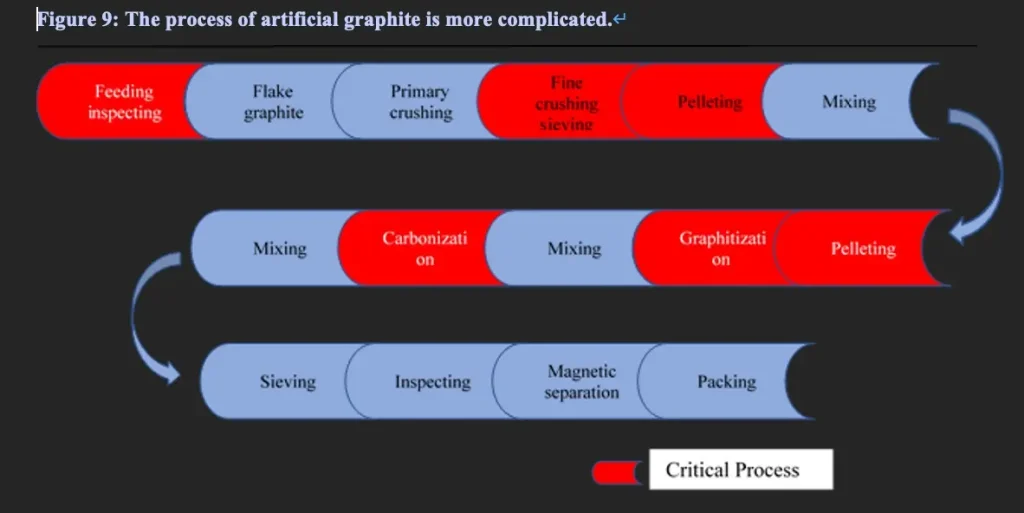
(1) Utayarishaji wa awali
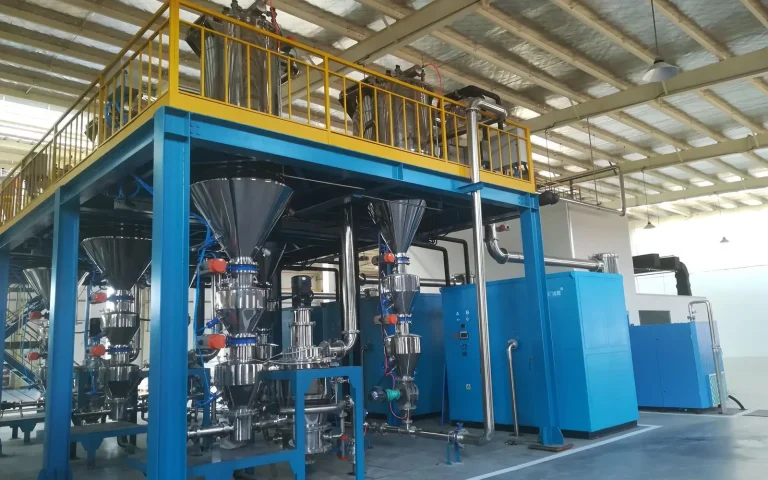
Graphite raw material (needle coke or petroleum coke) is mixed with binder for air milling (crushing).According to the different products, the graphite raw materials and adhesive (graphitization) according to different proportions, the mixing ratio is 100 :(5~20), the material through the vacuum feeding machine into the hopper, and then the hopper into the air flow mill for air kusaga, kusaga 5~10mm diameter of the raw and auxiliary materials to 5-10 microns. After air kusaga, cyclone dust collector is used to collect the required particle size materials, the dust collection rate is about 80%, the tail gas is filtered by the filter core filter and discharged, the dust removal efficiency is more than 99%. The material of the filter element is the filter cloth with pores less than 0.2 micron, which can intercept all the dust above 0.2 micron. The fan control system is in negative pressure state.
Tofauti: pretreatment mill is divided into mechanical mill and jet mill, now the mainstream is jet mill. There are more kinds of adhesives, such as petroleum asphalt, coal asphalt, phenolic resin or epoxy resin.
(2) Granulation/Granulation ya Pili
Granulation is a key step in artificial graphite processing. Granulation is divided into pyrolysis process and ball milling process.
Mchakato wa Pyrolysis: the intermediate material 1 is put into the reaction reactor and electrically heated according to a certain temperature curve in inert gas atmosphere and under a certain pressure. It is stirred at 200-300 ℃ for 1-3h and then heated to 400-500℃ to obtain the material with a particle size of 10-20mm. The material is cooled and discharged, namely the intermediate material
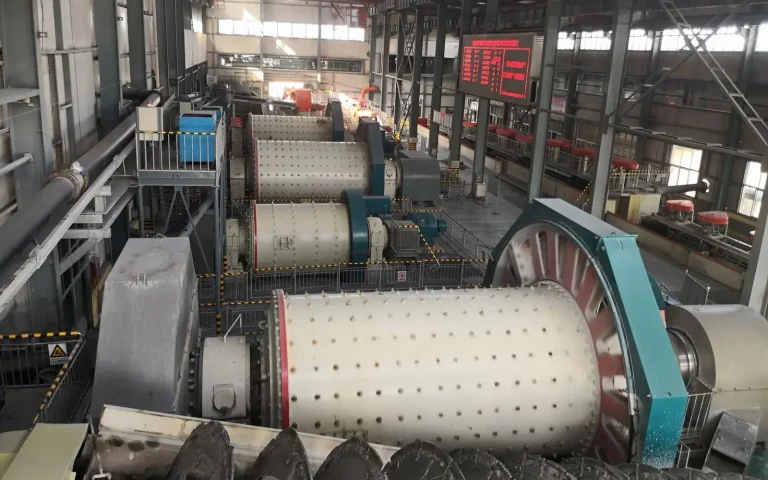
2. Ball mill and sieve division of labor: vacuum feeding, conveying intermediate material 2 to the ball mill for mechanical ball kusaga, kusaga 10~20mm material into 6~10 micron particle size material, and screening to get intermediate material
3. The material on the screen is transported back to the ball mill by vacuum pipe for ball kusaga.
The size, distribution and morphology of graphite particles affect many properties of anode materials. In general, the smaller the particle size, the better the rate performance and cycle life, but the first efficiency and compaction density (affecting the volume energy density and specific capacity) are worse, and vice versa. Reasonable particle size distribution (mixing large particles with small particles, later process) can improve the specific capacity of the negative electrode. The particle morphology also has a great influence on the rate and low temperature performance.
Granulation ya Pili: small particles have large specific surface area, more channels and shorter paths for lithium ion migration, good rate performance, and large particles have high compaction density and large capacity. How to take into account the advantages of large and small particles, and achieve high capacity and high rate at the same time? The answer is to take secondary granulation. Using the base material such as small grain petroleum coke and needle coke, by adding coating materials and additives, under the condition of high temperature agitation, by controlling the material proportion, temperature rise curve and agitation speed, the small grain base material can be granulated twice, and the product with larger grain size can be obtained. Compared with the product of the same particle size, the secondary granulation can effectively improve the liquid retention performance of the material and reduce the expansion coefficient of the material (there are concave holes between small particles and small particles), shorten the diffusion path of lithium ions, improve the rate performance, but also improve the high and low temperature performance and cycling performance of the material.
tofauti: The secondary granulation process has high barriers, many types of coating materials and additives, and is prone to problems such as uneven coating or coating shedding, or poor coating effect, etc. It is an important process for high-end artificial graphite.
(3) Graphitization
Graphitization is the orderly transformation of thermodynamically unstable carbon atoms from chaotic layer structure to graphite crystal structure by thermal activation. Therefore, high temperature heat treatment (HTT) is used in the graphitization process to provide energy for atomic rearrangement and structural transformation. In order to improve the graphitization degree of refractory carbon materials, catalysts can also be added.
Kupata athari bora za graphitization, mambo matatu yanahitaji kufanywa:
1. Unapaswa kuelewa njia ya kuingiza vifaa vya upinzani na vifaa ndani ya tanuru (kuingiza kwa usawa, kuingiza wima, mchanganyiko wa kuhamasisha na kuingiza mchanganyiko, nk), na unaweza kubadilisha umbali kati ya vifaa kulingana na utendaji tofauti wa vifaa vya upinzani;
2. according to the different capacity and product specifications of the graphitization furnace, different power curve is used to control the rate of rise and fall in the process of graphitization;
3, in specific circumstances, in the ingredients to add catalyst, improve the degree of graphitization, that is, “catalytic graphitization”.
tofauti: Different qualities of artificial graphite have different heating and cooling rates, holding time, catalysts, etc. It is expected that the types of graphitization furnaces used are different, resulting in relatively large differences in performance and cost. Graphitization separated from the front-end and back-end processes, especially the heating and cooling process, is basically programmed, but the graphitization time is long and the equipment investment is large, so more outsourced processing is required, and there is no risk of technology leakage.
(4) Carbonization iliyofunikwa
Carbonization iliyofunikwa: Carbonization iliyofunikwa uses a graphite-like carbon material as a “core”, and coats a layer of uniform amorphous carbon material on its surface to form particles similar to a “core-shell” structure. The precursors of commonly used amorphous carbon materials include low-temperature pyrolysis carbon materials such as phenolic resin, pitch, and citric acid. The interlayer spacing of amorphous carbon materials is larger than that of graphite, which can improve the diffusion performance of lithium ions in it. SEI film, improve the first effect, cycle life, etc.
tofauti: Different manufacturers choose different precursors and different heating procedures, so that the thickness and uniformity of the coating layer are also different, so the product cost and performance will also be different.
(5) Uchunguzi/Uwekaji Kichocheo
Vifaa vya grafiti vinahamishiwa kwenye brashi ya mipira kwa njia ya vacuum, na kisha vinapata mchanganyiko wa kimwili na uhamasishaji wa mipira. Vinachujwa kwa kutumia sieve ya molekuli ya 270, na vifaa chini ya sieve vinaangaliwa, kupimwa, kufungashwa na kuhifadhiwa. Vifaa katika sieve vinakandwa zaidi ili kukidhi mahitaji ya saizi ya chembe na kisha vinachujwa.

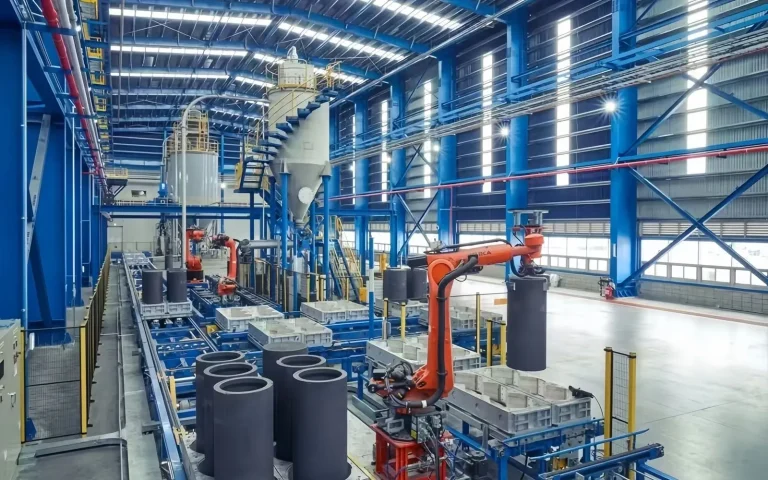
Tunasambaza suluhisho kamili la utengenezaji wa vifaa vya anode vya grafiti, ikijumuisha kusagwa, kuunda umbo, na kusafisha…
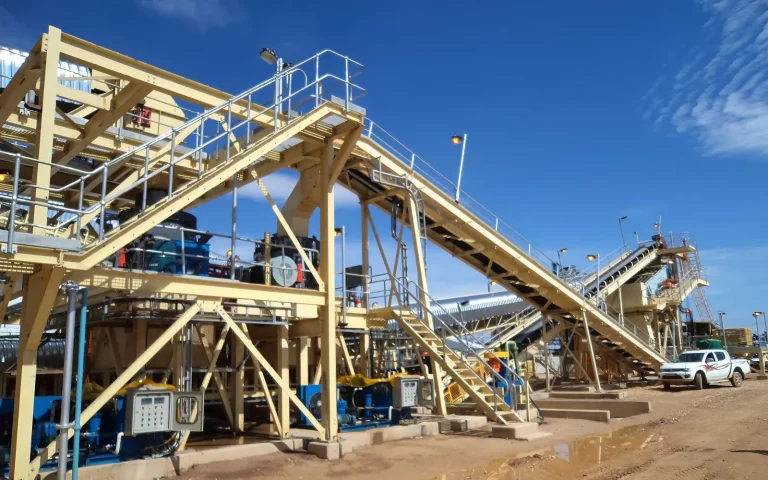
Kuoshwa kwa lita ni chaguo nzuri kwa mmiliki wa mradi kuanza katika hatua ya mwanzo ili kuokoa uwekezaji
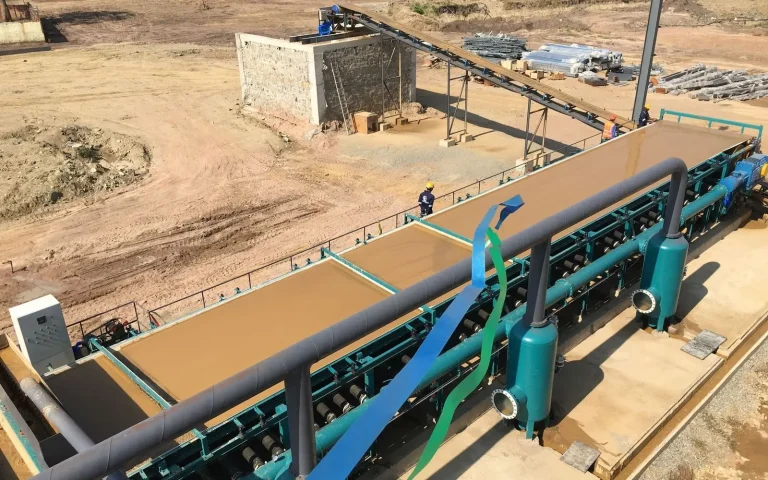
Mchakato wa Dhahabu CIL (kaboni katika kuoshwa) ni njia maarufu sana ya kusindika ore ya dhahabu aina ya oksidi yenye kiwango cha juu
Prominer inaweza kutoa suluhisho kamili la kutengeneza vifaa vya anode ya grafiti asilia ikiwa ni pamoja na kusaga
Anodi ya msingi wa silicon ni aina moja ya nyenzo ya anodi ya muundo kwa kuunganisha silicon
Spodumene na lepidolite ni madini muhimu yanayobeba lithiamu na ni rahisi sana kuyapata
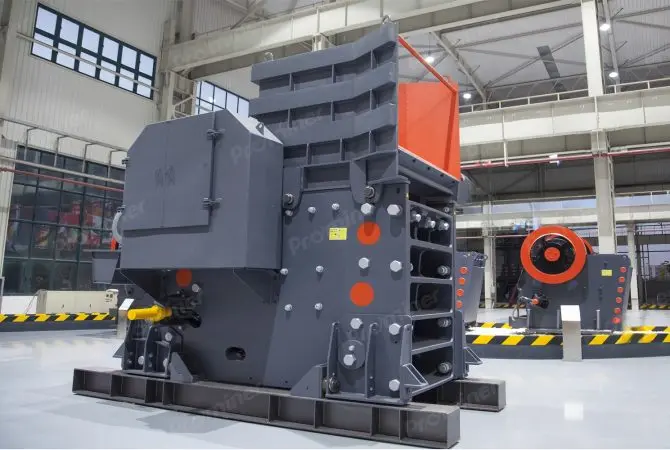
Taya Crusher, ukubwa wake wa ufunguzi huamua ukubwa wake wa juu wa kulisha. Chumba cha kusagwa cha crusher ya taya
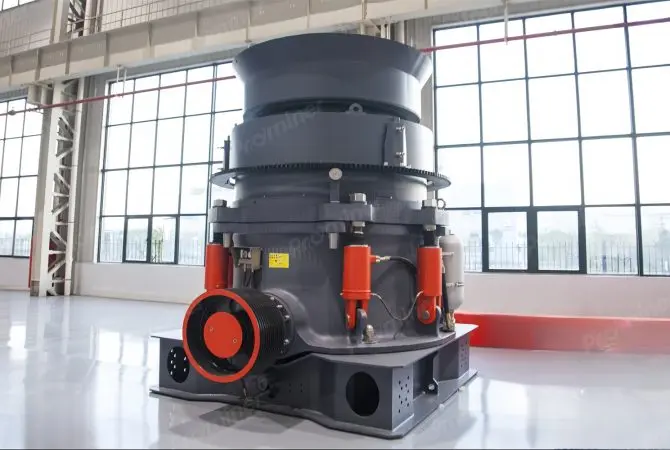
Crusher ya koni ya maziwa mengi inaunganisha kasi ya crusher, eksentrisiti na wasifu wa pafu
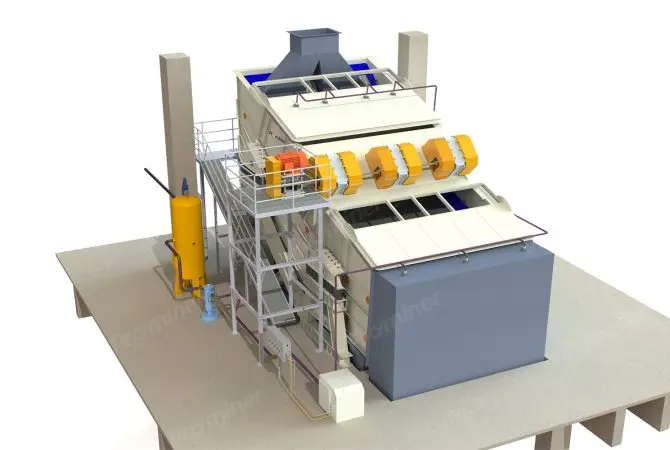
Paneli ya skrini ya flip-flow inaendelea kupanuka na kupungua ili kufanikisha viwango vya juu vya kasi
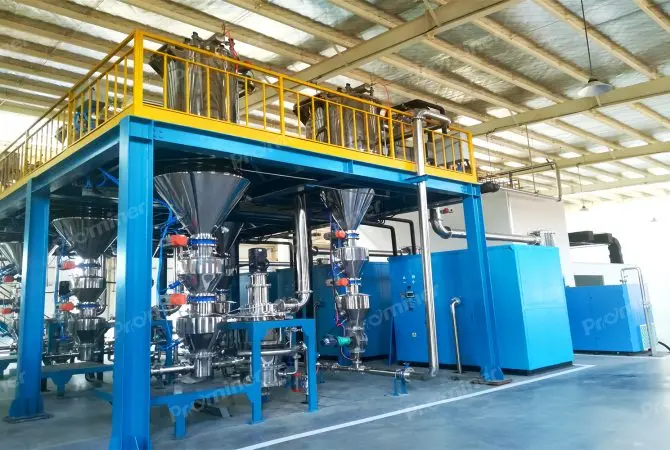
Jet mill pia inaitwa fluidized bed jet mill kwa kutumia vichwa vya ndege vingi kuunda mtiririko wa hewa wa kasi ya sauti
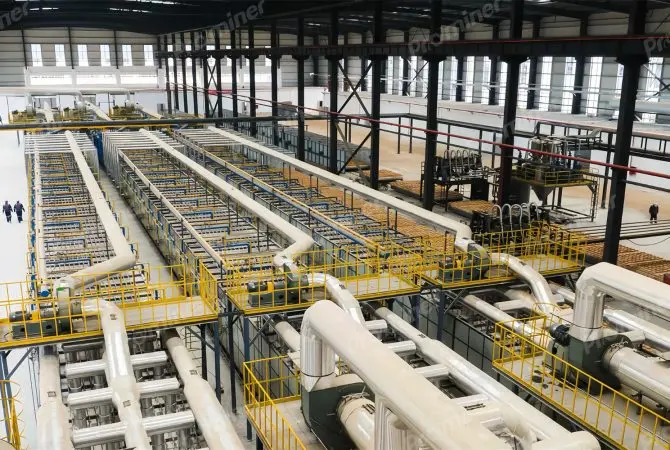
Prominer inatoa aina mbalimbali za furnaces kwa kupika kwa msingi na sekondari ya kaboni
Kujua zaidi kuhusu bidhaa zetu na suluhisho, tafadhali jaza fomu hapa chini na mmoja wa wataalamu wetu atakujibu hivi karibuni
Mradi wa Flotashi ya Dhahabu ya 3000 TPD katika Mkoa wa Shandong
2500TPD Lithium Ore Flotation katika Sichuan
Fax: (+86) 021-58779592
Address: Chumba 606, Jengo D3, Awamu ya II, Kituo cha Biashara cha Chuansha, 777 Long, Barabara ya Miaochuan, Eneo Jipya la Pudong, Shanghai, China
Haki miliki © 2023. Prominer (Shanghai) Mining Technology Co., Ltd.