

Chúng tôi có thể cung cấp giải pháp khai thác lithium trực tiếp (DLE) để thu hồi lithium từ nước muối hồ muối



Vật liệu anotchủ yếu được chia thành hai loại: vật liệu carbon và vật liệu phi carbon. Carbon đề cập đến các hệ thống dựa trên carbon, chủ yếu bao gồm các vi cầu mesocarbon, graphit nhân tạo, graphit tự nhiên và carbon cứng. Hiện tại, vật liệu carbon được sử dụng rộng rãi nhất là vật liệu anot graphit, trong đó graphit nhân tạo và graphit tự nhiên có ứng dụng công nghiệp quy mô lớn. Vật liệu phi carbon chủ yếu bao gồm vật liệu dựa trên silicat, vật liệu dựa trên thiếc, lithium titanate, v.v. Trong đó, vật liệu anot dựa trên silicat hiện là đối tượng nghiên cứu chính của các nhà sản xuất vật liệu anot lớn, và là một trong những vật liệu anot mới có khả năng được áp dụng quy mô lớn nhất trong tương lai.
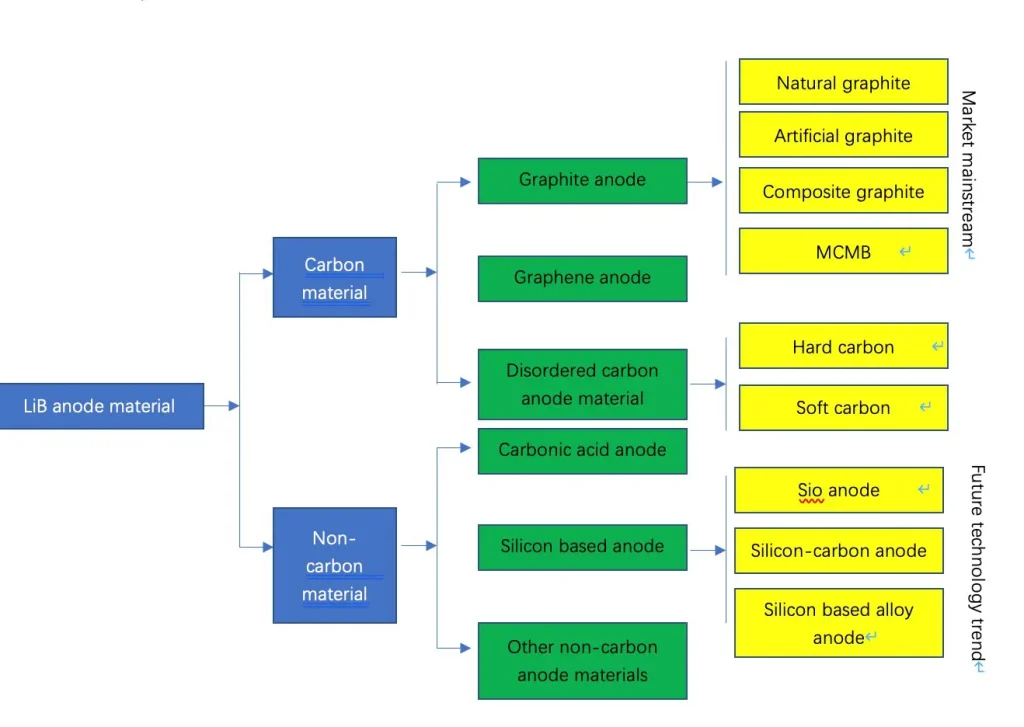
Chế biến Graphit Tự Nhiên
Vật liệu anot graphit tự nhiên là graphit flake tự nhiên làm nguyên liệu, sau khinghiền, phân loại, hình cầu hóa,tinh chế, xử lý bề mặt và các quá trình khác được chuẩn bị từ vật liệu catot.
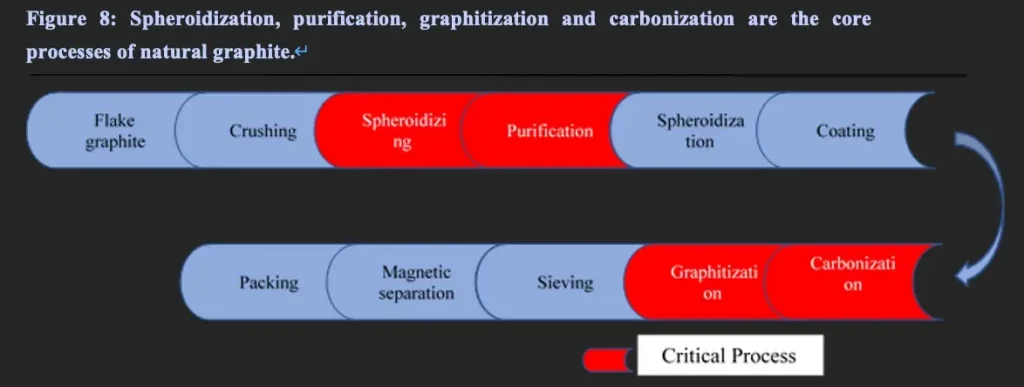
Quy trình chuẩn bị vật liệu anot graphit nhân tạo
Artificial graphite manufacturing process can be divided into four steps, more than ten small procedures, granulation and graphitization is the key.
Quy trình sản xuất vật liệu điện cực anode bằng than chì nhân tạo có thể được chia thành bốn bước:
1) xử lý trước
2) đóng viên
3) graphit hóa
4) nghiền bi và sàng.
Among the four steps, crushing and screening are relatively simple, and granulation and graphitization are the two links that reflect the technical threshold and production level of the anode industry.
Specific to the production process, firstly, one or more of the coke and conductive particles, carbon nanotubes, carbon black, acetylene black are premixed, and then the mixed material and carbon are sintered and coated once, and the prepared particles are graphitized. Graphitized materials and resin materials for secondary coating; Surface treatment with solvent, centrifugation, precipitation and other methods to separate solid particles from the solvent, and then carbonization, 5-20um particles, to obtain a high rate of carbon anode material. In this method, by mixing and fabricating particles, the particles are coated twice to fill the inner shell of the material, so that the internal structure of the material is stable, so that the carbon anode material has the advantages of high rate performance, high pressure compaction, high specific capacity and so on.
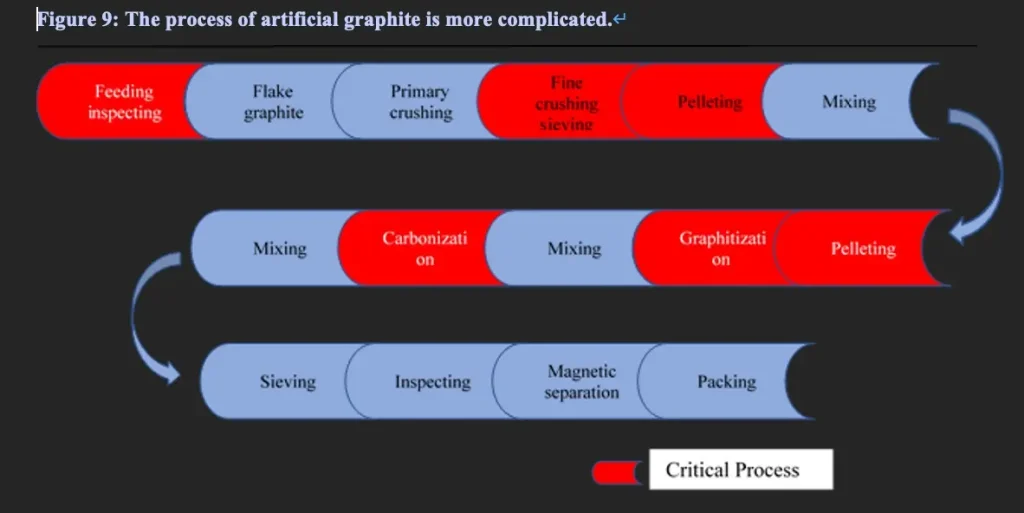
(1) Xử lý trước
Graphite raw material (needle coke or petroleum coke) is mixed with binder for air milling (crushing).According to the different products, the graphite raw materials and adhesive (graphitization) according to different proportions, the mixing ratio is 100 :(5~20), the material through the vacuum feeding machine into the hopper, and then the hopper into the air flow mill for air nghiền, nghiền 5~10mm diameter of the raw and auxiliary materials to 5-10 microns. After air nghiền, cyclone dust collector is used to collect the required particle size materials, the dust collection rate is about 80%, the tail gas is filtered by the filter core filter and discharged, the dust removal efficiency is more than 99%. The material of the filter element is the filter cloth with pores less than 0.2 micron, which can intercept all the dust above 0.2 micron. The fan control system is in negative pressure state.
Sự khác biệt: pretreatment mill is divided into mechanical mill and jet mill, now the mainstream is jet mill. There are more kinds of adhesives, such as petroleum asphalt, coal asphalt, phenolic resin or epoxy resin.
(2) Đóng viên/Đóng viên thứ hai
Đóng viên is a key step in artificial graphite processing. Đóng viên is divided into pyrolysis process and ball milling process.
Quá trình nhiệt phân: the intermediate material 1 is put into the reaction reactor and electrically heated according to a certain temperature curve in inert gas atmosphere and under a certain pressure. It is stirred at 200-300 ℃ for 1-3h and then heated to 400-500℃ to obtain the material with a particle size of 10-20mm. The material is cooled and discharged, namely the intermediate material
2. Ball mill and sieve division of labor: vacuum feeding, conveying intermediate material 2 to the ball mill for mechanical ball nghiền, nghiền 10~20mm material into 6~10 micron particle size material, and screening to get intermediate material
3. The material on the screen is transported back to the ball mill by vacuum pipe for ball nghiền.
The size, distribution and morphology of graphite particles affect many properties of anode materials. In general, the smaller the particle size, the better the rate performance and cycle life, but the first efficiency and compaction density (affecting the volume energy density and specific capacity) are worse, and vice versa. Reasonable particle size distribution (mixing large particles with small particles, later process) can improve the specific capacity of the negative electrode. The particle morphology also has a great influence on the rate and low temperature performance.
Granul hóa phụ: small particles have large specific surface area, more channels and shorter paths for lithium ion migration, good rate performance, and large particles have high compaction density and large capacity. How to take into account the advantages of large and small particles, and achieve high capacity and high rate at the same time? The answer is to take secondary granulation. Using the base material such as small grain petroleum coke and needle coke, by adding coating materials and additives, under the condition of high temperature agitation, by controlling the material proportion, temperature rise curve and agitation speed, the small grain base material can be granulated twice, and the product with larger grain size can be obtained. Compared with the product of the same particle size, the secondary granulation can effectively improve the liquid retention performance of the material and reduce the expansion coefficient of the material (there are concave holes between small particles and small particles), shorten the diffusion path of lithium ions, improve the rate performance, but also improve the high and low temperature performance and cycling performance of the material.
Sự khác biệt: The secondary granulation process has high barriers, many types of coating materials and additives, and is prone to problems such as uneven coating or coating shedding, or poor coating effect, etc. It is an important process for high-end artificial graphite.
(3) Graphit hóa
Quá trình graphit hóa is the orderly transformation of thermodynamically unstable carbon atoms from chaotic layer structure to graphite crystal structure by thermal activation. Therefore, high temperature heat treatment (HTT) is used in the graphitization process to provide energy for atomic rearrangement and structural transformation. In order to improve the graphitization degree of refractory carbon materials, catalysts can also be added.
Để có được hiệu suất graphit hóa tốt hơn, cần thực hiện ba khía cạnh:
1. Nắm vững phương pháp nạp vật liệu kháng và vật liệu vào lò (nạp theo chiều ngang, nạp theo chiều dọc, trượt ren và nạp hỗn hợp, v.v.), và có thể điều chỉnh khoảng cách giữa các vật liệu theo các đặc tính khác nhau của vật liệu kháng;
2. according to the different capacity and product specifications of the graphitization furnace, different power curve is used to control the rate of rise and fall in the process of graphitization;
3, in specific circumstances, in the ingredients to add catalyst, improve the degree of graphitization, that is, “catalytic graphitization”.
Sự khác biệt: Different qualities of artificial graphite have different heating and cooling rates, holding time, catalysts, etc. It is expected that the types of graphitization furnaces used are different, resulting in relatively large differences in performance and cost. Quá trình graphit hóa separated from the front-end and back-end processes, especially the heating and cooling process, is basically programmed, but the graphitization time is long and the equipment investment is large, so more outsourced processing is required, and there is no risk of technology leakage.
(4) Carbon hóa lớp phủ
Carbon hóa lớp phủ: Carbon hóa lớp phủ uses a graphite-like carbon material as a “core”, and coats a layer of uniform amorphous carbon material on its surface to form particles similar to a “core-shell” structure. The precursors of commonly used amorphous carbon materials include low-temperature pyrolysis carbon materials such as phenolic resin, pitch, and citric acid. The interlayer spacing of amorphous carbon materials is larger than that of graphite, which can improve the diffusion performance of lithium ions in it. SEI film, improve the first effect, cycle life, etc.
Sự khác biệt: Different manufacturers choose different precursors and different heating procedures, so that the thickness and uniformity of the coating layer are also different, so the product cost and performance will also be different.
(5) Sàng lọc/Pha tạp
Các vật liệu đã graphit hóa được vận chuyển đến máy nghiền bi bằng chân không, sau đó trải qua sự trộn vật lý và nghiền bi. Chúng được sàng lọc bằng một bộ lọc phân tử 270 lưới, và vật liệu dưới bộ lọc được kiểm tra, đo lường, đóng gói và lưu trữ. Vật liệu trên bộ lọc được nghiền bi thêm để đạt yêu cầu kích thước hạt và sau đó được sàng lọc.

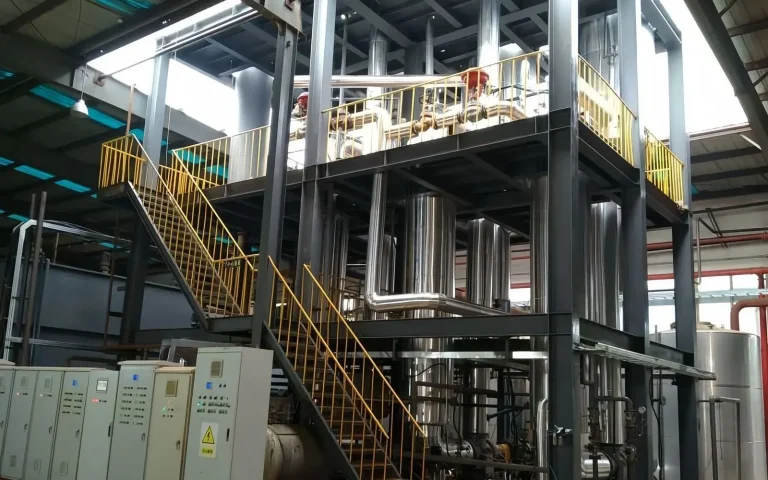
Chúng tôi có thể cung cấp giải pháp khai thác lithium trực tiếp (DLE) để thu hồi lithium từ nước muối hồ muối
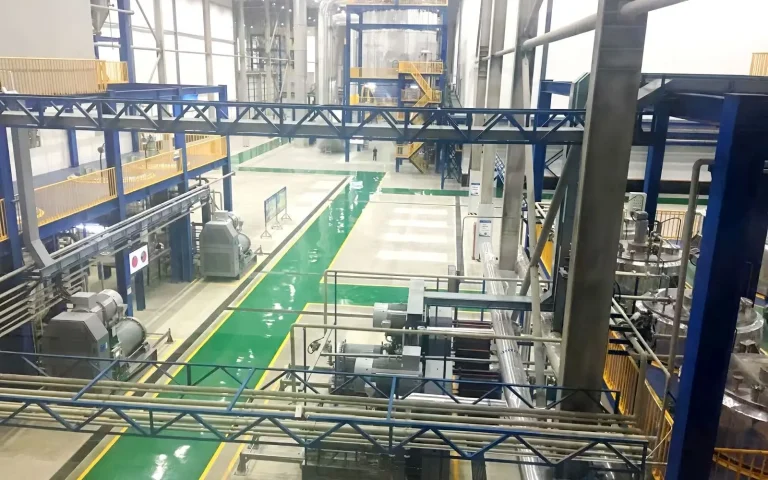
Vật liệu catot là một trong những vật liệu chính quyết định hiệu suất của pin lithium-ion
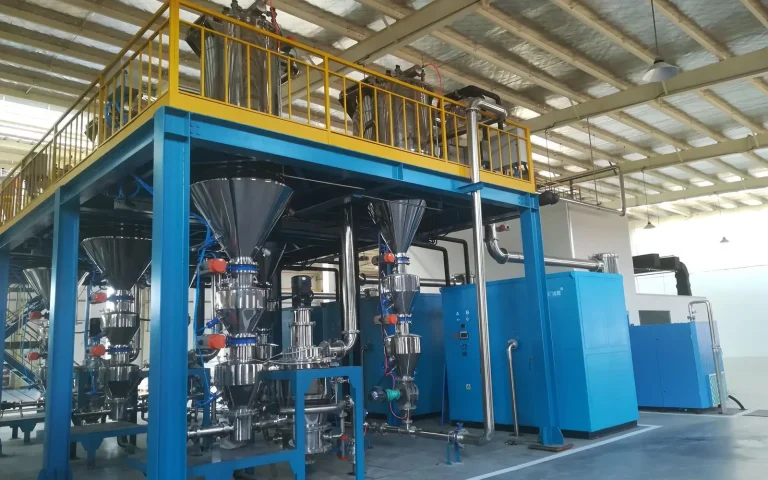
Anot dựa trên silicon là một loại vật liệu anot composite bằng cách tổng hợp silicon
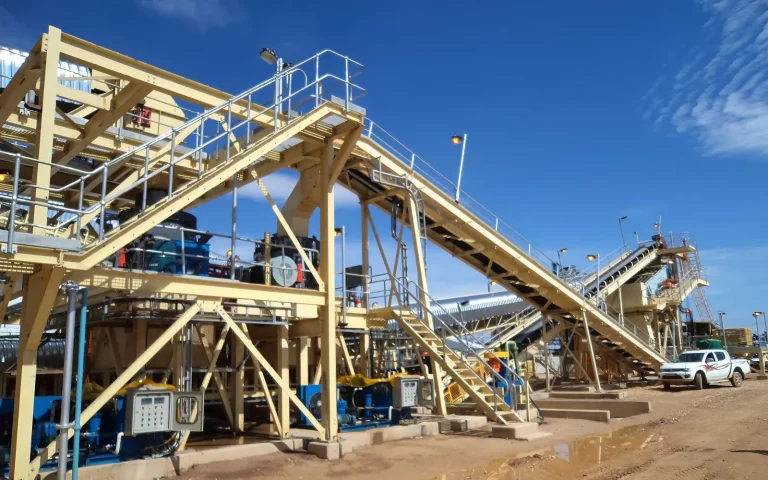
Rửa bằng bể là một lựa chọn tốt cho chủ đầu tư dự án để bắt đầu ở giai đoạn ban đầu nhằm tiết kiệm vốn đầu tư
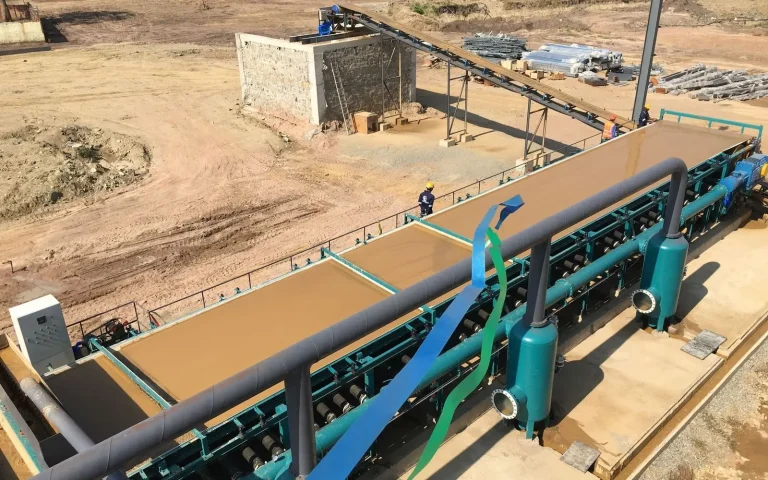
Quy trình CIL vàng (carbon trong quá trình chiết xuất) là cách rất phổ biến để chế biến quặng vàng oxit loại cao cấp
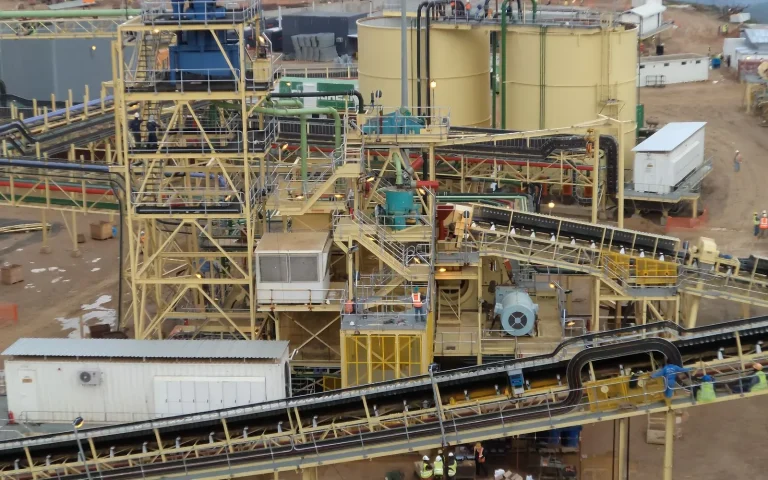
Tuyển nổi là cách chế biến phổ biến nhất trong dự án chế biến quặng vàng. Bởi vì quy trình tuyển nổi
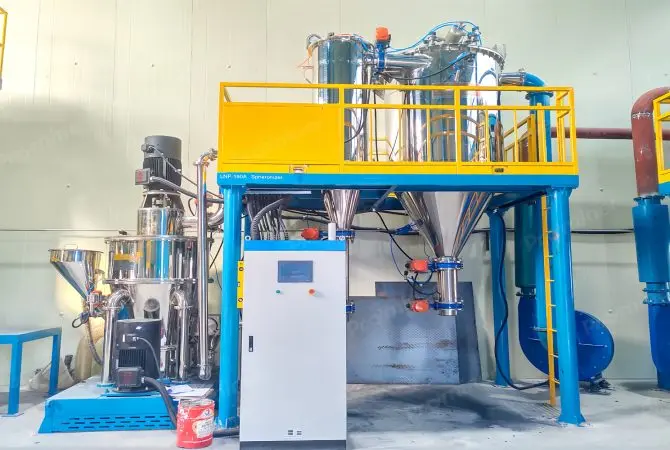
Bên cạnh các yêu cầu PSD nghiêm ngặt, Graphite Anode còn yêu cầu hình dạng hình cầu để
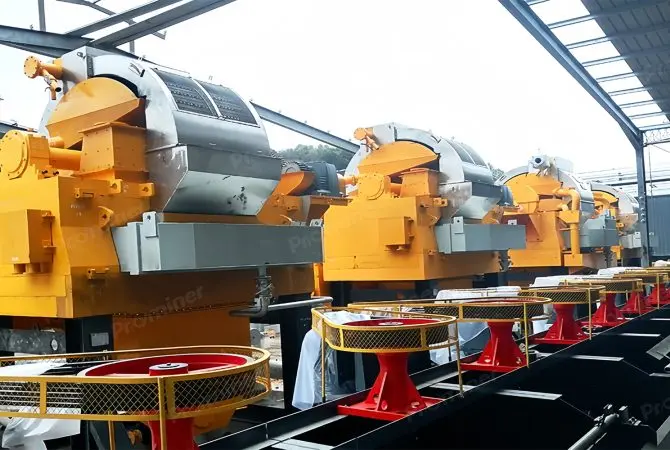
Prominer có thể cung cấp các bộ tách từ HIMS (bộ tách từ trường cường độ cao) khác nhau
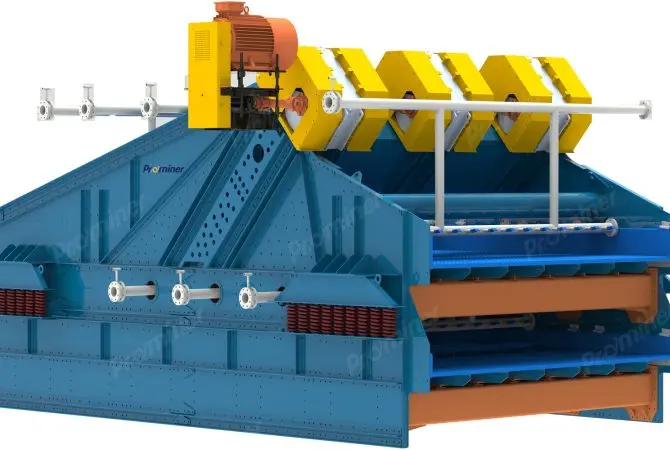
Prominer có thể cung cấp tất cả các loại màn hình tuyến tính cho phân loại khoáng sản, kích thước vật liệu, tách nước
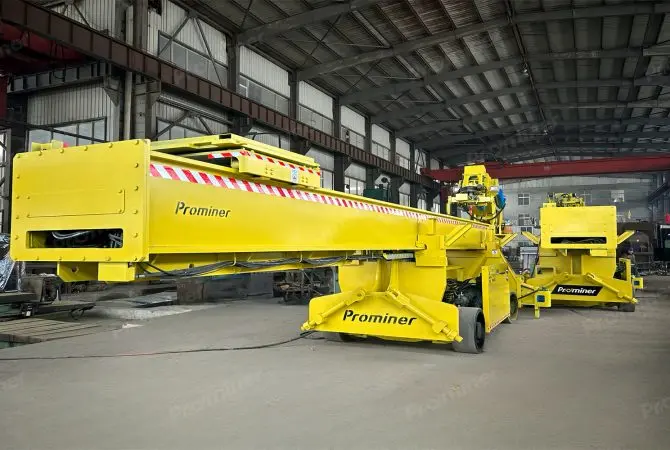
Chúng tôi có thể thiết kế và sản xuất máy tái lắp máy nghiền (hay còn gọi là máy tái lắp máy nghiền)
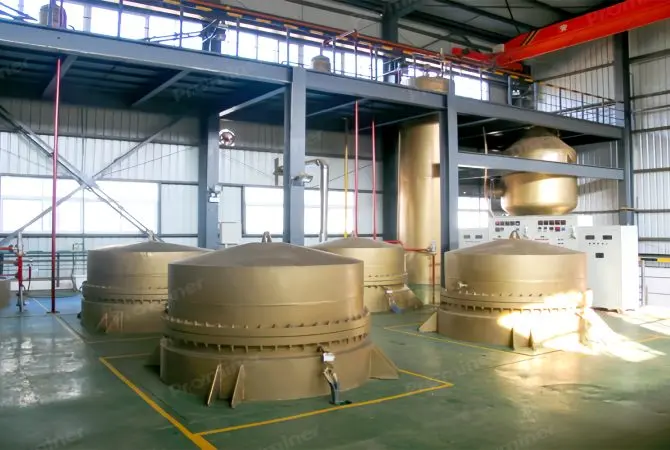
Prominer có thể thiết kế và cung cấp hệ thống tinh chế và luyện kim hoàn chỉnh cho dự án vàng CIL
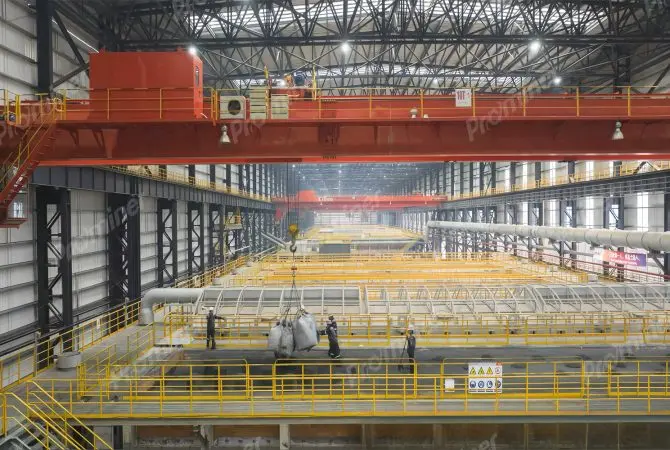
Chúng tôi có thể cung cấp nhiều loại lò graphit hóa cho việc thay đổi vật liệu carbon
Để tìm hiểu thêm về sản phẩm và giải pháp của chúng tôi, vui lòng điền vào mẫu dưới đây và một trong những chuyên gia của chúng tôi sẽ liên lạc lại với bạn sớm
Dự án tuyển nổi vàng 3000 TPD ở tỉnh Shandong
Tuyển nổi quặng lithium 2500 TPD ở Tứ Xuyên
Fax: (+86) 021-58779592
Địa chỉ: Phòng 606, Tòa nhà D3, Giai đoạn II, Trung tâm Thương mại Chuansha, 777 Đường Long, Đường Miaochuan, Khu vực Phố Đông, Thượng Hải, Trung Quốc
Bản quyền © 2023. Công ty TNHH Công nghệ Khai thác Prominer (Thượng Hải)


