

UHP grafietelektrode wordt voornamelijk gebruikt voor ultra hoge vermogen elektrische boogovens in de staalsmeltindustrie




Quartz sand purification is essential for producing high-purity silica used in glass manufacturing, electronics, photovoltaics, ceramics, and chemical industries. Depending on the impurities present—such as iron, feldspar, mica, clay minerals, and heavy minerals—different purification technologies are applied. Below are the main methods used in quartz sand purification.
Washing and desliming are preliminary purification steps used to remove surface impurities, clay, and fine particles from quartz sand. Water flushing, scrubbing, and hydraulic classification help separate mud and lightweight contaminants.
Attrition scrubbing is often applied to remove iron films and clay coatings attached to the quartz surface. This method improves the efficiency of subsequent separation processes.
Magnetic separation is used to remove magnetic minerals such as magnetite, hematite, and biotite from quartz sand. Both weak and strong magnetic separation techniques can be applied, depending on the type of iron-bearing impurities present.
High-gradient magnetic separators are particularly effective for removing weakly magnetic contaminants and achieving higher purity levels required for advanced industrial applications.
Flotation is a chemical separation method used to remove feldspar, mica, and other non-magnetic impurities. By adding specific reagents, impurities attach to air bubbles and float to the surface, while quartz particles remain at the bottom.
This process is widely used when producing high-purity quartz sand, especially for glassmaking and ceramic industries.
Acid leaching is a chemical purification method designed to remove metal oxides and trace impurities embedded within quartz grains. Common acids used include hydrochloric acid, sulfuric acid, and hydrofluoric acid.
This method is particularly effective for reducing iron, aluminum, and other metallic contaminants, enabling the production of high-purity or ultra-high-purity quartz.
Gravity separation utilizes differences in specific gravity between quartz and impurity minerals. Equipment such as shaking tables, spiral chutes, and centrifugal concentrators can separate heavy minerals like rutile and zircon from quartz sand.
This method is often used as a pre-treatment step before more advanced purification processes.
Thermal treatment involves heating quartz sand to alter or remove certain impurities. For example, calcination can decompose organic materials and facilitate the removal of volatile substances.
In some cases, thermal shock treatment is used to improve the effectiveness of subsequent grinding and purification steps.
In practice, a combination of purification technologies is typically required to achieve the desired purity level. A typical process flow may include washing, magnetic separation, flotation, acid leaching, and final rinsing.
For ultra-high-purity quartz used in semiconductor and photovoltaic industries, advanced techniques such as high-temperature chlorination and plasma treatment may also be applied.
The purification of quartz sand involves multiple technologies tailored to the type and concentration of impurities present. From basic washing and magnetic separation to advanced chemical and thermal treatments, each method plays a critical role in producing high-quality quartz sand for various industrial applications. Selecting the appropriate combination of purification processes ensures optimal performance and cost efficiency.
A: Voor grafietbronnen moet een volledige oplossing zowel de natuurlijke grafietflotatie als verwerking op diepte omvatten. Het balpkart- en hydrocyclonsysteem dienen als de basis voor het maalproces. Voor de productie van geavanceerde anodenmaterialen is de vormpers essentieel om de tapdichtheid te verbeteren en de specifieke oppervlakte te verminderen. Daarnaast is het Prominer-coatingsysteem, dat coating- en granulatiefuncties combineert, een belangrijke stap in de verwerking van winstgevende anodenmaterialen.
A: Processelectie hangt volledig af van de eigenschappen van het erts. Het Gold CIL/CIP-proces is een zeer populaire en effectieve manier om hoogwaardig oxidatiegouderts te verwerken. Voor veel andere goudprojecten blijft flotatie de meest populaire verwerkingsmethode. Voor eigenaren die bij de eerste fase willen besparen op investeringen, zijn vatstroom- of heap-stroombiolevering flexibele en economische opties. We raden aan te beginnen met een lab- en proefproces om de meest efficiënte en wetenschappelijke processtroom te bepalen.
A: Magnetische scheiding is cruciaal voor mijnverrijking. We bieden zowel HIMS (Hoge Intensiteit) als LIMS (Lage Intensiteit) magnetische scheiders om verschillende magneet eigenschappen van mineralen aan te kunnen. In een geoptimaliseerd plantontwerp wordt deze technologie geïntegreerd met een hoogrenderend breeksysteem—gebruikmakend van enkelcilinder- of meercilinder hydraulische kegelbrekers—en een maalproces. Dit zorgt ervoor dat afvalgesteente vroeg wordt afgewezen, wat de productiviteit aanzienlijk verbetert en energie bespaart.
A: Designing a successful plant requires a comprehensive EPC (Engineering, Procurement, and Construction) service. Key considerations include engineering design (site surveys, sampling guidance, and PFD drawings) and equipment customization to ensure machinery matches the specific ore characteristics. For example, Prominer can customize linear screens up to 5.1m in width for large-scale grading and dewatering. Finally, professional on-site services, including civil work supervision and commissioning, are vital for long-term stable operation.
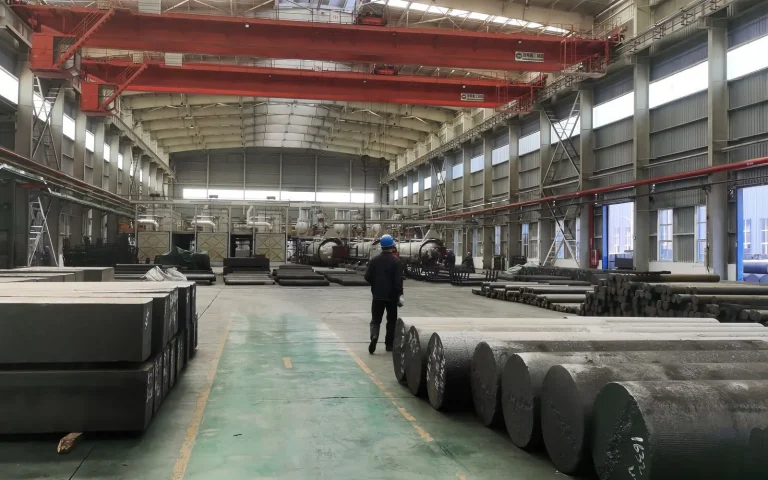
UHP grafietelektrode wordt voornamelijk gebruikt voor ultra hoge vermogen elektrische boogovens in de staalsmeltindustrie
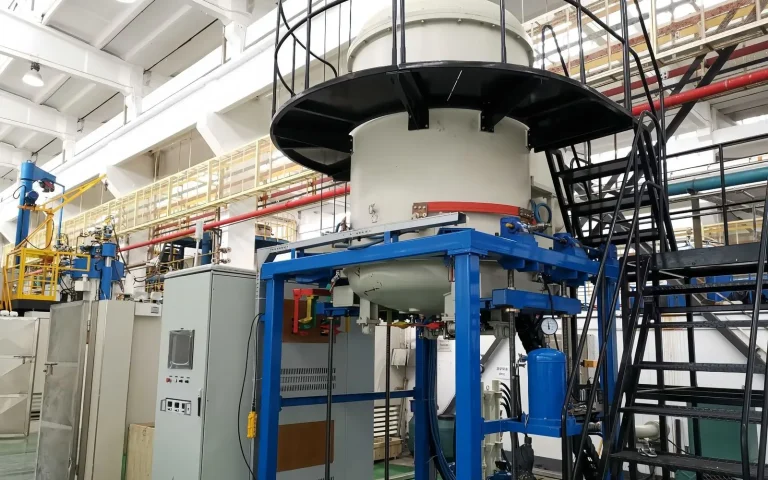
De vraag vanuit de industrie in de loop der jaren is geweest naar speciale grafiet en koolstof met steeds striktere
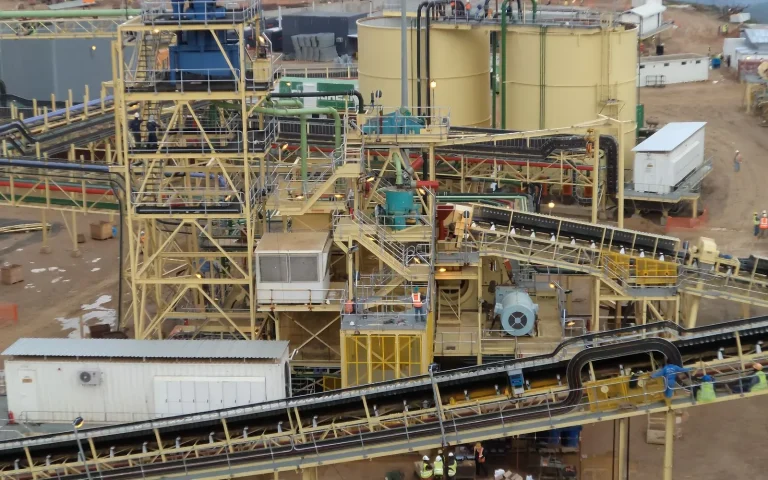
Flotatie is de meest populaire verwerkingswijze in goudertsverwerkingsprojecten. Omdat het flotatieproces

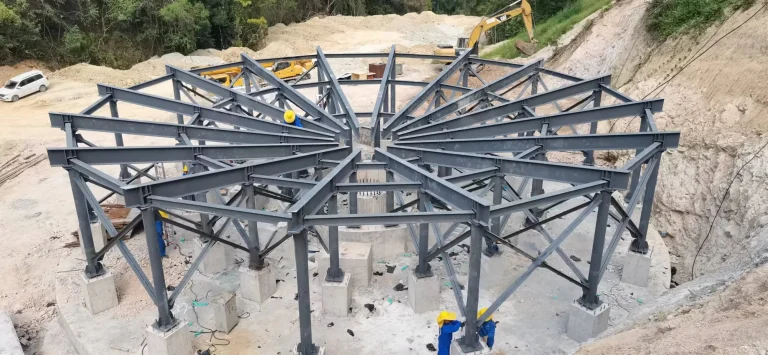
Ruwe grondstof: Fluorieterts (CaF₂) Fluorietgraad: 35-40% Concentratiegraad: ≥97% CaF₂
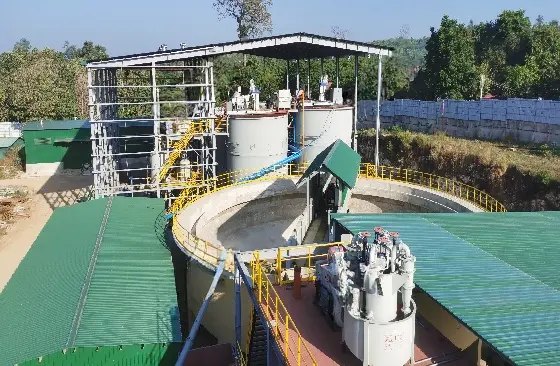
Locatie: Tanzania, Afrika & Centraal Kalimantan, Indonesië Erts type: Lage-graad sulfideerts (1,2–1,8 g/t Au)
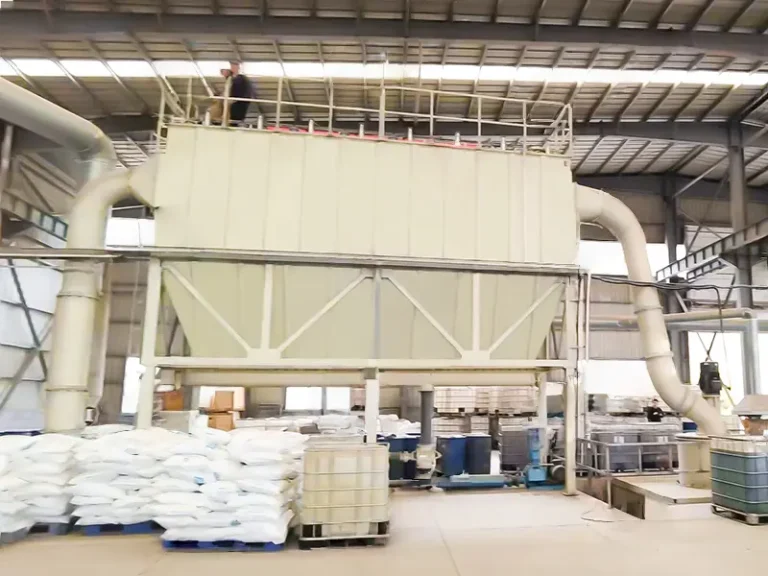
Ruwe Erts: Dolomiet Steen (CaMg(CO₃)₂) Invoergrootte: ≤10 mm Eindproduct: Ultra Fijn Dolomietpoeder
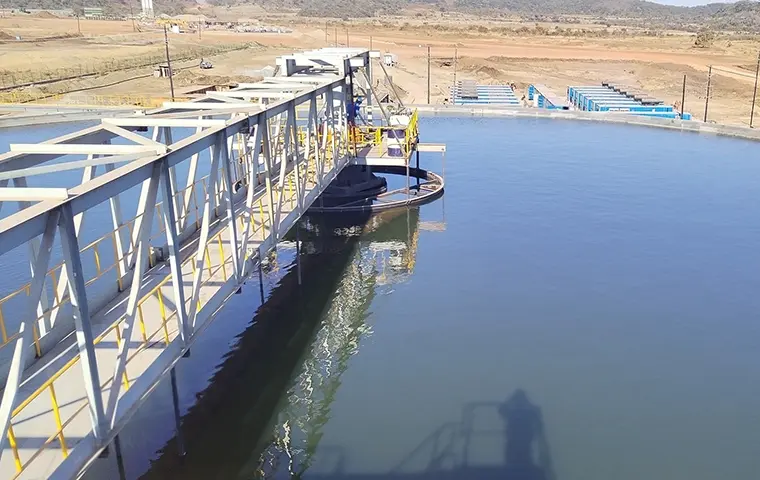
Ruweerts: Kalksteenerts CaCO3 Kwaliteit: 85% Eindproduct: Gecoate en ongecoate kalkpoeder (325 – 2500 mesh)
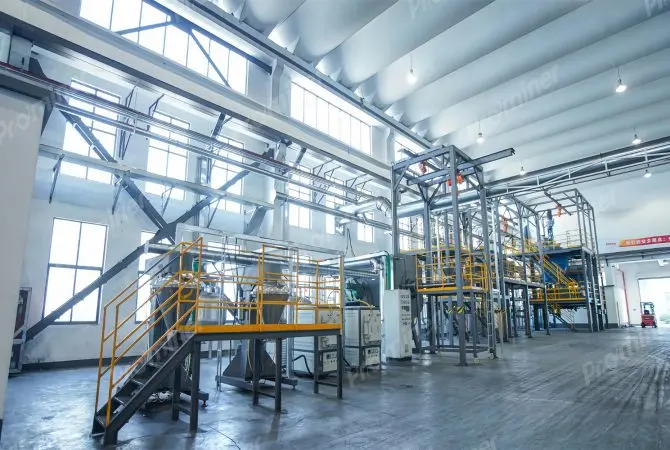
Grondstof: Naaldkook en petroleumkook Projectcapaciteit: 50 kg per uur
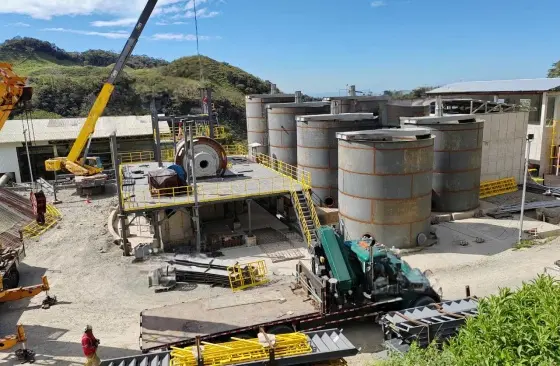
Ruwe erts: Vrij-vermaalbaar oxide gouderts Goudgehalte: 1,5-3,5 g/t Eindproduct: Dore goudstaaf (Au+Ag ≥ 90%)
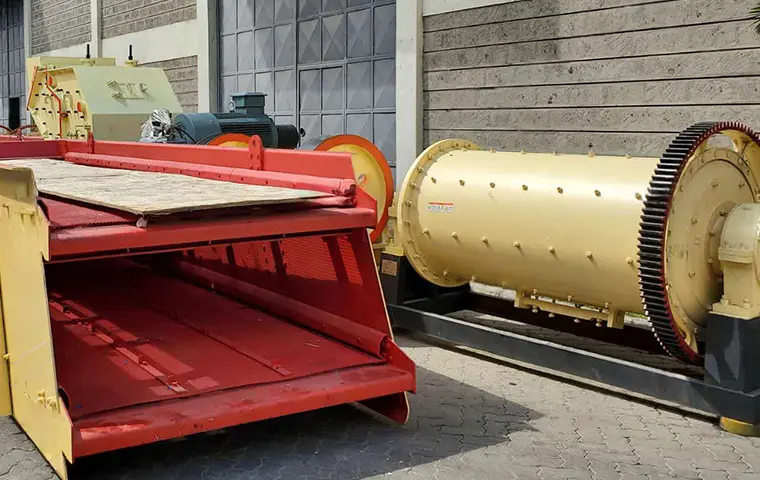
Ruwe Dood: Gemengde Oxide- en Sulfide-Gouderts Goudgraad: 3,5 g/t Goudherstelpercentage: 92%
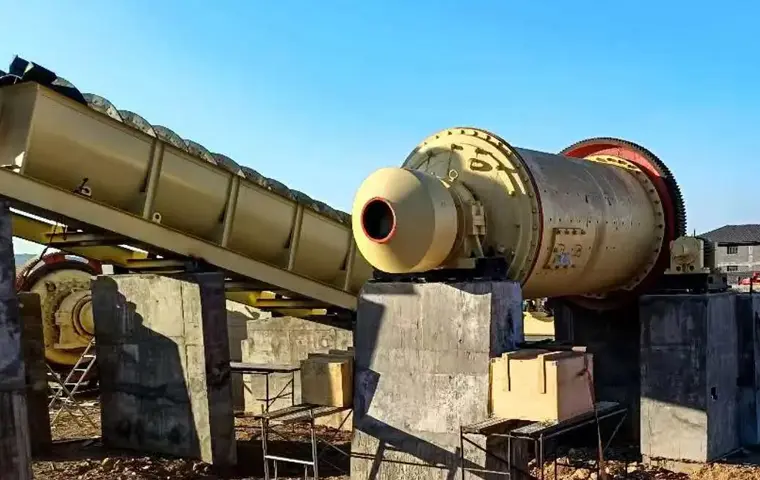
Ruwe Erts: Oxide Type Gouderts Goud Gehalte: 2,5 g/t Goudstaaf Zuiverheid: 96%
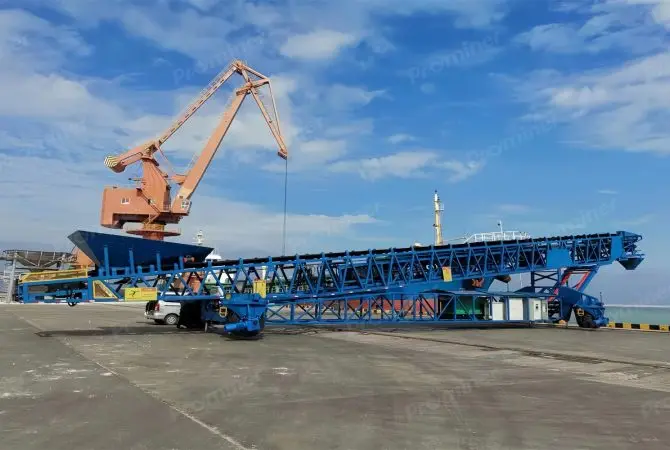
Ons ingenieursteam kan de mobiele radiale stapelaar en lader ontwerpen en vervaardigen
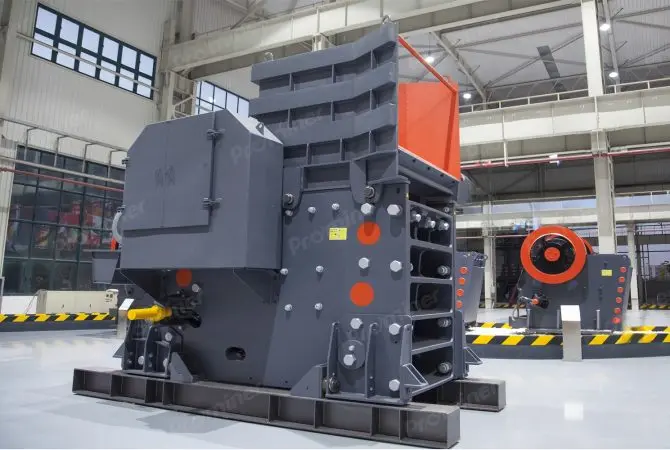
Kegelbreker, de opening bepaalt de maximale invoergrootte. De vergruizingskamer van een kegelbreker
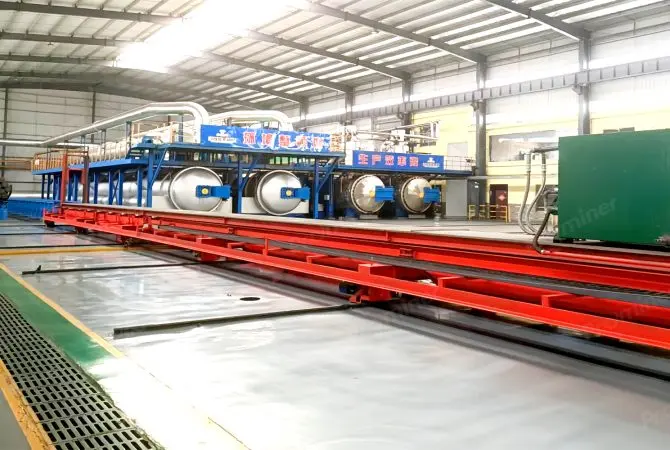
We kunnen hete-in en koude-uit type hogedrukimpregnatie van eenmaal gebakken grafiet bieden
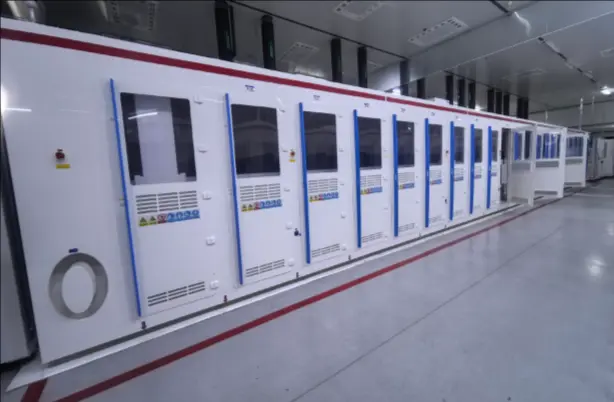
Inclusief: Monokristallijne batch-textuur-apparatuur, batch-textuur-loader/unloader, lage-druk...
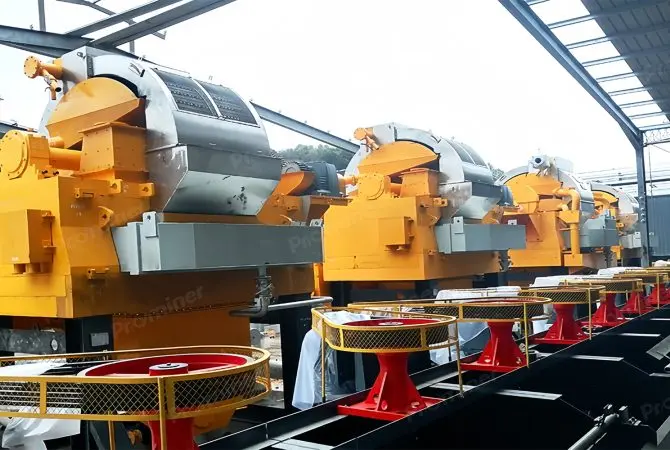
Prominer kan verschillende HIMS (High Intensity Magnetic Separator) magnetische scheiders leveren
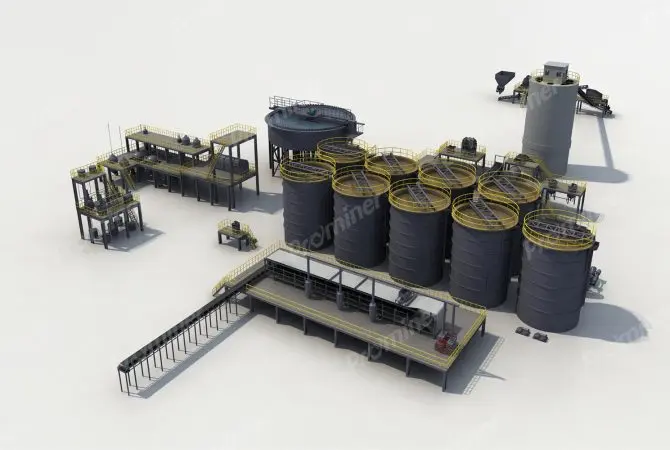
Prominer kan de complete oplossing voor het CIL (carbon in leaching) systeem bieden
Om meer te weten te komen over onze producten en oplossingen, vul alstublieft het onderstaande formulier in en een van onze experts zal u binnenkort terugbellen
3000 TPD goud flotatieproject in de provincie Shandong
2500 TPD lithiumerts flotatie in Sichuan
Fax: (+86) 021-60870195
Adres:No.2555, Xiupu Road, Pudong, Shanghai
Auteursrecht © 2023.Prominer (Shanghai) Mining Technology Co., Ltd.


