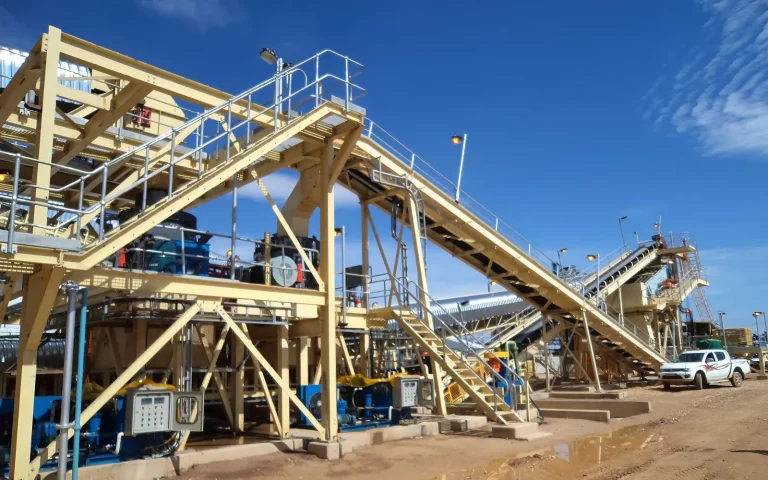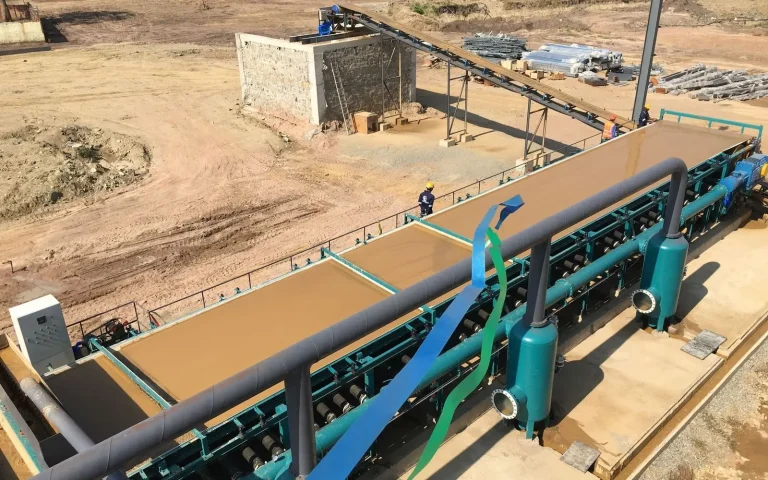
我们可以提供直接锂提取(DLE)解决方案,从盐湖卤水中回收锂


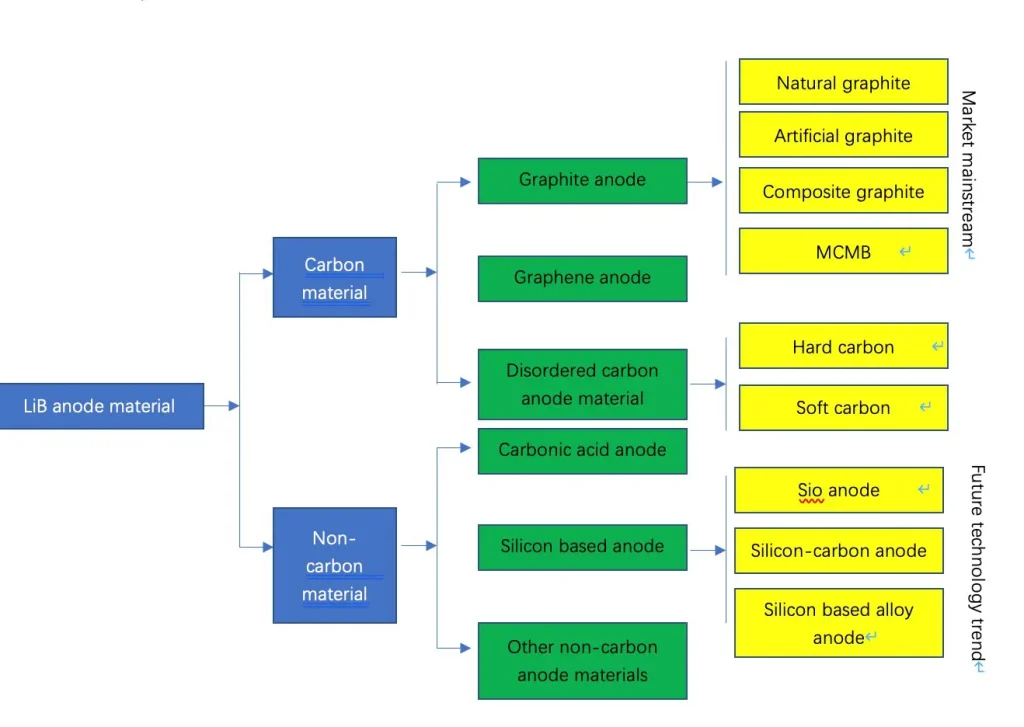
阳极材料主要分为两类:碳材料和非碳材料。碳指的是基于碳的体系,主要包括介孔碳微球、人造石墨、天然石墨和硬碳。目前,最广泛使用的碳材料是石墨阳极材料,其中人造石墨和天然石墨具有大规模工业应用。非碳材料主要包括硅基材料、锡基材料、锂钛酸盐等。其中,硅基阳极材料是目前主要阳极材料制造商的研究重点,是未来最有可能大规模应用的新型阳极材料之一。
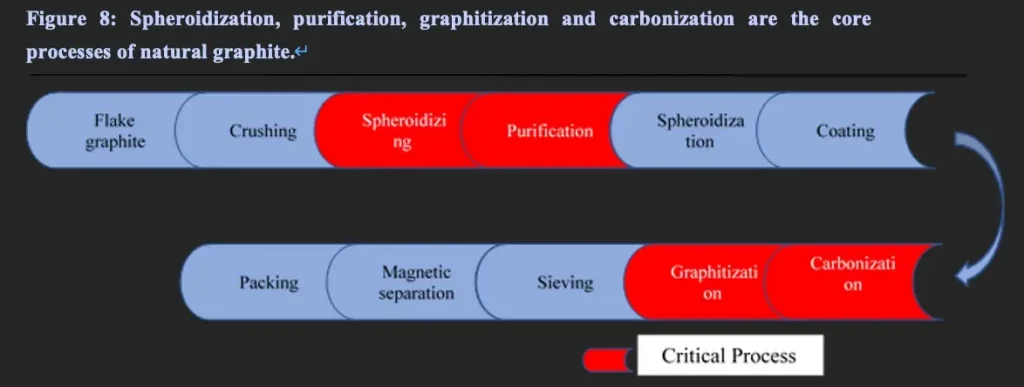
天然石墨加工
天然石墨阳极材料是以天然鳞片石墨为原料,经过磨粉、分级、球形化、净化、表面处理等工艺制备的阴极材料。
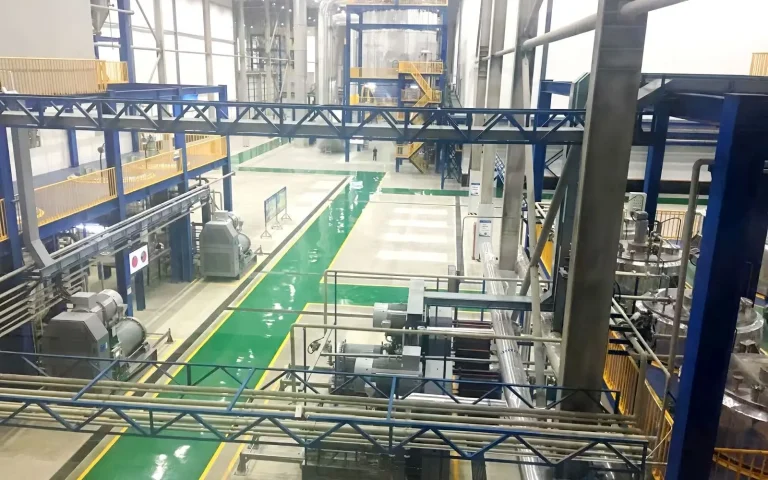
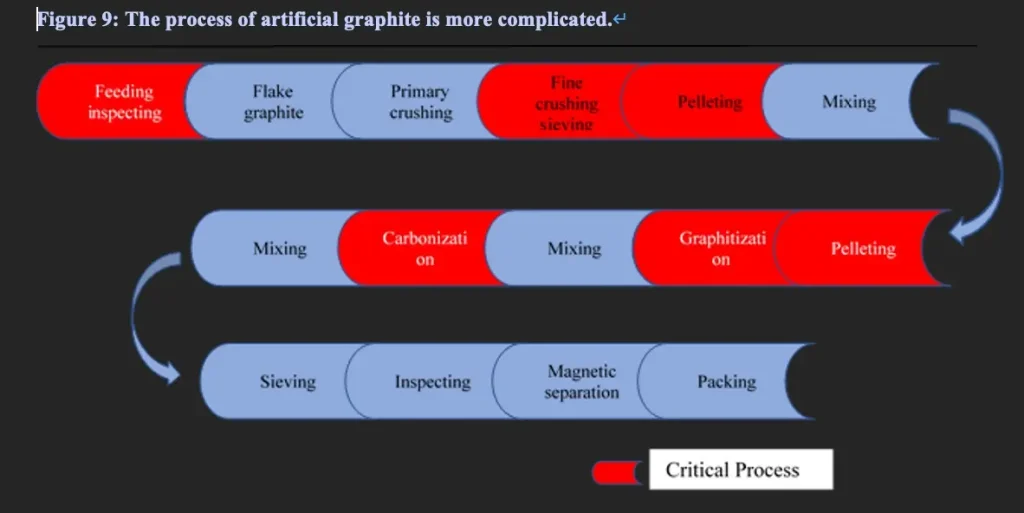
人造石墨阳极材料的制备工艺
Artificial graphite manufacturing process can be divided into four steps, more than ten small procedures, granulation and graphitization is the key.
人造石墨阳极材料的生产工艺可分为四个步骤:
1) 预处理
2) 颗粒化
3) 石墨化
4) 球磨及筛分。
Among the four steps, crushing and screening are relatively simple, and granulation and graphitization are the two links that reflect the technical threshold and production level of the anode industry.
Specific to the production process, firstly, one or more of the coke and conductive particles, carbon nanotubes, carbon black, acetylene black are premixed, and then the mixed material and carbon are sintered and coated once, and the prepared particles are graphitized. Graphitized materials and resin materials for secondary coating; Surface treatment with solvent, centrifugation, precipitation and other methods to separate solid particles from the solvent, and then carbonization, 5-20um particles, to obtain a high rate of carbon anode material. In this method, by mixing and fabricating particles, the particles are coated twice to fill the inner shell of the material, so that the internal structure of the material is stable, so that the carbon anode material has the advantages of high rate performance, high pressure compaction, high specific capacity and so on.
(1)预处理
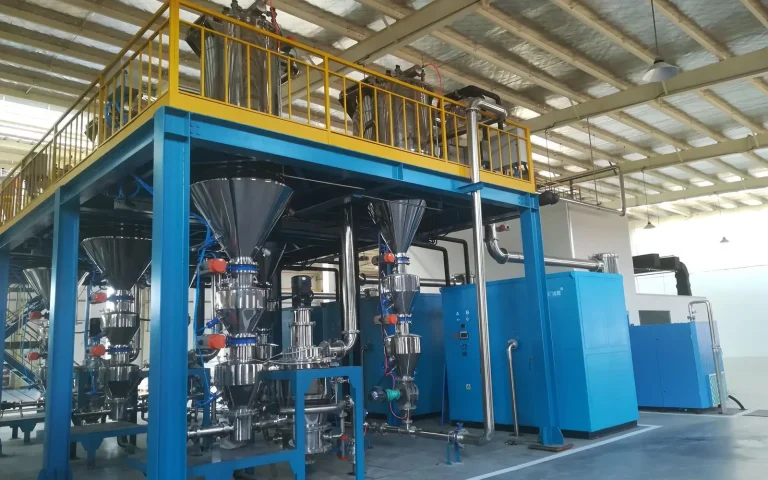
Graphite raw material (needle coke or petroleum coke) is mixed with binder for air milling (crushing).According to the different products, the graphite raw materials and adhesive (graphitization) according to different proportions, the mixing ratio is 100 :(5~20), the material through the vacuum feeding machine into the hopper, and then the hopper into the air flow mill for air 磨粉, 磨粉 5~10mm diameter of the raw and auxiliary materials to 5-10 microns. After air 磨粉, cyclone dust collector is used to collect the required particle size materials, the dust collection rate is about 80%, the tail gas is filtered by the filter core filter and discharged, the dust removal efficiency is more than 99%. The material of the filter element is the filter cloth with pores less than 0.2 micron, which can intercept all the dust above 0.2 micron. The fan control system is in negative pressure state.
差异: pretreatment mill is divided into mechanical mill and jet mill, now the mainstream is jet mill. There are more kinds of adhesives, such as petroleum asphalt, coal asphalt, phenolic resin or epoxy resin.
(2) 成粒/二次成粒
成粒 is a key step in artificial graphite processing. 成粒 is divided into pyrolysis process and ball milling process.
热解过程: the intermediate material 1 is put into the reaction reactor and electrically heated according to a certain temperature curve in inert gas atmosphere and under a certain pressure. It is stirred at 200-300 ℃ for 1-3h and then heated to 400-500℃ to obtain the material with a particle size of 10-20mm. The material is cooled and discharged, namely the intermediate material
2. Ball mill and sieve division of labor: vacuum feeding, conveying intermediate material 2 to the ball mill for mechanical ball 磨粉, 磨粉 10~20mm material into 6~10 micron particle size material, and screening to get intermediate material
3. The material on the screen is transported back to the ball mill by vacuum pipe for ball 磨粉.
The size, distribution and morphology of graphite particles affect many properties of anode materials. In general, the smaller the particle size, the better the rate performance and cycle life, but the first efficiency and compaction density (affecting the volume energy density and specific capacity) are worse, and vice versa. Reasonable particle size distribution (mixing large particles with small particles, later process) can improve the specific capacity of the negative electrode. The particle morphology also has a great influence on the rate and low temperature performance.
二次成粒: small particles have large specific surface area, more channels and shorter paths for lithium ion migration, good rate performance, and large particles have high compaction density and large capacity. How to take into account the advantages of large and small particles, and achieve high capacity and high rate at the same time? The answer is to take secondary granulation. Using the base material such as small grain petroleum coke and needle coke, by adding coating materials and additives, under the condition of high temperature agitation, by controlling the material proportion, temperature rise curve and agitation speed, the small grain base material can be granulated twice, and the product with larger grain size can be obtained. Compared with the product of the same particle size, the secondary granulation can effectively improve the liquid retention performance of the material and reduce the expansion coefficient of the material (there are concave holes between small particles and small particles), shorten the diffusion path of lithium ions, improve the rate performance, but also improve the high and low temperature performance and cycling performance of the material.
差异: The secondary granulation process has high barriers, many types of coating materials and additives, and is prone to problems such as uneven coating or coating shedding, or poor coating effect, etc. It is an important process for high-end artificial graphite.
(3) 石墨化
石墨化 is the orderly transformation of thermodynamically unstable carbon atoms from chaotic layer structure to graphite crystal structure by thermal activation. Therefore, high temperature heat treatment (HTT) is used in the graphitization process to provide energy for atomic rearrangement and structural transformation. In order to improve the graphitization degree of refractory carbon materials, catalysts can also be added.
为了获得更好的石墨化效果,需要做到三个方面:
1. 掌握将电阻材料和物料装入炉内的方法(水平装载,垂直装载,错位和混合装载等),并可以根据电阻材料的不同性能调整材料之间的距离;
2. according to the different capacity and product specifications of the graphitization furnace, different power curve is used to control the rate of rise and fall in the process of graphitization;
3, in specific circumstances, in the ingredients to add catalyst, improve the degree of graphitization, that is, “catalytic graphitization”.
差异: Different qualities of artificial graphite have different heating and cooling rates, holding time, catalysts, etc. It is expected that the types of graphitization furnaces used are different, resulting in relatively large differences in performance and cost. 石墨化 separated from the front-end and back-end processes, especially the heating and cooling process, is basically programmed, but the graphitization time is long and the equipment investment is large, so more outsourced processing is required, and there is no risk of technology leakage.
(4) 涂层碳化
涂层碳化: 涂层碳化 uses a graphite-like carbon material as a “core”, and coats a layer of uniform amorphous carbon material on its surface to form particles similar to a “core-shell” structure. The precursors of commonly used amorphous carbon materials include low-temperature pyrolysis carbon materials such as phenolic resin, pitch, and citric acid. The interlayer spacing of amorphous carbon materials is larger than that of graphite, which can improve the diffusion performance of lithium ions in it. SEI film, improve the first effect, cycle life, etc.
差异: Different manufacturers choose different precursors and different heating procedures, so that the thickness and uniformity of the coating layer are also different, so the product cost and performance will also be different.
(5) 筛选/掺杂
石墨化材料通过真空运输到球磨机,然后进行物理混合和球磨。它们用270目分子筛进行筛选,筛下的材料进行检查、测量、包装和存储。筛上的材料进一步球磨以满足粒径要求,然后再进行筛分。

如需了解更多关于我们产品和解决方案的信息,请填写以下表格,我们的一位专家将尽快与您联系
Fax: (+86) 021-58779592
地址: 上海市浦东新区苗川路777号川沙商务中心D3栋二期606室
版权 © 2023. 与石(上海)矿业科技有限公司