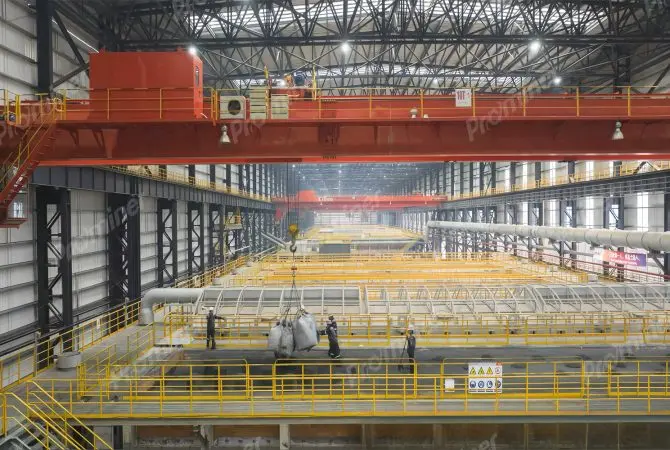
يمكننا تقديم حل لاستخراج الليثيوم المباشر (DLE) لاسترداد الليثيوم من مياه بحيرات الملح


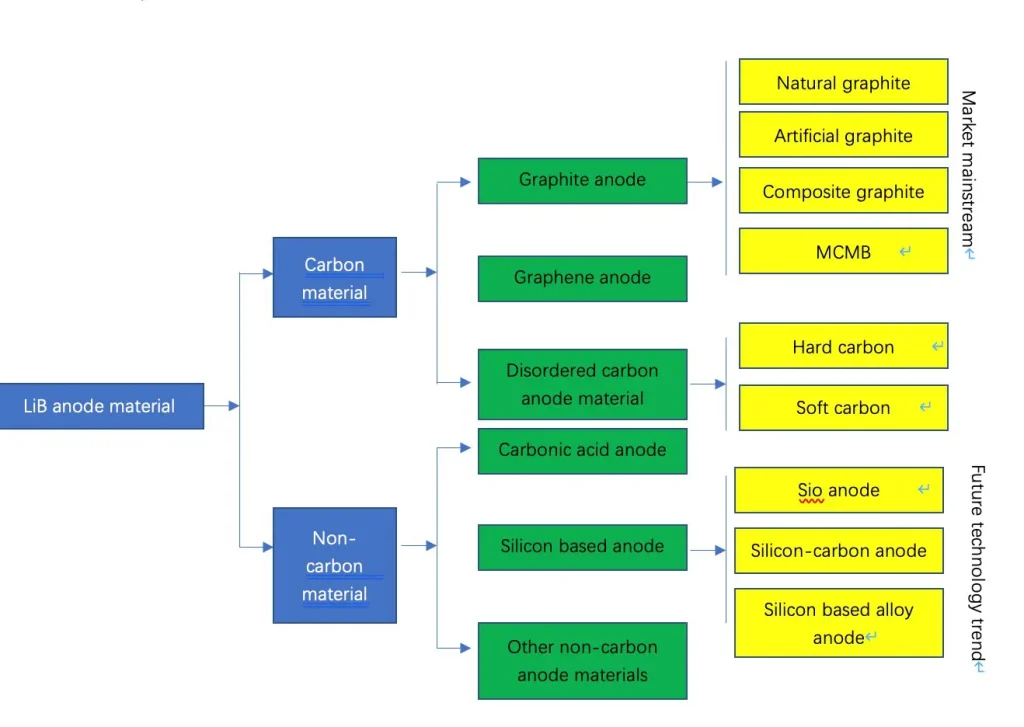
مواد الأنودتنقسم بشكل رئيسي إلى فئتين: مواد كربونية ومواد غير كربونية. يشير الكربون إلى الأنظمة القائمة على الكربون، والتي تشمل بشكل رئيسي كريات الكربون المتوسطة، الجرافيت الصناعي، الجرافيت الطبيعي والكربون الصلب. في الوقت الحالي، تعتبر مواد الأنود الكربونية، وخاصة الجرافيت الصناعي والجرافيت الطبيعي، هي الأكثر استخداماً على نطاق واسع في الصناعات. تشمل المواد غير الكربونية بشكل رئيسي المواد القائمة على السيليكون، المواد القائمة على القصدير، الليثيوم Titanate، وغيرها. من بينها، تُعتبر مواد الأنود القائمة على السيليكون هي الأهداف البحثية الرئيسية لمصنعي مواد الأنود الرئيسيين حالياً، وتعتبر واحدة من مواد الأنود الجديدة الأكثر احتمالاً للتطبيق على نطاق واسع في المستقبل.
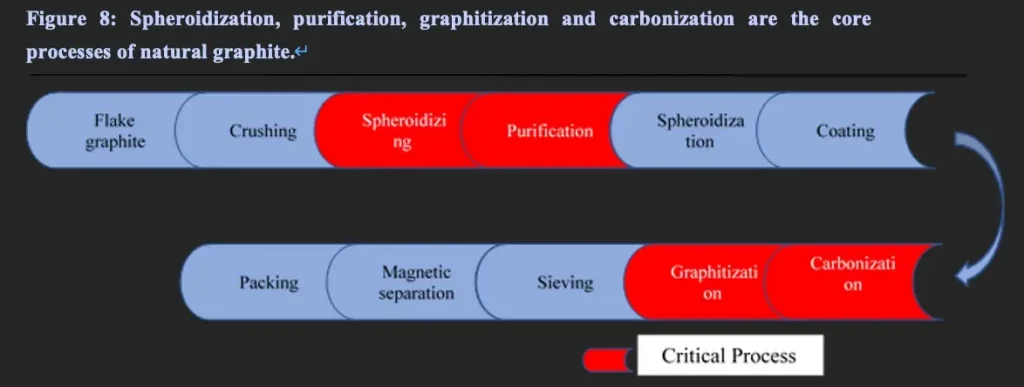
معالجة الجرافيت الطبيعي
مادة الأنود من الجرافيت الطبيعي هي جرافيت رقيق طبيعي كمادة خام، بعدالطحن، التصنيف، التكرير،التنقية، معالجة السطح وعمليات أخرى تم إعدادها من مادة الكاثود.
عملية إعداد مادة الأنود من الجرافيت الصناعي
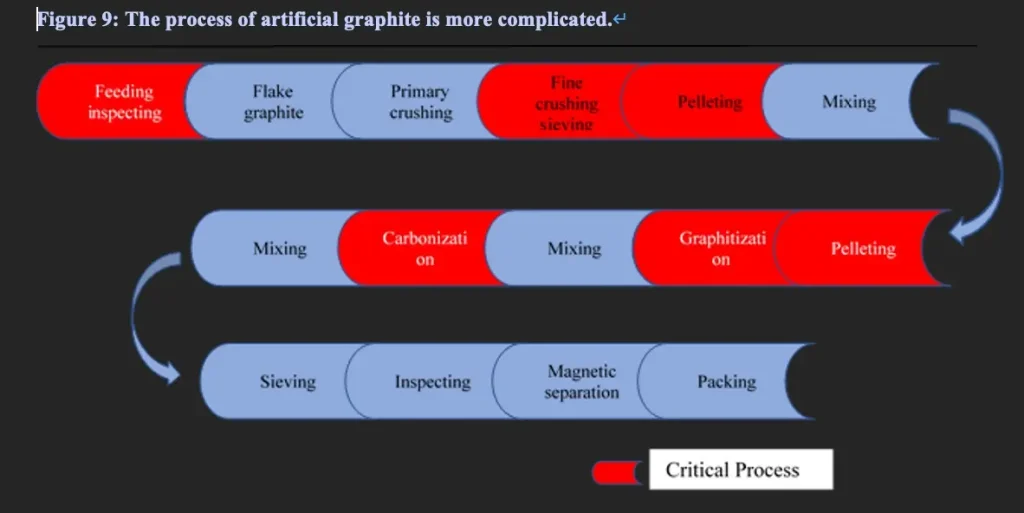
Artificial graphite manufacturing process can be divided into four steps, more than ten small procedures, granulation and graphitization is the key.
يمكن تقسيم عملية إنتاج مادة الأنود من الجرافيت الصناعي إلى أربع خطوات:
1) المعالجة المسبقة
2) التشكيل
3) الجرفنة
4) الطحن الكروي والفحص.
Among the four steps, crushing and screening are relatively simple, and granulation and graphitization are the two links that reflect the technical threshold and production level of the anode industry.
Specific to the production process, firstly, one or more of the coke and conductive particles, carbon nanotubes, carbon black, acetylene black are premixed, and then the mixed material and carbon are sintered and coated once, and the prepared particles are graphitized. Graphitized materials and resin materials for secondary coating; Surface treatment with solvent, centrifugation, precipitation and other methods to separate solid particles from the solvent, and then carbonization, 5-20um particles, to obtain a high rate of carbon anode material. In this method, by mixing and fabricating particles, the particles are coated twice to fill the inner shell of the material, so that the internal structure of the material is stable, so that the carbon anode material has the advantages of high rate performance, high pressure compaction, high specific capacity and so on.
(1) المعالجة المسبقة
Graphite raw material (needle coke or petroleum coke) is mixed with binder for air milling (crushing).According to the different products, the graphite raw materials and adhesive (graphitization) according to different proportions, the mixing ratio is 100 :(5~20), the material through the vacuum feeding machine into the hopper, and then the hopper into the air flow mill for air الطحن, الطحن 5~10mm diameter of the raw and auxiliary materials to 5-10 microns. After air الطحن, cyclone dust collector is used to collect the required particle size materials, the dust collection rate is about 80%, the tail gas is filtered by the filter core filter and discharged, the dust removal efficiency is more than 99%. The material of the filter element is the filter cloth with pores less than 0.2 micron, which can intercept all the dust above 0.2 micron. The fan control system is in negative pressure state.
الفرق: pretreatment mill is divided into mechanical mill and jet mill, now the mainstream is jet mill. There are more kinds of adhesives, such as petroleum asphalt, coal asphalt, phenolic resin or epoxy resin.
(2) التكوير/التكوير الثانوي
التكوير is a key step in artificial graphite processing. التكوير is divided into pyrolysis process and ball milling process.
عملية البيروليز: the intermediate material 1 is put into the reaction reactor and electrically heated according to a certain temperature curve in inert gas atmosphere and under a certain pressure. It is stirred at 200-300 ℃ for 1-3h and then heated to 400-500℃ to obtain the material with a particle size of 10-20mm. The material is cooled and discharged, namely the intermediate material
2. Ball mill and sieve division of labor: vacuum feeding, conveying intermediate material 2 to the ball mill for mechanical ball الطحن, الطحن 10~20mm material into 6~10 micron particle size material, and screening to get intermediate material
3. The material on the screen is transported back to the ball mill by vacuum pipe for ball الطحن.
The size, distribution and morphology of graphite particles affect many properties of anode materials. In general, the smaller the particle size, the better the rate performance and cycle life, but the first efficiency and compaction density (affecting the volume energy density and specific capacity) are worse, and vice versa. Reasonable particle size distribution (mixing large particles with small particles, later process) can improve the specific capacity of the negative electrode. The particle morphology also has a great influence on the rate and low temperature performance.
التكوير الثانوي: small particles have large specific surface area, more channels and shorter paths for lithium ion migration, good rate performance, and large particles have high compaction density and large capacity. How to take into account the advantages of large and small particles, and achieve high capacity and high rate at the same time? The answer is to take secondary granulation. Using the base material such as small grain petroleum coke and needle coke, by adding coating materials and additives, under the condition of high temperature agitation, by controlling the material proportion, temperature rise curve and agitation speed, the small grain base material can be granulated twice, and the product with larger grain size can be obtained. Compared with the product of the same particle size, the secondary granulation can effectively improve the liquid retention performance of the material and reduce the expansion coefficient of the material (there are concave holes between small particles and small particles), shorten the diffusion path of lithium ions, improve the rate performance, but also improve the high and low temperature performance and cycling performance of the material.
الاختلافات: The secondary granulation process has high barriers, many types of coating materials and additives, and is prone to problems such as uneven coating or coating shedding, or poor coating effect, etc. It is an important process for high-end artificial graphite.
(3) تحويل إلى غرافيت
الرسومات is the orderly transformation of thermodynamically unstable carbon atoms from chaotic layer structure to graphite crystal structure by thermal activation. Therefore, high temperature heat treatment (HTT) is used in the graphitization process to provide energy for atomic rearrangement and structural transformation. In order to improve the graphitization degree of refractory carbon materials, catalysts can also be added.
للحصول على تأثير تحويل أفضل إلى غرافيت، يحتاج الأمر إلى القيام بثلاثة جوانب:
1. إتقان طريقة تحميل المواد المقاومة والمواد في الفرن (التحميل الأفقي، التحميل العمودي، الانزلاق والتحميل المختلط، إلخ)، ويمكن ضبط المسافة بين المواد وفقًا للأداء المختلف للمواد المقاومة؛
2. according to the different capacity and product specifications of the graphitization furnace, different power curve is used to control the rate of rise and fall in the process of graphitization;
3, in specific circumstances, in the ingredients to add catalyst, improve the degree of graphitization, that is, “catalytic graphitization”.
الاختلافات: Different qualities of artificial graphite have different heating and cooling rates, holding time, catalysts, etc. It is expected that the types of graphitization furnaces used are different, resulting in relatively large differences in performance and cost. الرسومات separated from the front-end and back-end processes, especially the heating and cooling process, is basically programmed, but the graphitization time is long and the equipment investment is large, so more outsourced processing is required, and there is no risk of technology leakage.
(4) الكربنة المغلفة
الكربنة المغلفة: الكربنة المغلفة uses a graphite-like carbon material as a “core”, and coats a layer of uniform amorphous carbon material on its surface to form particles similar to a “core-shell” structure. The precursors of commonly used amorphous carbon materials include low-temperature pyrolysis carbon materials such as phenolic resin, pitch, and citric acid. The interlayer spacing of amorphous carbon materials is larger than that of graphite, which can improve the diffusion performance of lithium ions in it. SEI film, improve the first effect, cycle life, etc.
الاختلافات: Different manufacturers choose different precursors and different heating procedures, so that the thickness and uniformity of the coating layer are also different, so the product cost and performance will also be different.
(5) الفرز/التحسين
تُنقل المواد المحولة إلى الجرافين إلى مطحنة الكرات بواسطة الفراغ، ثم تخضع للخليط الفيزيائي وطحن الكرات. يتم فرزها باستخدام منخل جزيئي 270، ويتم فحص المادة تحت المنخل وقياسها وتعبئتها وتخزينها. تُطحن المادة الموجودة على المنخل بشكل إضافي لتلبية متطلبات حجم الجسيمات ثم تُنخل.

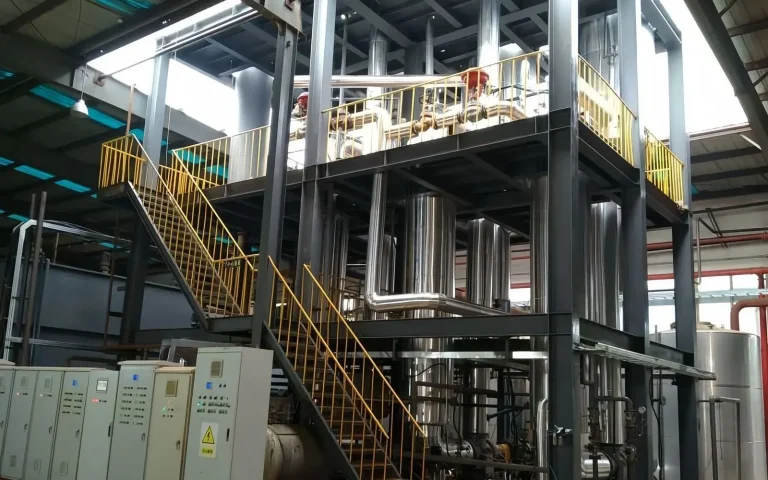
يمكننا تقديم حل لاستخراج الليثيوم المباشر (DLE) لاسترداد الليثيوم من مياه بحيرات الملح
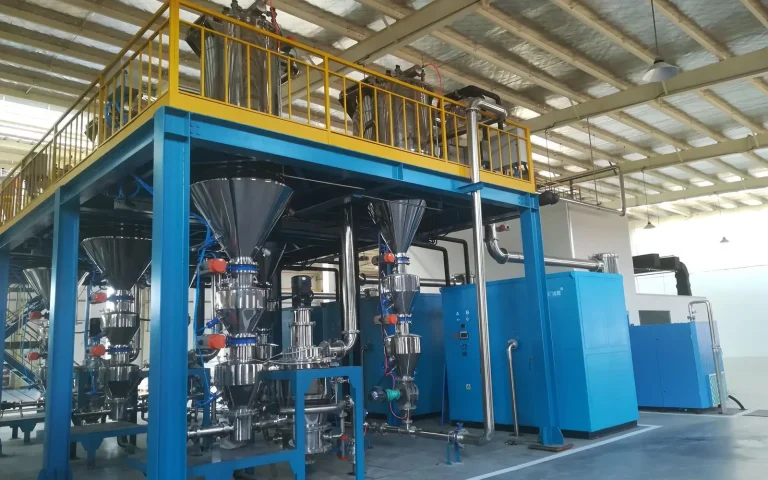
الأنود المعتمد على السيليكون هو نوع من مواد الأنود المركب عن طريق دمج السيليكون
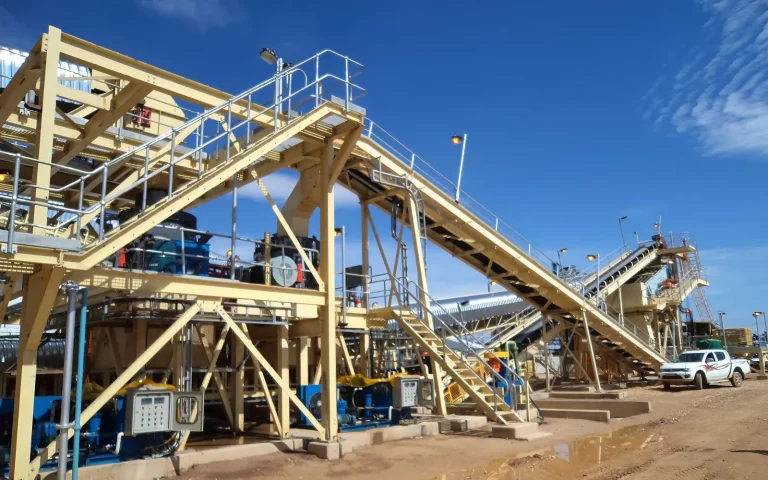
يعتبر تسريب الأحواض خيارًا جيدًا لصاحب المشروع لبدء المرحلة الأولية لتوفير الاستثمار
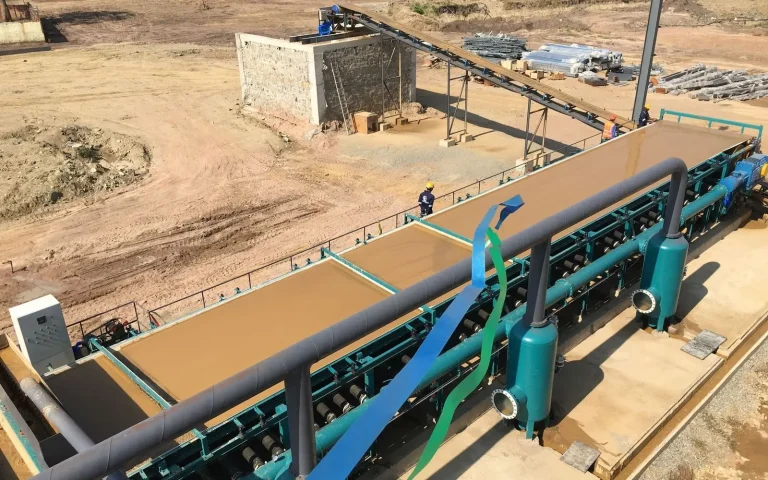
تعد عملية الذهب CIL (الكربون في عملية التشفير) طريقة شائعة جدًا لمعالجة خام الذهب من نوع الأكسيد عالي الدرجة
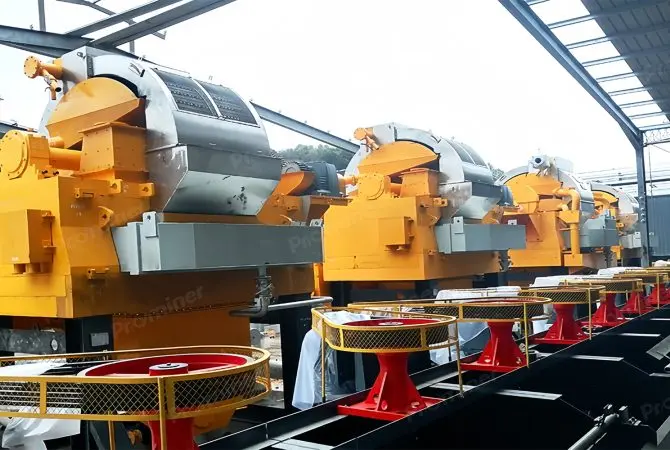
يمكن أن توفر بروماينر أنواعًا مختلفة من الفواصل المغناطيسية HIMS (فاصل مغناطيسي عالي الكثافة)
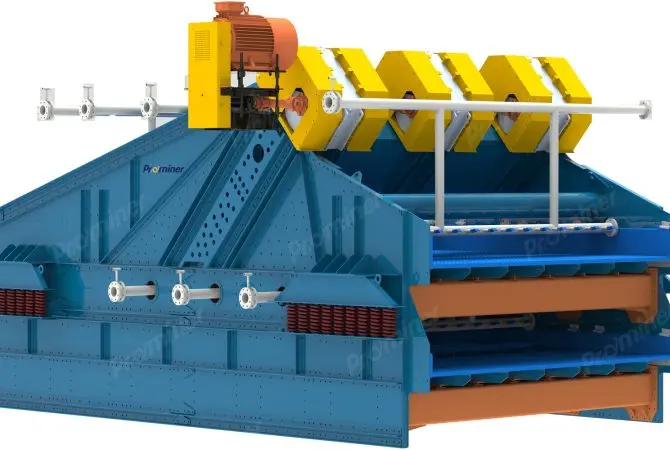
يمكن لشركة بروماينر توفير جميع أنواع الشاشات الخطية لتصنيف المعادن، وتقسيم المواد، وإزالة المياه
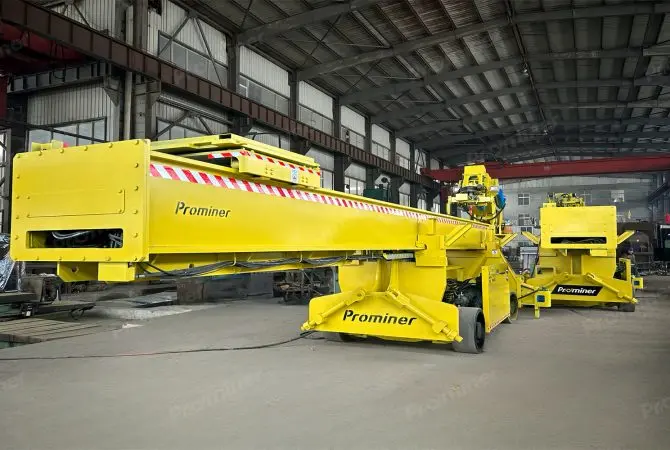
يمكننا تصميم وتصنيع آلة إعادة توسيع المطحنة (أو ما يسمى بمناور إعادة توسيع المطحنة)
لمعرفة المزيد عن منتجاتنا وحلولنا، يرجى ملء النموذج أدناه وسيتواصل معك أحد خبرائنا قريبًا
مشروع فحص الذهب بقدرة 3000 طن يوميًا في مقاطعة شاندونغ
2500 طن يوميًا من فحص خام الليثيوم في سيتشوان
Fax: (+86) 021-58779592
العنوان: الغرفة 606، مبنى D3، المرحلة الثانية، مركز أعمال تشوانشا، 777 لونغ، طريق ميواوشوان، المنطقة الجديدة باودونغ، شنغهاي، الصين
حقوق الطبع والنشر © 2023. بروماينر (شنغهاي) لتكنولوجيا التعدين المحدودة.