如何为不同类型的金矿选择最有利可图的技术?
选择最具利润的技术以处理不同类型的金矿石是一个复杂的决策,需要对地质、冶金、环境和经济因素进行全面评估。黄金提取和加工技术的盈利能力取决于矿石类型、矿物学、品位、基础设施和市场动态。以下是一些指导这一选择过程的步骤:
矿石特性描述:
- 理解矿石类型:不同的金矿类型包括易磨矿、难选矿、与硫化物相关的矿石、含碳矿石或复杂矿石。每种类型都需要特定的加工技术。
- 矿物学:分析矿物成分(例如,金颗粒大小、解离特征以及相关矿物如黄铁矿、砷辉矿或石英)。
- 品位:评估每吨矿石的金含量(高品位矿石通常需要与低品位矿石不同的方法)。
- 难熔性:确定金是否锁定在硫化矿物或含碳材料中,这可能需要先进的技术,如焙烧、压力氧化或生物氧化。
2. 评估每种矿石类型的加工选项:
- 常见的金提取技术包括:
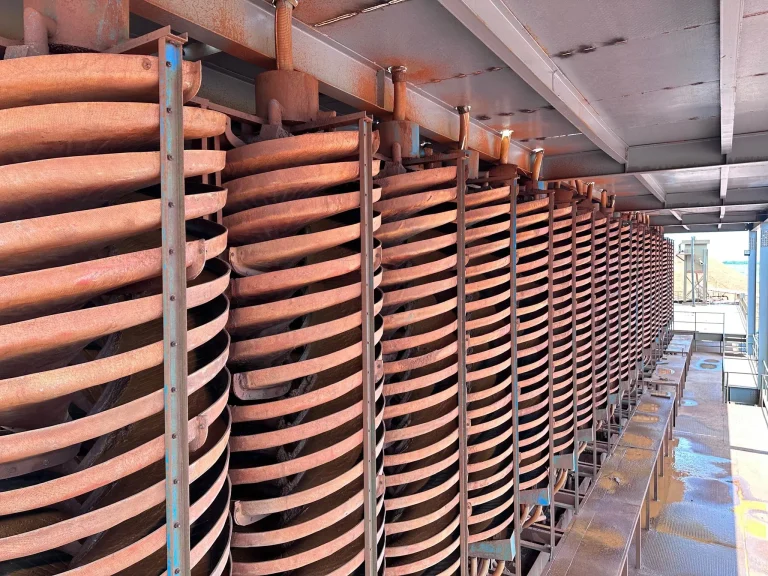
- 重力分离:最适合在自然浮选矿中的粗金。
- 浮选:适合与硫化物有关的黄金或细小金颗粒。
- 氰化浸出(CIL/CIP): Common for free-milling ores and low-grade ores with free gold. It can also follow flotation for refractory ores.
- Autoclave (Pressure Oxidation): Ideal for refractory ores containing sulfide minerals.
- 焙烧: Used to oxidize sulfides or carbonaceous materials.
- Bio-Oxidation: A lower-cost alternative to autoclave for refractory ores.
- Selective Chlorination or Other Novel Methods: Often applied to complex ores.
- Match the technology to ore characteristics and processing requirements.
3. Consider Economic Factors:
- Capex vs. Opex: Evaluate capital expenditure (CAPEX) for new infrastructure vs. operational expenditure (OPEX) for running the process.
- 回收率: Choose technologies that ensure maximum gold recovery while minimizing losses. Profitability often hinges on improving recovery efficiencies.
- 作业规模: Some technologies are better suited for large-scale operations, while others are more appropriate for small or medium-scale mines.
- Market Price of Gold: Assess profitability considering prevailing and forecasted gold prices.
4. Environmental and Legal Considerations:
- Assess environmental impacts and local regulations on tailings disposal, water use, emissions, and toxicity.
- Ensure compliance with cyanide or sulfur-based disposal methods if these chemicals are used.
- Evaluate technologies with lower environmental footprints, such as bioleaching or closed-system operations.
5. Test and Pilot Studies:
- Conduct metallurgical test work on ore samples to evaluate the performance of different technologies. Key tests include:
- Gravity separation tests
- Flotation tests
- Cyanidation tests (batch leaching and adsorption studies)
- Diagnostic leaching (for refractory ores)
- Pilot-scale studies allow evaluation in realistic operating conditions.
6. Infrastructure and Accessibility:
- Assess the availability of water, energy, transportation, and equipment near the mine site.
- Remote areas may favor easy-to-implement methods like gravity separation or heap leaching over complex technologies.
7. Consider Synergies and Hybrid Technologies:
- In some cases, combining multiple technologies can maximize profitability. Example:
- Gravity separation followed by cyanide leaching for high-grade free-milling ores.
- Flotation followed by autoclave treatment for sulfide-associated refractory ores.
- Hybrid processing flowsheets may offer higher recovery rates for complex ores.
8. Profitability Modeling:
- Use financial models to calculate key metrics:
- Net Present Value (NPV)
- Internal Rate of Return (IRR)
- Payback period
- Breakeven analysis
- Account for metal recovery, processing costs, and initial investment.
结论:
The most profitable technology for gold ore processing depends on an integrated assessment of ore type, recovery rates, costs, and market conditions. Collaborate with experienced metallurgists, geologists, engineers, and environmental experts to make an informed decision. Ultimately, piloting and testing are essential before committing to full-scale implementation.
常见问题解答
A: 矿物特性即使在同一矿体内也会有显著差异。专业测试(如化学分析、XRD和SEM)可以确保流程图针对您的特定矿石品位和解离粒度进行优化。这可以防止昂贵的设备不匹配,并保证您的项目获得尽可能最高的回收率。
A: 我们保持核心易损件(如破碎机衬板、筛网和磨球)的永久库存。对于国际客户,我们在初次购买时提供建议的“2年备件清单”。技术支持通过远程视频提供24/7服务,对于复杂的维护需求可以安排现场访问。
A: 是的。我们派遣一支由高级机械和电气工程师组成的团队到现场,监督设备的安装、调试和负载测试。我们还为您的当地操作员提供全面的现场培训,以确保长期顺利运行。
A: 当然。我们专注于提供EPCM(工程、采购、施工管理)服务。这包括从初步矿石测试和矿山设计到设备制造、物流以及全面的工厂集成,确保从绿地项目到生产的无缝过渡。