

Мы можем предоставить решение прямой экстракции лития (DLE) для восстановления лития из рассолов соленого озера



Анодные материалыв основном делятся на две категории: углеродные материалы и неуглеродные материалы. Углерод относится к углеродосодержащим системам, преимущественно включающим мезоуглеродные микросферы, искусственный графит, натуральный графит и твердый углерод. В настоящее время наиболее широко используемыми углеродными материалами являются анодные материалы на основе графита, среди которых искусственный графит и натуральный графит имеют масштабные промышленные применения. Неуглеродные материалы в основном включают кремнеземные материалы, оловянные материалы, литий-титанат и т. д. Среди них анодные материалы на основе кремния являются основными объектами исследования крупных производителей анодных материалов в настоящее время и являются одними из новых анодных материалов, которые с наибольшей вероятностью будут применены в широком масштабе в будущем.
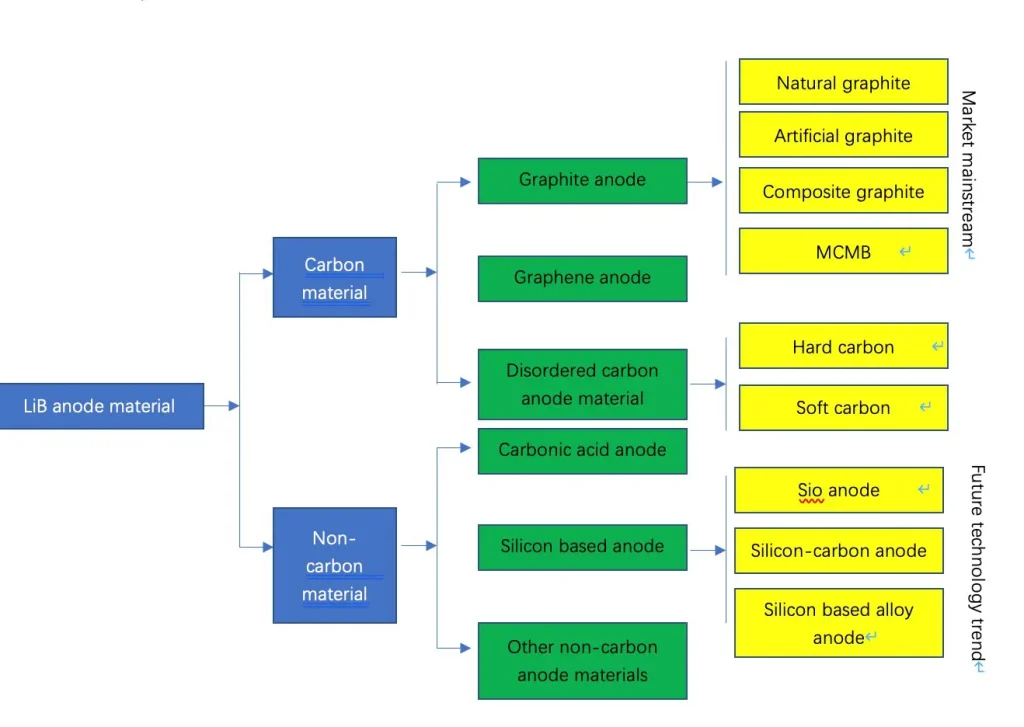
Обработка натурального графита
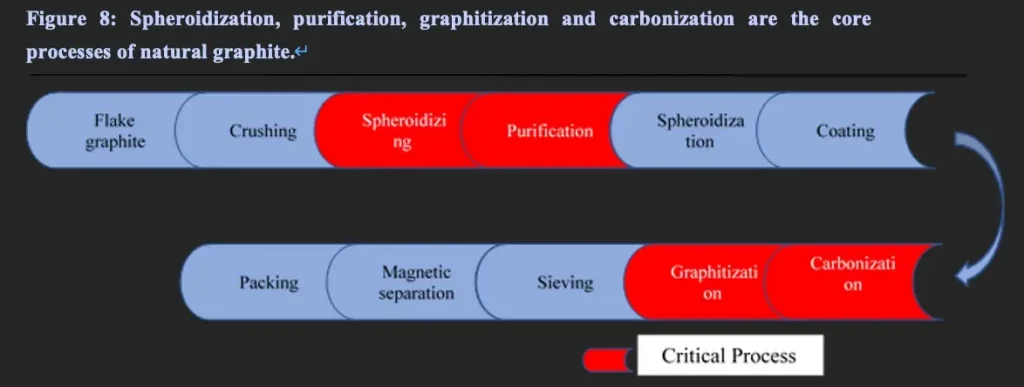
Анодный материал из натурального графита является натуральным флейковым графитом в качестве сырья, который послеизмельчения, сортировки, сферонаполнения,очистки, обработки поверхности и других процессов подготавливается из катодного материала.
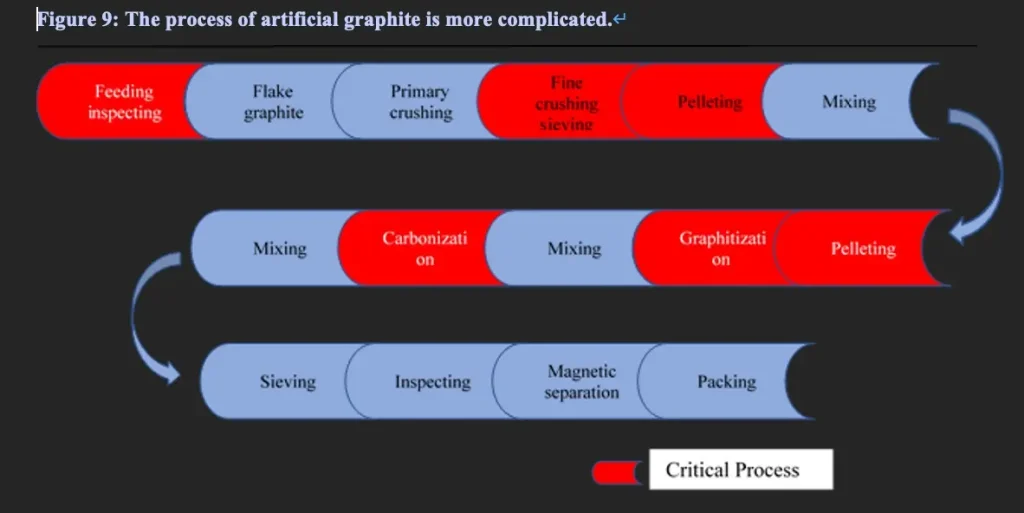
Процесс подготовки анодного материала из искусственного графита
Artificial graphite manufacturing process can be divided into four steps, more than ten small procedures, granulation and graphitization is the key.
Производственный процесс анодного материала из искусственного графита может быть разделен на четыре этапа:
1) предварительная обработка
2) грануляция
3) графитизация
4) шаровая мельница и сортировка.
Among the four steps, crushing and screening are relatively simple, and granulation and graphitization are the two links that reflect the technical threshold and production level of the anode industry.
Specific to the production process, firstly, one or more of the coke and conductive particles, carbon nanotubes, carbon black, acetylene black are premixed, and then the mixed material and carbon are sintered and coated once, and the prepared particles are graphitized. Graphitized materials and resin materials for secondary coating; Surface treatment with solvent, centrifugation, precipitation and other methods to separate solid particles from the solvent, and then carbonization, 5-20um particles, to obtain a high rate of carbon anode material. In this method, by mixing and fabricating particles, the particles are coated twice to fill the inner shell of the material, so that the internal structure of the material is stable, so that the carbon anode material has the advantages of high rate performance, high pressure compaction, high specific capacity and so on.
(1) Предварительная обработка
Graphite raw material (needle coke or petroleum coke) is mixed with binder for air milling (crushing).According to the different products, the graphite raw materials and adhesive (graphitization) according to different proportions, the mixing ratio is 100 :(5~20), the material through the vacuum feeding machine into the hopper, and then the hopper into the air flow mill for air измельчения, измельчения 5~10mm diameter of the raw and auxiliary materials to 5-10 microns. After air измельчения, cyclone dust collector is used to collect the required particle size materials, the dust collection rate is about 80%, the tail gas is filtered by the filter core filter and discharged, the dust removal efficiency is more than 99%. The material of the filter element is the filter cloth with pores less than 0.2 micron, which can intercept all the dust above 0.2 micron. The fan control system is in negative pressure state.
Разница: pretreatment mill is divided into mechanical mill and jet mill, now the mainstream is jet mill. There are more kinds of adhesives, such as petroleum asphalt, coal asphalt, phenolic resin or epoxy resin.
(2) Грануляция/Вторичная грануляция
Грануляция is a key step in artificial graphite processing. Грануляция is divided into pyrolysis process and ball milling process.
Процесс пиролиза: the intermediate material 1 is put into the reaction reactor and electrically heated according to a certain temperature curve in inert gas atmosphere and under a certain pressure. It is stirred at 200-300 ℃ for 1-3h and then heated to 400-500℃ to obtain the material with a particle size of 10-20mm. The material is cooled and discharged, namely the intermediate material
2. Ball mill and sieve division of labor: vacuum feeding, conveying intermediate material 2 to the ball mill for mechanical ball измельчения, измельчения 10~20mm material into 6~10 micron particle size material, and screening to get intermediate material
3. The material on the screen is transported back to the ball mill by vacuum pipe for ball измельчения.
The size, distribution and morphology of graphite particles affect many properties of anode materials. In general, the smaller the particle size, the better the rate performance and cycle life, but the first efficiency and compaction density (affecting the volume energy density and specific capacity) are worse, and vice versa. Reasonable particle size distribution (mixing large particles with small particles, later process) can improve the specific capacity of the negative electrode. The particle morphology also has a great influence on the rate and low temperature performance.
Вторичная грануляция: small particles have large specific surface area, more channels and shorter paths for lithium ion migration, good rate performance, and large particles have high compaction density and large capacity. How to take into account the advantages of large and small particles, and achieve high capacity and high rate at the same time? The answer is to take secondary granulation. Using the base material such as small grain petroleum coke and needle coke, by adding coating materials and additives, under the condition of high temperature agitation, by controlling the material proportion, temperature rise curve and agitation speed, the small grain base material can be granulated twice, and the product with larger grain size can be obtained. Compared with the product of the same particle size, the secondary granulation can effectively improve the liquid retention performance of the material and reduce the expansion coefficient of the material (there are concave holes between small particles and small particles), shorten the diffusion path of lithium ions, improve the rate performance, but also improve the high and low temperature performance and cycling performance of the material.
Различия: The secondary granulation process has high barriers, many types of coating materials and additives, and is prone to problems such as uneven coating or coating shedding, or poor coating effect, etc. It is an important process for high-end artificial graphite.
(3) Графитизация
Графитизация is the orderly transformation of thermodynamically unstable carbon atoms from chaotic layer structure to graphite crystal structure by thermal activation. Therefore, high temperature heat treatment (HTT) is used in the graphitization process to provide energy for atomic rearrangement and structural transformation. In order to improve the graphitization degree of refractory carbon materials, catalysts can also be added.
Для достижения лучшего эффекта графитизации необходимо учесть три аспекта:
1. Овладеть методом загрузки резистивных материалов и материалов в корзину (горизонтальная загрузка, вертикальная загрузка, смещение и смешанная загрузка и т. д.) и возможность регулировать расстояние между материалами в зависимости от различных характеристик резистивных материалов;
2. according to the different capacity and product specifications of the graphitization furnace, different power curve is used to control the rate of rise and fall in the process of graphitization;
3, in specific circumstances, in the ingredients to add catalyst, improve the degree of graphitization, that is, “catalytic graphitization”.
Различия: Different qualities of artificial graphite have different heating and cooling rates, holding time, catalysts, etc. It is expected that the types of graphitization furnaces used are different, resulting in relatively large differences in performance and cost. Графитизация separated from the front-end and back-end processes, especially the heating and cooling process, is basically programmed, but the graphitization time is long and the equipment investment is large, so more outsourced processing is required, and there is no risk of technology leakage.
(4) Покрытая Карбонизация
Покрытая карбонизация: Покрытая карбонизация uses a graphite-like carbon material as a “core”, and coats a layer of uniform amorphous carbon material on its surface to form particles similar to a “core-shell” structure. The precursors of commonly used amorphous carbon materials include low-temperature pyrolysis carbon materials such as phenolic resin, pitch, and citric acid. The interlayer spacing of amorphous carbon materials is larger than that of graphite, which can improve the diffusion performance of lithium ions in it. SEI film, improve the first effect, cycle life, etc.
Различия: Different manufacturers choose different precursors and different heating procedures, so that the thickness and uniformity of the coating layer are also different, so the product cost and performance will also be different.
(5) Отбор/Дооптимизация
Графитизированные материалы транспортируются в шаровую мельницу с помощью вакуума, затем проходят физическое смешивание и шаровую дробление. Они просеиваются через молекулярное сито с ячейками 270, а материал под ситом проверяется, измеряется, упаковывается и хранится. Материал на сите далее подвергается дроблению в шаровой мельнице, чтобы соответствовать требованиям к размеру частиц, а затем просеивается.

Мы можем предоставить решение прямой экстракции лития (DLE) для восстановления лития из рассолов соленого озера
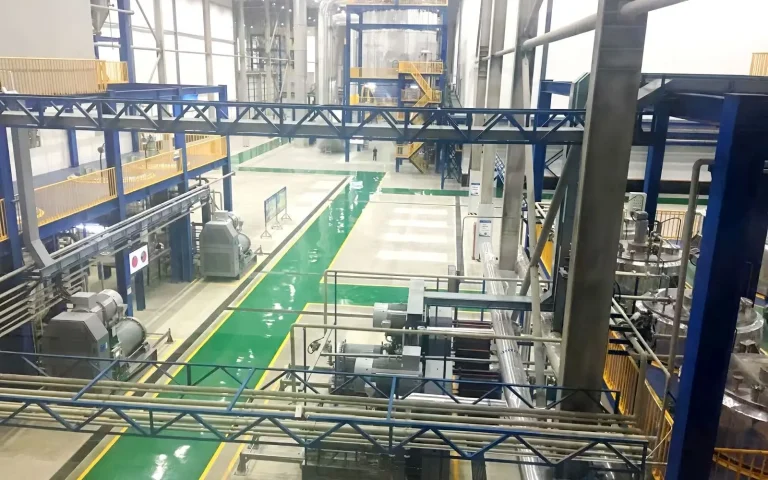
Катодный материал является одним из ключевых материалов, определяющих производительность литий-ионных батарей
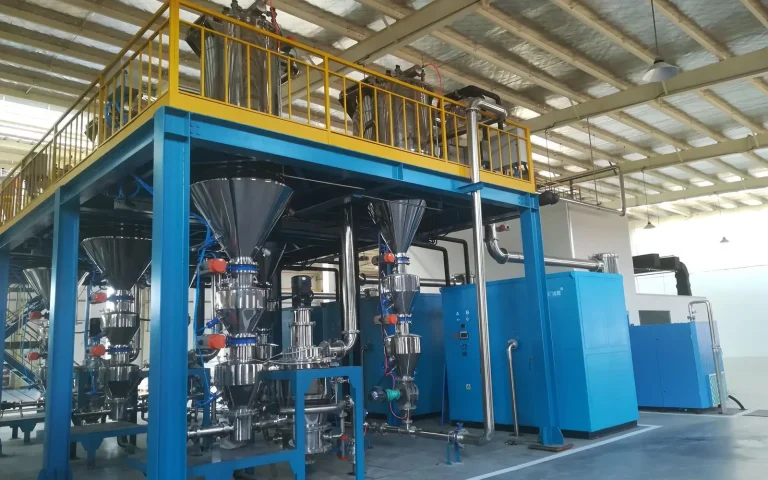
Анод на основе кремния является одним из видов композитных анодных материалов путем комбинирования кремния
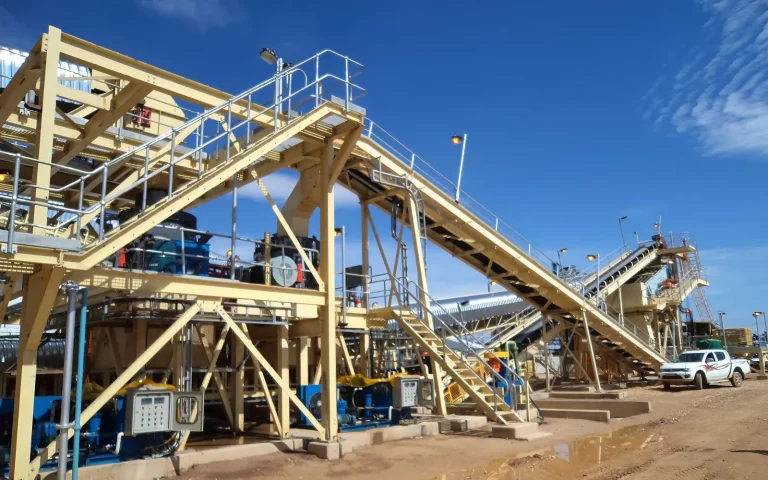
Выщелачивание в чанах является хорошим вариантом для владельца проекта на начальном этапе, чтобы сэкономить инвестиции
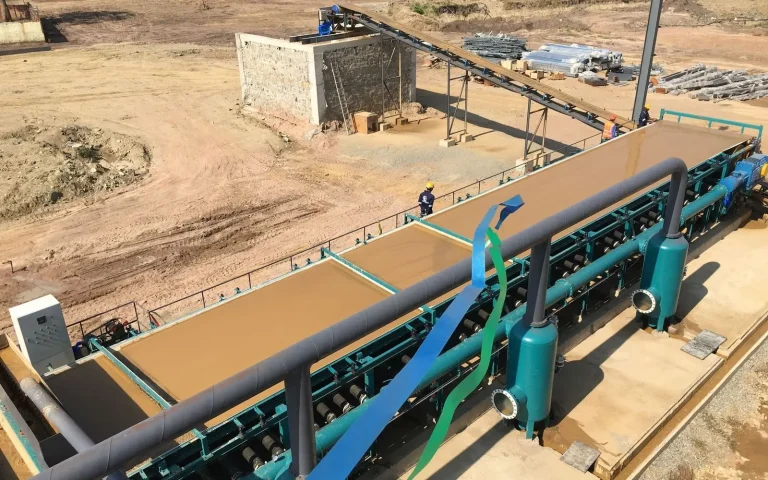
Процесс золотого CIL (углерод в выщелачивании) является очень популярным способом переработки золотоносной руды высокого качества
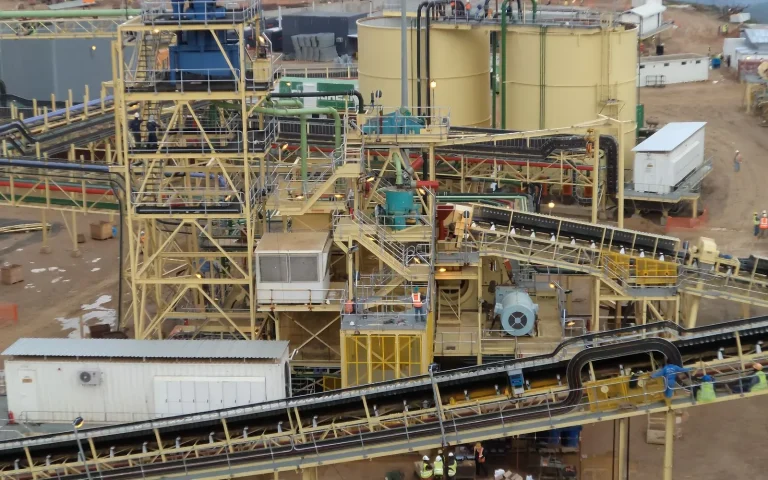
Флотация является наиболее популярным методом переработки в проекте по обработке золотой руды. Поскольку процесс флотации
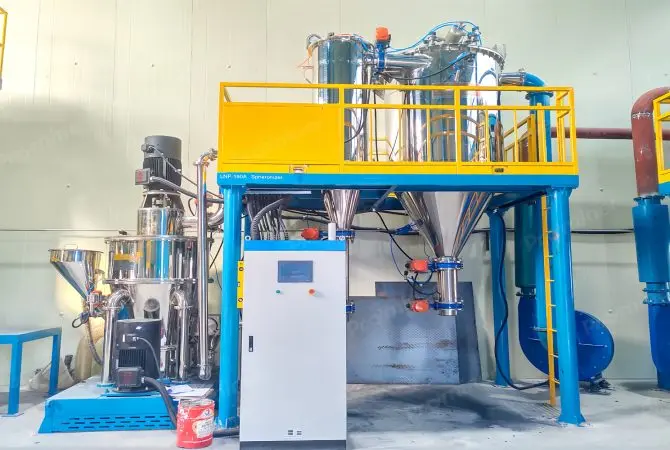
Помимо строгих требований к PSD, анодный графит также требует сферической формы для
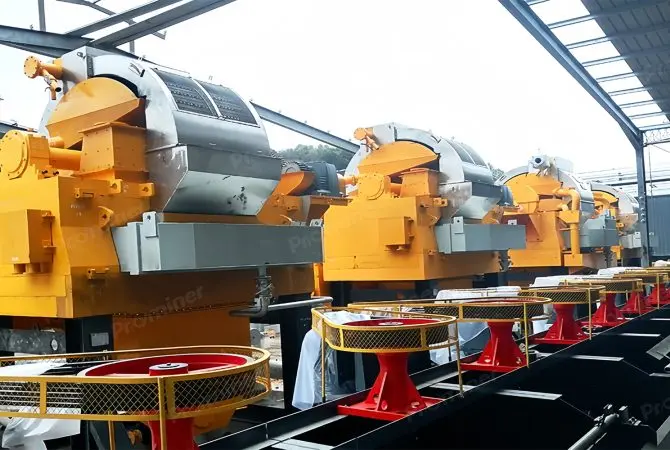
Промайнер может предоставить различные магнитные сепараторы HIMS (магнитный сепаратор с высокой интенсивностью)
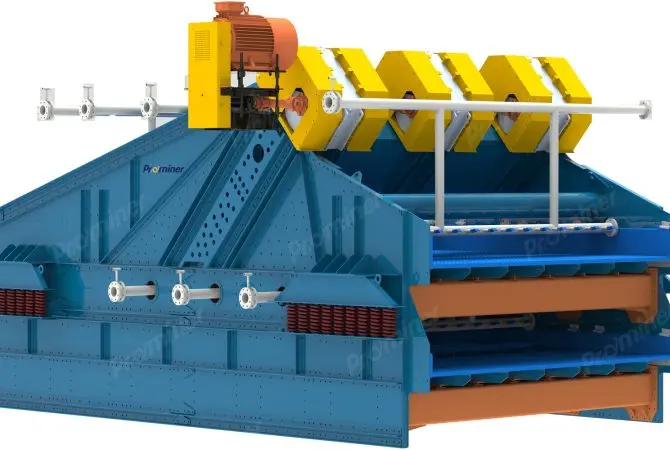
Prominer может предоставить все виды линейных экранов для сортировки минералов, размерения материалов, осушения
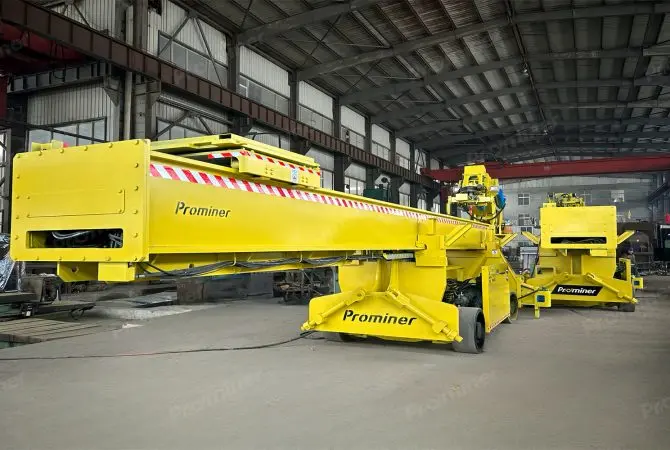
Мы можем спроектировать и произвести машину для перезагрузки мельницы (или манипулятор для перезагрузки мельницы)
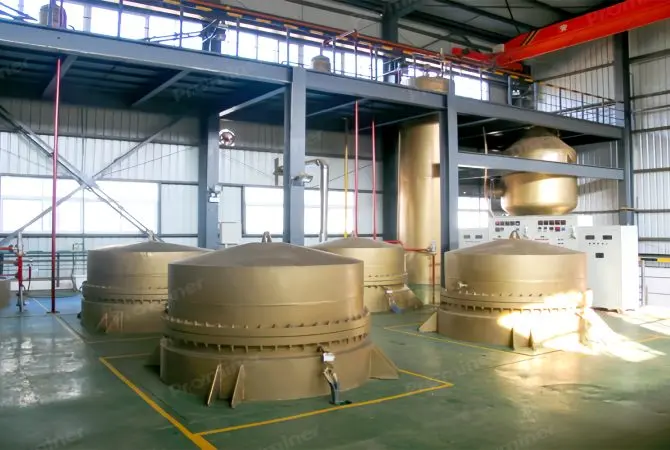
Prominer может спроектировать и предоставить полный комплекс переработки и плавления для проекта CIL золота
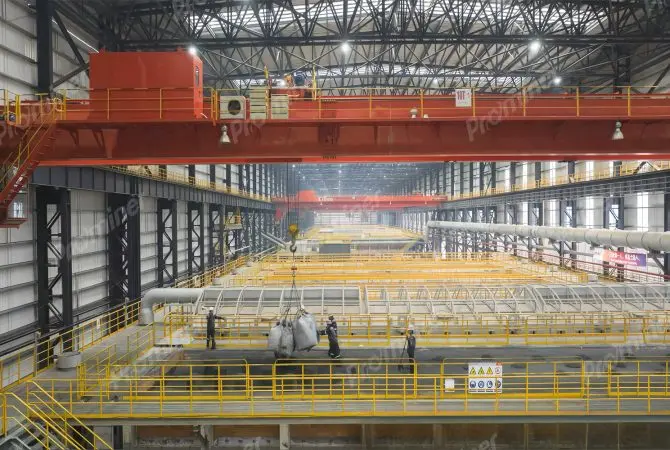
Мы можем предоставить различные типы печей для графитизации для изменения углеродных материалов
Чтобы узнать больше о наших продуктах и решениях, пожалуйста, заполните форму ниже, и один из наших специалистов свяжется с вами в ближайшее время
3000 ТПД проект флотации золота в провинции Шаньдун
2500 ТПД флотации литиевой руды в Сычуани
Fax: (+86) 021-58779592
Адрес: Комната 606, здание D3, фаза II, бизнес-центр Чуансха, 777 Лонг, Мяочуань роад, район Пудунъ, Шанхай, Китай
Авторское право © 2023. Prominer (Шанхай) Mining Technology Co., Ltd.


