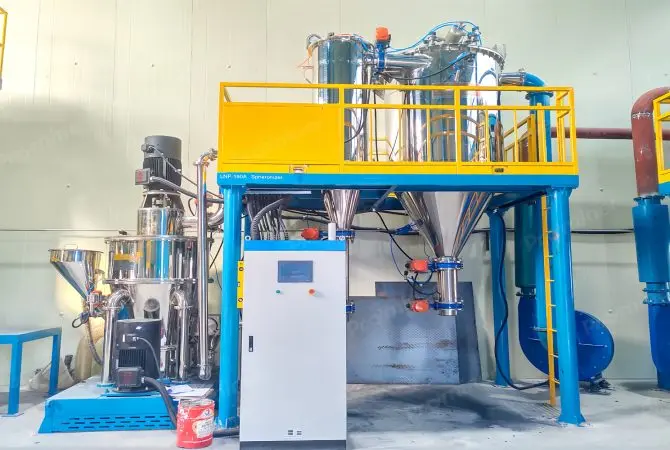
Wir können eine direkte Lithiumextraktionslösung (DLE) bereitstellen, um Lithium aus Salzsee-Brine zurückzugewinnen



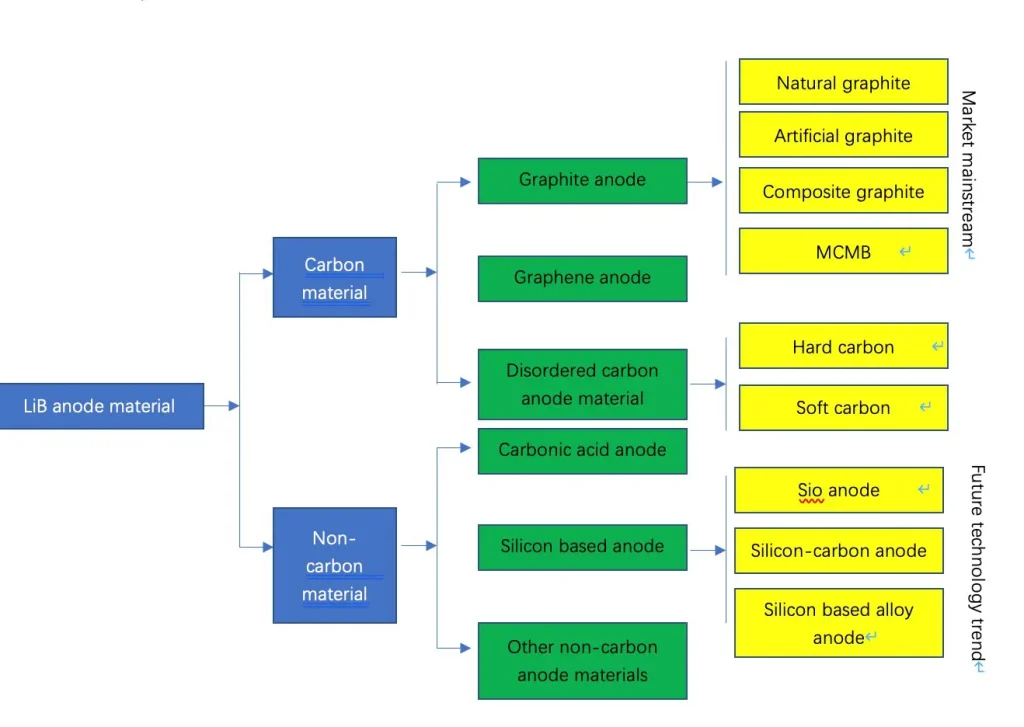
Anodenmaterialiensind hauptsächlich in zwei Kategorien unterteilt: Kohlenstoffmaterialien und Nicht-Kohlenstoffmaterialien. Kohlenstoff bezieht sich auf kohlenstoffbasierte Systeme, hauptsächlich bestehend aus Mesokohlenstoff-Mikrosphären, künstlichem Graphit, natürlichem Graphit und hartem Kohlenstoff. Derzeit sind die am häufigsten verwendeten Kohlenstoffmaterialien Graphitanodenmaterialien, von denen künstlicher Graphit und natürlicher Graphit großflächige industrielle Anwendungen haben. Nicht-Kohlenstoffmaterialien umfassen hauptsächlich silikonbasierte Materialien, zinnbasierte Materialien, Lithiumtitanat usw. Unter ihnen sind silikonbasierte Anodenmaterialien die Hauptforschungsobjekte bedeutender Hersteller von Anodenmaterialien und gehören zu den neuen Anodenmaterialien, die in Zukunft am wahrscheinlichsten großflächig angewendet werden.
Verarbeitung von natürlichem Graphit
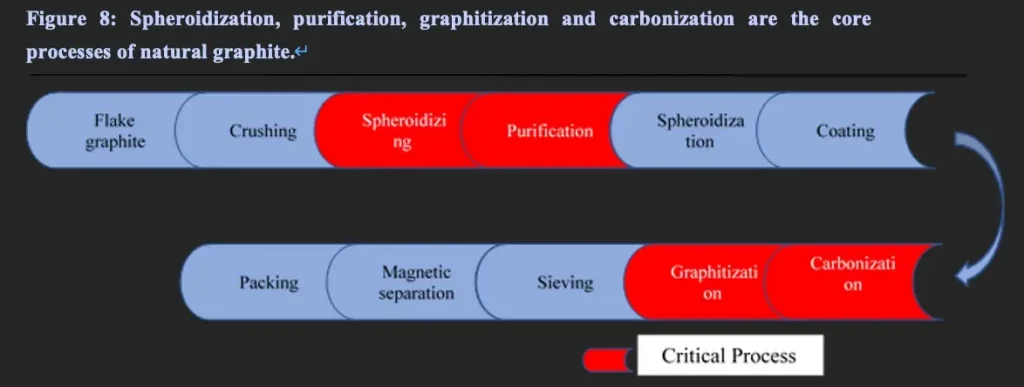
Natürliche Graphitanodenmaterialien sind natürliche Flake-Graphite als Rohmaterial, die nachMahlen, Klassifizierung, Spheroidisierung,Reinigung, Oberflächenbehandlung und anderen Prozessen aus dem Kathodenmaterial hergestellt werden.
Herstellungsprozess von künstlichem Graphitanodenmaterial
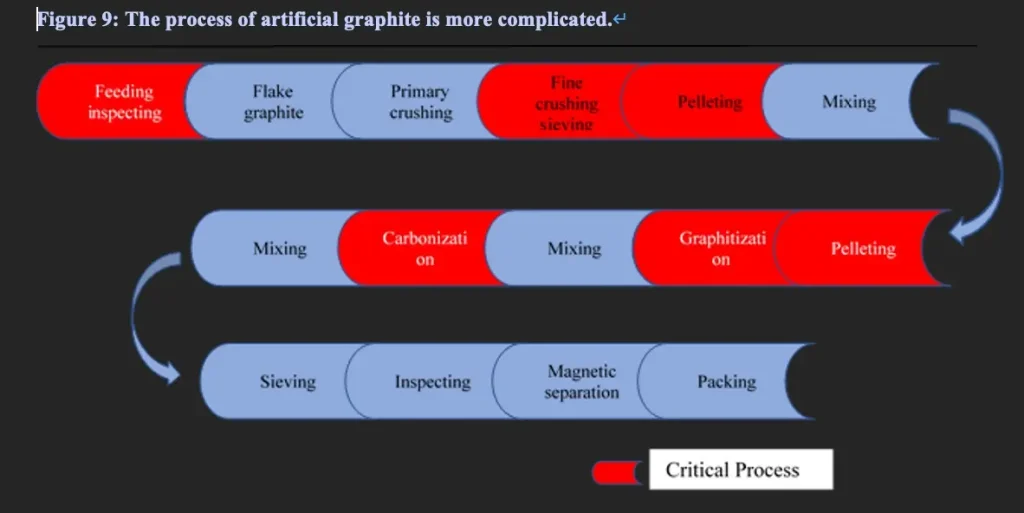
Artificial graphite manufacturing process can be divided into four steps, more than ten small procedures, granulation and graphitization is the key.
Der Produktionsprozess des künstlichen Graphitanodenmaterials kann in vier Schritte unterteilt werden:
1) Vorbehandlung
2) Die Granulation
3) Graphitierung
4) Mahlen und Sieben.
Among the four steps, crushing and screening are relatively simple, and granulation and graphitization are the two links that reflect the technical threshold and production level of the anode industry.
Specific to the production process, firstly, one or more of the coke and conductive particles, carbon nanotubes, carbon black, acetylene black are premixed, and then the mixed material and carbon are sintered and coated once, and the prepared particles are graphitized. Graphitized materials and resin materials for secondary coating; Surface treatment with solvent, centrifugation, precipitation and other methods to separate solid particles from the solvent, and then carbonization, 5-20um particles, to obtain a high rate of carbon anode material. In this method, by mixing and fabricating particles, the particles are coated twice to fill the inner shell of the material, so that the internal structure of the material is stable, so that the carbon anode material has the advantages of high rate performance, high pressure compaction, high specific capacity and so on.
(1) Vorverarbeitung
Graphite raw material (needle coke or petroleum coke) is mixed with binder for air milling (crushing).According to the different products, the graphite raw materials and adhesive (graphitization) according to different proportions, the mixing ratio is 100 :(5~20), the material through the vacuum feeding machine into the hopper, and then the hopper into the air flow mill for air Mahlen, Mahlen 5~10mm diameter of the raw and auxiliary materials to 5-10 microns. After air Mahlen, cyclone dust collector is used to collect the required particle size materials, the dust collection rate is about 80%, the tail gas is filtered by the filter core filter and discharged, the dust removal efficiency is more than 99%. The material of the filter element is the filter cloth with pores less than 0.2 micron, which can intercept all the dust above 0.2 micron. The fan control system is in negative pressure state.
Unterschied: pretreatment mill is divided into mechanical mill and jet mill, now the mainstream is jet mill. There are more kinds of adhesives, such as petroleum asphalt, coal asphalt, phenolic resin or epoxy resin.
(2) Die Granulation/Sekundärgranulation
Die Granulation is a key step in artificial graphite processing. Die Granulation is divided into pyrolysis process and ball milling process.
Pyrolyseprozess: the intermediate material 1 is put into the reaction reactor and electrically heated according to a certain temperature curve in inert gas atmosphere and under a certain pressure. It is stirred at 200-300 ℃ for 1-3h and then heated to 400-500℃ to obtain the material with a particle size of 10-20mm. The material is cooled and discharged, namely the intermediate material
2. Ball mill and sieve division of labor: vacuum feeding, conveying intermediate material 2 to the ball mill for mechanical ball Mahlen, Mahlen 10~20mm material into 6~10 micron particle size material, and screening to get intermediate material
3. The material on the screen is transported back to the ball mill by vacuum pipe for ball Mahlen.
The size, distribution and morphology of graphite particles affect many properties of anode materials. In general, the smaller the particle size, the better the rate performance and cycle life, but the first efficiency and compaction density (affecting the volume energy density and specific capacity) are worse, and vice versa. Reasonable particle size distribution (mixing large particles with small particles, later process) can improve the specific capacity of the negative electrode. The particle morphology also has a great influence on the rate and low temperature performance.
Sekundäre Die Granulation: small particles have large specific surface area, more channels and shorter paths for lithium ion migration, good rate performance, and large particles have high compaction density and large capacity. How to take into account the advantages of large and small particles, and achieve high capacity and high rate at the same time? The answer is to take secondary granulation. Using the base material such as small grain petroleum coke and needle coke, by adding coating materials and additives, under the condition of high temperature agitation, by controlling the material proportion, temperature rise curve and agitation speed, the small grain base material can be granulated twice, and the product with larger grain size can be obtained. Compared with the product of the same particle size, the secondary granulation can effectively improve the liquid retention performance of the material and reduce the expansion coefficient of the material (there are concave holes between small particles and small particles), shorten the diffusion path of lithium ions, improve the rate performance, but also improve the high and low temperature performance and cycling performance of the material.
Unterschiede: The secondary granulation process has high barriers, many types of coating materials and additives, and is prone to problems such as uneven coating or coating shedding, or poor coating effect, etc. It is an important process for high-end artificial graphite.
(3) Graphitierung
Graphitierung is the orderly transformation of thermodynamically unstable carbon atoms from chaotic layer structure to graphite crystal structure by thermal activation. Therefore, high temperature heat treatment (HTT) is used in the graphitization process to provide energy for atomic rearrangement and structural transformation. In order to improve the graphitization degree of refractory carbon materials, catalysts can also be added.
Um einen besseren Graphitierungseffekt zu erzielen, müssen drei Aspekte berücksichtigt werden:
1. Beherrschung der Methode zum Laden von Widerstandsmaterialien und Materialien in den Ofen (horizontaler Ladebetrieb, vertikaler Ladebetrieb, Versatz- und Mischladung usw.) und die Möglichkeit, den Abstand zwischen den Materialien entsprechend den unterschiedlichen Eigenschaften der Widerstandsmaterialien anzupassen;
2. according to the different capacity and product specifications of the graphitization furnace, different power curve is used to control the rate of rise and fall in the process of graphitization;
3, in specific circumstances, in the ingredients to add catalyst, improve the degree of graphitization, that is, “catalytic graphitization”.
Unterschiede: Different qualities of artificial graphite have different heating and cooling rates, holding time, catalysts, etc. It is expected that the types of graphitization furnaces used are different, resulting in relatively large differences in performance and cost. Graphitierung separated from the front-end and back-end processes, especially the heating and cooling process, is basically programmed, but the graphitization time is long and the equipment investment is large, so more outsourced processing is required, and there is no risk of technology leakage.
(4) Beschichtete Karbonisierung
Beschichtete Karbonisierung: Beschichtete Karbonisierung uses a graphite-like carbon material as a “core”, and coats a layer of uniform amorphous carbon material on its surface to form particles similar to a “core-shell” structure. The precursors of commonly used amorphous carbon materials include low-temperature pyrolysis carbon materials such as phenolic resin, pitch, and citric acid. The interlayer spacing of amorphous carbon materials is larger than that of graphite, which can improve the diffusion performance of lithium ions in it. SEI film, improve the first effect, cycle life, etc.
Unterschiede: Different manufacturers choose different precursors and different heating procedures, so that the thickness and uniformity of the coating layer are also different, so the product cost and performance will also be different.
(5) Screening/Dotierung
Die graphitisierten Materialien werden vakuumiert in die Kugelmühle transportiert und unterziehen sich dann einer physikalischen Mischung und Kugelmühle. Sie werden mit einem 270-Mesh-Molekularsieb gesiebt, und das Material unter dem Sieb wird inspiziert, gemessen, verpackt und lagert. Das Material auf dem Sieb wird weiter gekugelmühlt, um die Partikelgrößenanforderungen zu erfüllen, und anschließend gesiebt.

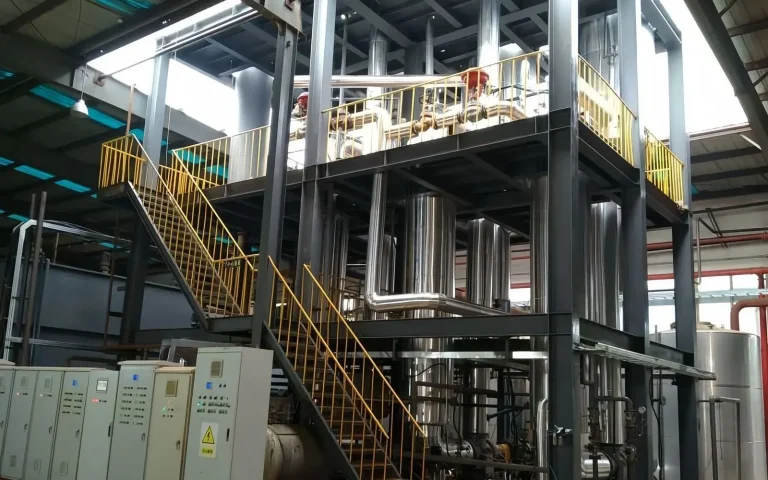
Wir können eine direkte Lithiumextraktionslösung (DLE) bereitstellen, um Lithium aus Salzsee-Brine zurückzugewinnen
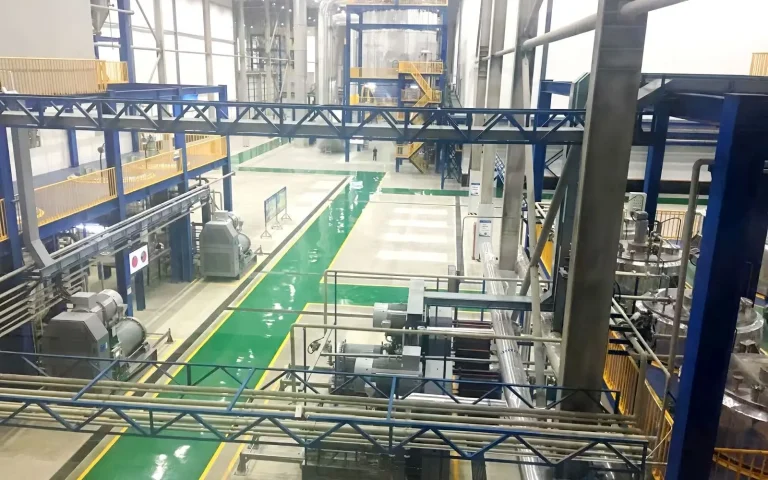
Kathodenmaterial ist eines der entscheidenden Materialien, um die Leistung von Lithium-Ionen-Batterien zu bestimmen.
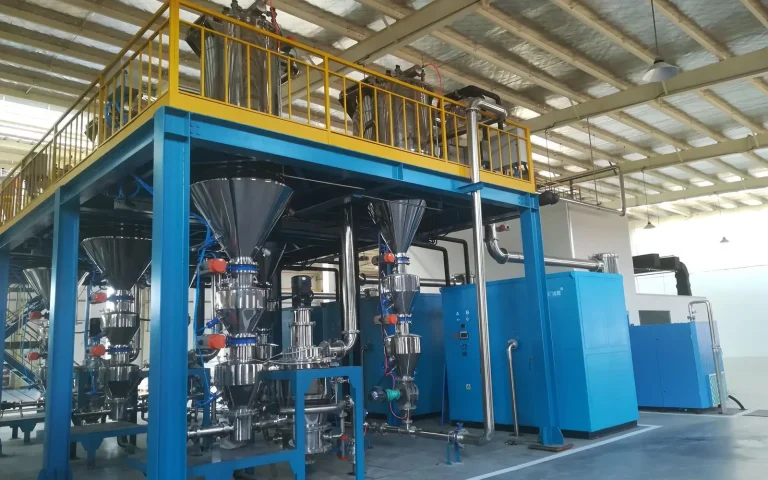
Siliziumbasierte Anoden sind eine Art von Verbundanodenmaterial durch Zusammensetzung von Silizium
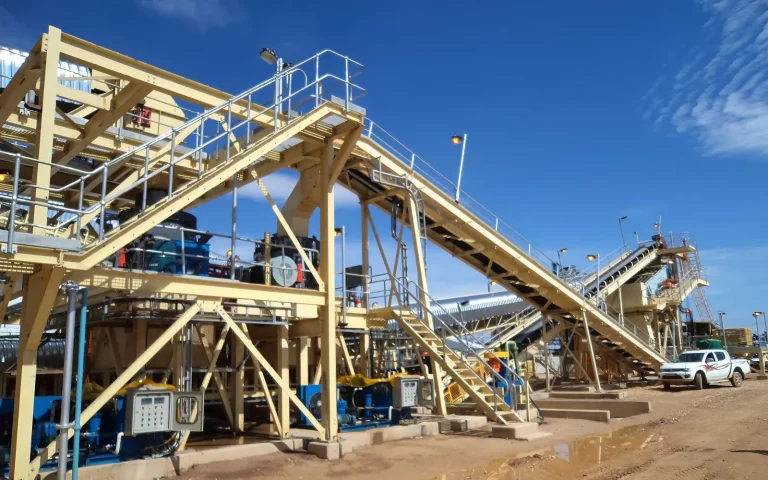
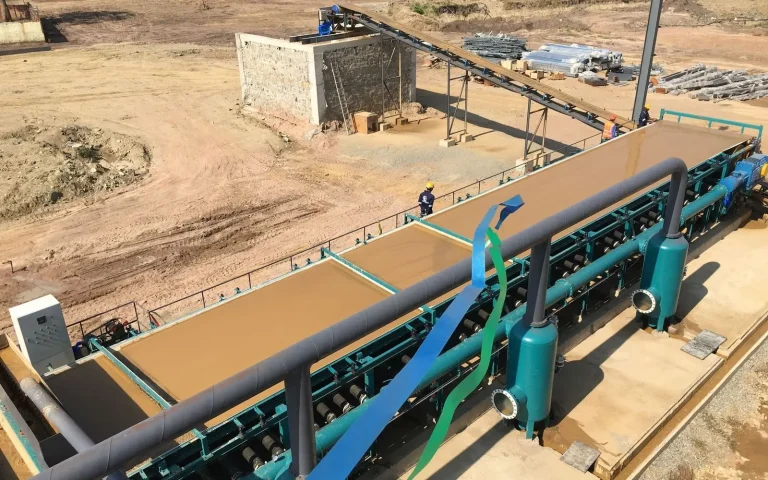
Vat-Leaching ist eine gute Option für den Projektinhaber, um in der Anfangsphase zu starten und Investitionen zu sparen.
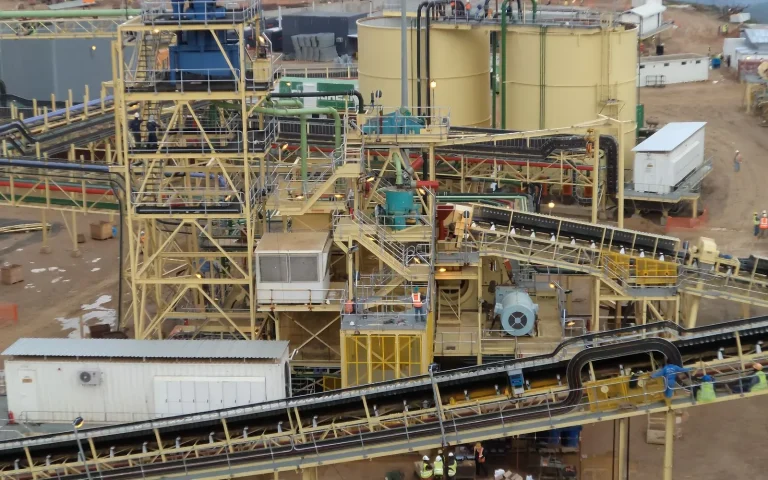
Der Gold-CIL-Prozess (Kohlenstoff in der Auslaugung) ist eine sehr beliebte Methode zur Verarbeitung von goldhaltigem Erz hoher Qualität.
Die Flotation ist die beliebteste Verarbeitungsart im Goldbergbau-Projekt. Denn der Flotationsprozess
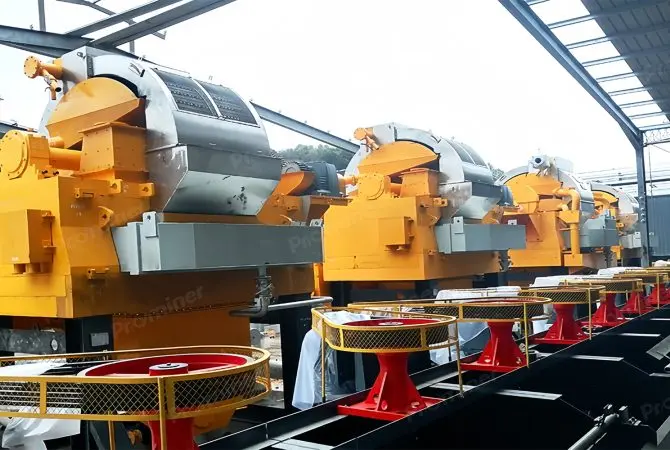
Prominer kann verschiedene HIMS (Hochintensitäts-Magnetseparatoren) bereitstellen
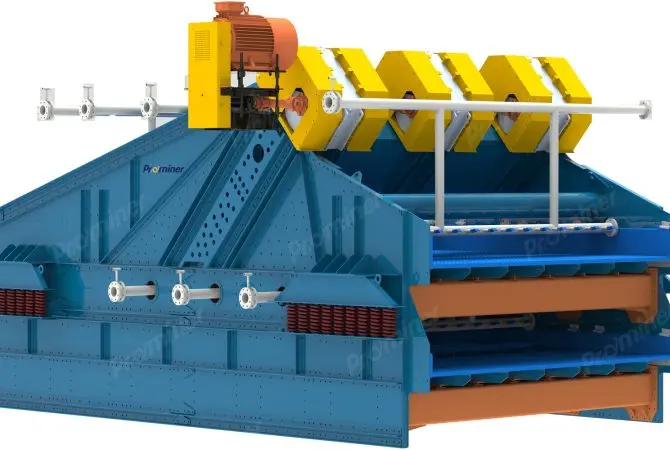
Prominer kann alle Arten von linearen Sieben für Mineralbewertungen, Materialgrößen und Entwässerung bereitstellen
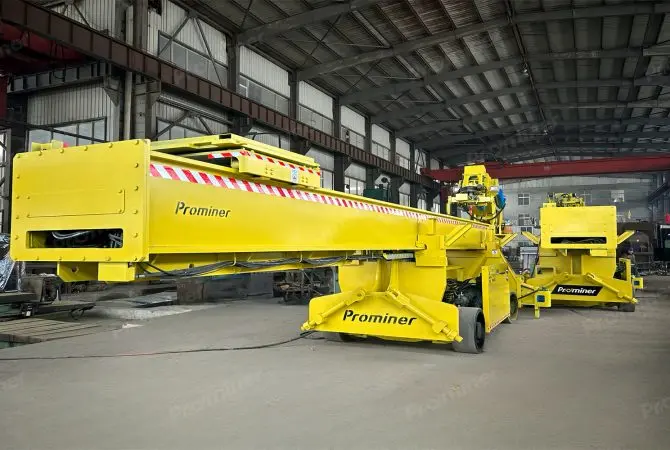
Wir können die Mühlen-Relining-Maschine (auch als Mühlen-Relining-Manipulator bezeichnet) entwerfen und herstellen
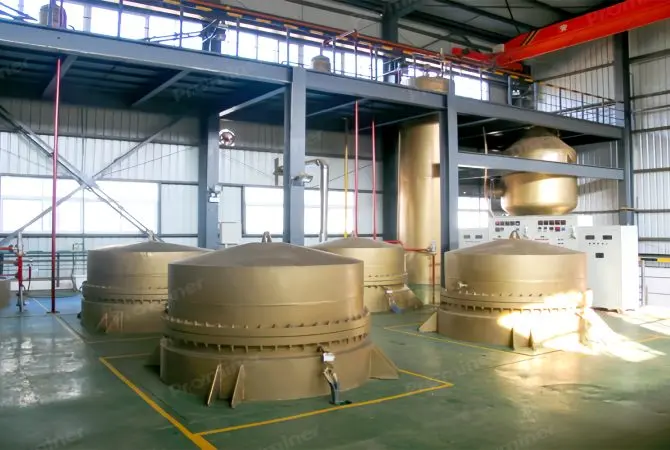
Prominer kann das gesamte Raffinerie- und Schmelzsystem für das Gold CIL-Projekt entwerfen und bereitstellen
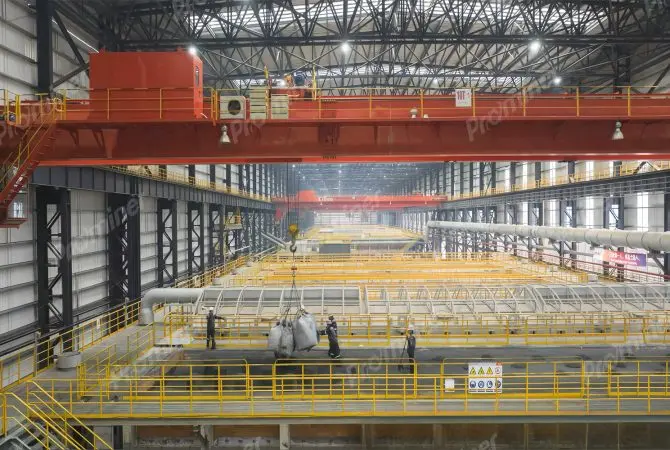
Wir können verschiedene Arten von Graphitierungsöfen für die Umwandlung von Kohlenstoffmaterial bereitstellen
Um mehr über unsere Produkte und Lösungen zu erfahren, füllen Sie bitte das untenstehende Formular aus, und einer unserer Experten wird sich in Kürze bei Ihnen melden.
3000 TPD Goldflotationsprojekt in der Provinz Shandong
2500 TPD Lithiumerzfloation in Sichuan
Fax: (+86) 021-58779592
Adresse: Zimmer 606, Gebäude D3, Phase II, Chuansha Business Center, 777 Long, Miaochuan Straße, Pudong New Area, Shanghai, China
Urheberrecht © 2023. Prominer (Shanghai) Mining Technology Co., Ltd.