How to Select the Most Profitable Technology for Different Gold Ore Types?
Selecting the most profitable technology for processing different types of gold ores is a complex decision that requires thorough evaluation of geological, metallurgical, environmental, and economic factors. The profitability of gold extraction and processing technologies depends on the ore type, mineralogy, grade, infrastructure, and market dynamics. Here are some steps to guide this selection process:
1. Ore Characterization:
- Understanding Ore Type: Different gold ore types include free-milling, refractory, sulfide-associated, carbonaceous, or complex ores. Each type requires specific processing technologies.
- 鉱物学: Analyze the mineral composition (e.g., gold particle size, liberation characteristics, and associated minerals like pyrite, arsenopyrite, or quartz).
- 品位: Assess the gold content per ton of ore (high-grade ores often require different methods than low-grade ores).
- 難溶性: Determine if the gold is locked in sulfide minerals or carbonaceous material, which may necessitate advanced technologies like roasting, pressure oxidation, or bio-oxidation.
2. Evaluate Processing Options for Each Ore Type:
- Common gold extraction technologies include:
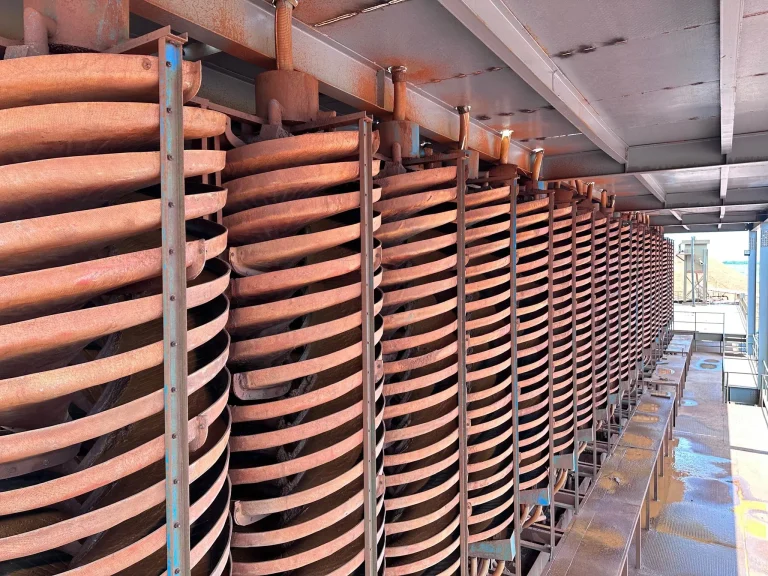
- 重力分離: Best for coarse gold in free-milling ores.
- フローテーション: Suitable for sulfide-associated gold or fine gold particles.
- Cyanide Leaching (CIL/CIP): Common for free-milling ores and low-grade ores with free gold. It can also follow flotation for refractory ores.
- Autoclave (Pressure Oxidation): Ideal for refractory ores containing sulfide minerals.
- 焙煎: Used to oxidize sulfides or carbonaceous materials.
- Bio-Oxidation: A lower-cost alternative to autoclave for refractory ores.
- Selective Chlorination or Other Novel Methods: Often applied to complex ores.
- Match the technology to ore characteristics and processing requirements.
3. Consider Economic Factors:
- Capex vs. Opex: Evaluate capital expenditure (CAPEX) for new infrastructure vs. operational expenditure (OPEX) for running the process.
- 回収率: Choose technologies that ensure maximum gold recovery while minimizing losses. Profitability often hinges on improving recovery efficiencies.
- 事業規模: Some technologies are better suited for large-scale operations, while others are more appropriate for small or medium-scale mines.
- Market Price of Gold: Assess profitability considering prevailing and forecasted gold prices.
4. Environmental and Legal Considerations:
- Assess environmental impacts and local regulations on tailings disposal, water use, emissions, and toxicity.
- Ensure compliance with cyanide or sulfur-based disposal methods if these chemicals are used.
- Evaluate technologies with lower environmental footprints, such as bioleaching or closed-system operations.
5. Test and Pilot Studies:
- Conduct metallurgical test work on ore samples to evaluate the performance of different technologies. Key tests include:
- Gravity separation tests
- Flotation tests
- Cyanidation tests (batch leaching and adsorption studies)
- Diagnostic leaching (for refractory ores)
- Pilot-scale studies allow evaluation in realistic operating conditions.
6. Infrastructure and Accessibility:
- Assess the availability of water, energy, transportation, and equipment near the mine site.
- Remote areas may favor easy-to-implement methods like gravity separation or heap leaching over complex technologies.
7. Consider Synergies and Hybrid Technologies:
- In some cases, combining multiple technologies can maximize profitability. Example:
- Gravity separation followed by cyanide leaching for high-grade free-milling ores.
- Flotation followed by autoclave treatment for sulfide-associated refractory ores.
- Hybrid processing flowsheets may offer higher recovery rates for complex ores.
8. Profitability Modeling:
- Use financial models to calculate key metrics:
- Net Present Value (NPV)
- Internal Rate of Return (IRR)
- Payback period
- Breakeven analysis
- Account for metal recovery, processing costs, and initial investment.
結論:
The most profitable technology for gold ore processing depends on an integrated assessment of ore type, recovery rates, costs, and market conditions. Collaborate with experienced metallurgists, geologists, engineers, and environmental experts to make an informed decision. Ultimately, piloting and testing are essential before committing to full-scale implementation.
FAQ(よくある質問)
A:鉱物の特性は、同じ鉱床内でも大きく異なります。プロのテスト(化学分析、XRD、SEMなど)は、フローチャートが特定の鉱石グレードと解放サイズに最適化されていることを保証します。これにより、高価な機器のミスマッチを防ぎ、プロジェクトのために可能な限り高い回収率を保証します。
A: 当社は、コア摩耗部品(例えば、クラッシャーライナー、スクリーンメッシュ、グラインディングメディア)の常時在庫を維持しています。国際的な顧客には、初回購入時に推奨される「2年用予備部品リスト」を提供しています。技術サポートは、リモートビデオを通じて24時間年中無休で利用可能であり、複雑なメンテナンスニーズには現地訪問を手配することもできます。
A: はい。私たちは、機器の設置、試運転、負荷テストを監督するために、シニア機械エンジニアと電気エンジニアのチームを現地に派遣します。また、地元のオペレーターが円滑に長期的に運用できるよう、包括的な現地トレーニングも提供します。
A: もちろんです。私たちはEPCM(エンジニアリング、調達、建設管理)サービスを提供することを専門としています。これには、初期の鉱石テストや鉱山設計から、設備製造、物流、フルスケールのプラント統合まで、緑地から生産へのシームレスな移行を確保するすべてが含まれます。