Why HPGR + Ball Mill Circuits Slash Ilmenite Grinding Costs by 28%?
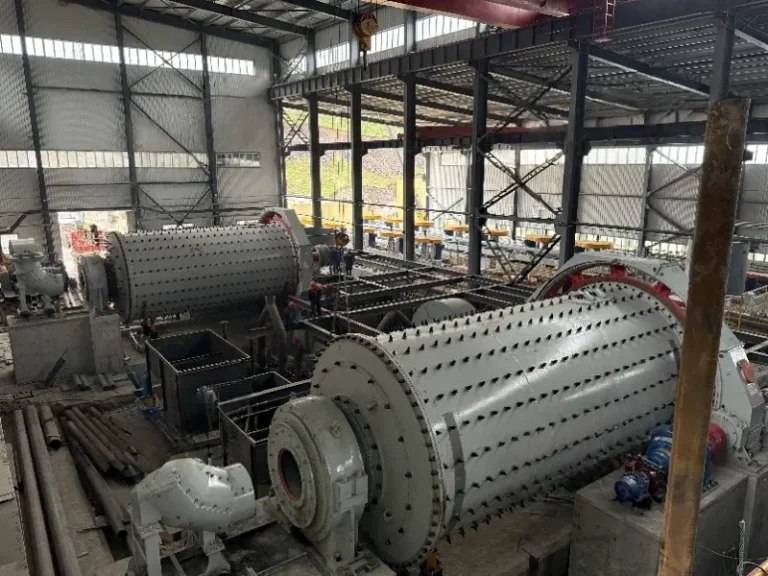
High Pressure Grinding Rolls (HPGR) combined with ball mill circuits have demonstrated significant cost savings in grinding processes such as ilmenite ore milling due to several efficiency-improving factors. Below are some key reasons why these circuits reduce costs by an estimated 28%:
1. Energy Efficiency
- HPGR operates by compressing the material between two counter-rotating rolls under high pressure, causing micro-cracks and weakening the mineral structures. This process is far more energy-efficient than the traditional grinding methods (e.g., SAG mills) typically used before ball mills.
- Using HPGR reduces the energy required to achieve the desired particle size in the ball mill stage because the pre-treated material is weaker and more grindable.
2. Reduced Steel Media Consumption
- HPGR circuits require significantly less grinding media (e.g., steel balls) because much of the material size reduction happens during the compression phase in the HPGR, rather than relying on impact and abrasion in the ball mill. Lower media consumption leads to cost savings on replacement media.
3. Lower Grinding Costs Due to Finer Feed
- HPGR yields a finer product with a more consistent particle size distribution. This finer feed reduces the workload for the ball mill, enabling it to use less energy for milling while improving throughput. Consequently, operating costs are reduced.
4. Improved Mineral Liberation
- The micro-cracking induced by HPGR facilitates better liberation of ilmenite during the ball milling stage, which enhances recovery rates during downstream processing. Efficient mineral liberation can reduce costs further, especially if fewer stages of grinding or separation are needed.
5. Reduced Maintenance and Wear
- HPGRs are designed to have lower wear rates compared to SAG mills or crushers commonly used before ball mills. This translates to lower maintenance costs and reduced downtime, contributing to overall cost savings.
6. Higher Throughput
- The synergistic operation of HPGR and ball mills boosts throughput by effectively pre-treating the material and allowing faster processing in the ball mill. Higher throughput decreases unit processing costs.
7. Lower Water Usage
- HPGR requires less water than traditional wet milling setups since the pre-grinding crushing process does not rely on slurry formation. Reduced water consumption decreases operating costs and environmental impact.
結論:
The combination of HPGR and ball milling creates a high-efficiency grinding circuit, yielding significant reductions in energy consumption, operational costs, media consumption, and maintenance requirements. In the context of ilmenite grinding, these benefits directly lead to cost savings of approximately 28% compared to conventional grinding methods.
FAQ(よくある質問)
A:鉱物の特性は、同じ鉱床内でも大きく異なります。プロのテスト(化学分析、XRD、SEMなど)は、フローチャートが特定の鉱石グレードと解放サイズに最適化されていることを保証します。これにより、高価な機器のミスマッチを防ぎ、プロジェクトのために可能な限り高い回収率を保証します。
A: 当社は、コア摩耗部品(例えば、クラッシャーライナー、スクリーンメッシュ、グラインディングメディア)の常時在庫を維持しています。国際的な顧客には、初回購入時に推奨される「2年用予備部品リスト」を提供しています。技術サポートは、リモートビデオを通じて24時間年中無休で利用可能であり、複雑なメンテナンスニーズには現地訪問を手配することもできます。
A: はい。私たちは、機器の設置、試運転、負荷テストを監督するために、シニア機械エンジニアと電気エンジニアのチームを現地に派遣します。また、地元のオペレーターが円滑に長期的に運用できるよう、包括的な現地トレーニングも提供します。
A: もちろんです。私たちはEPCM(エンジニアリング、調達、建設管理)サービスを提供することを専門としています。これには、初期の鉱石テストや鉱山設計から、設備製造、物流、フルスケールのプラント統合まで、緑地から生産へのシームレスな移行を確保するすべてが含まれます。