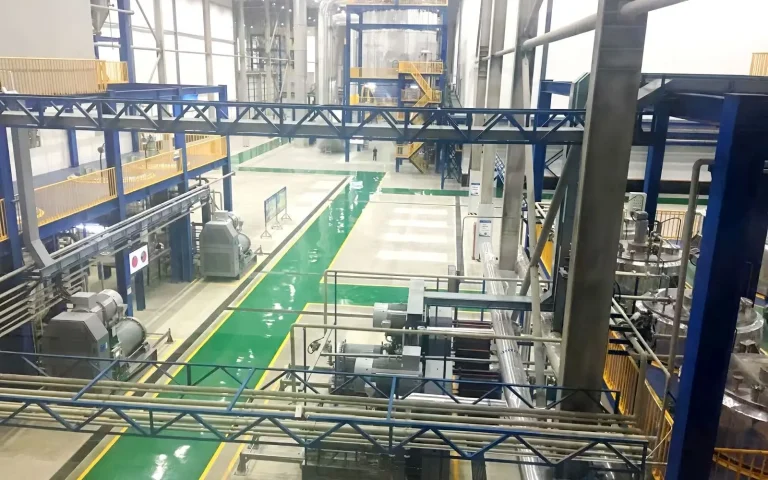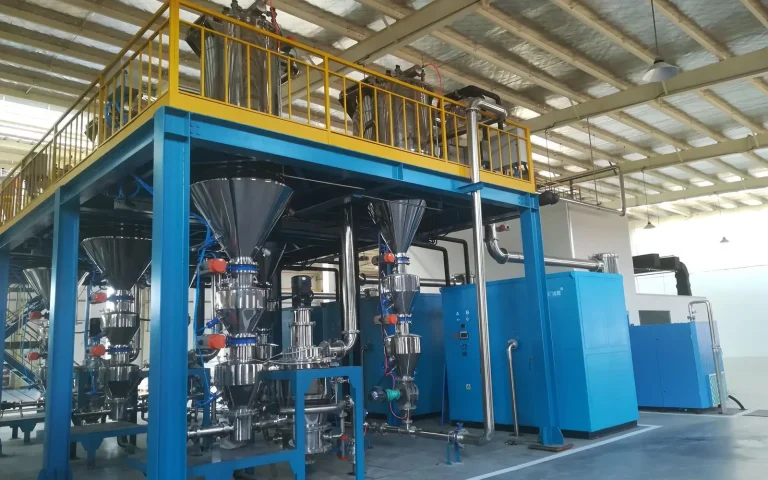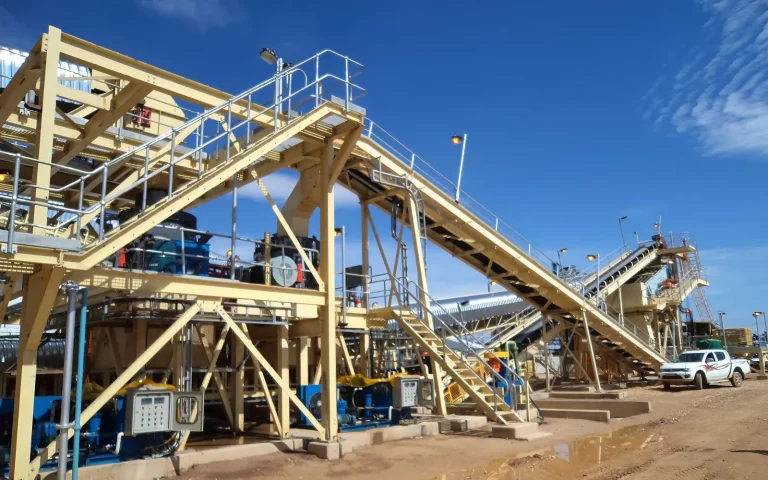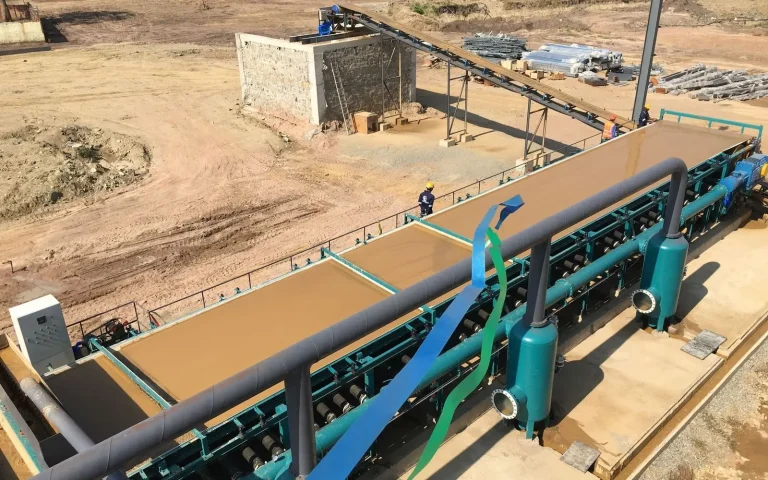
소금 호수 염수에서 리튬을 회수하기 위한 직접 리튬 추출 (DLE) 솔루션을 제공합니다.


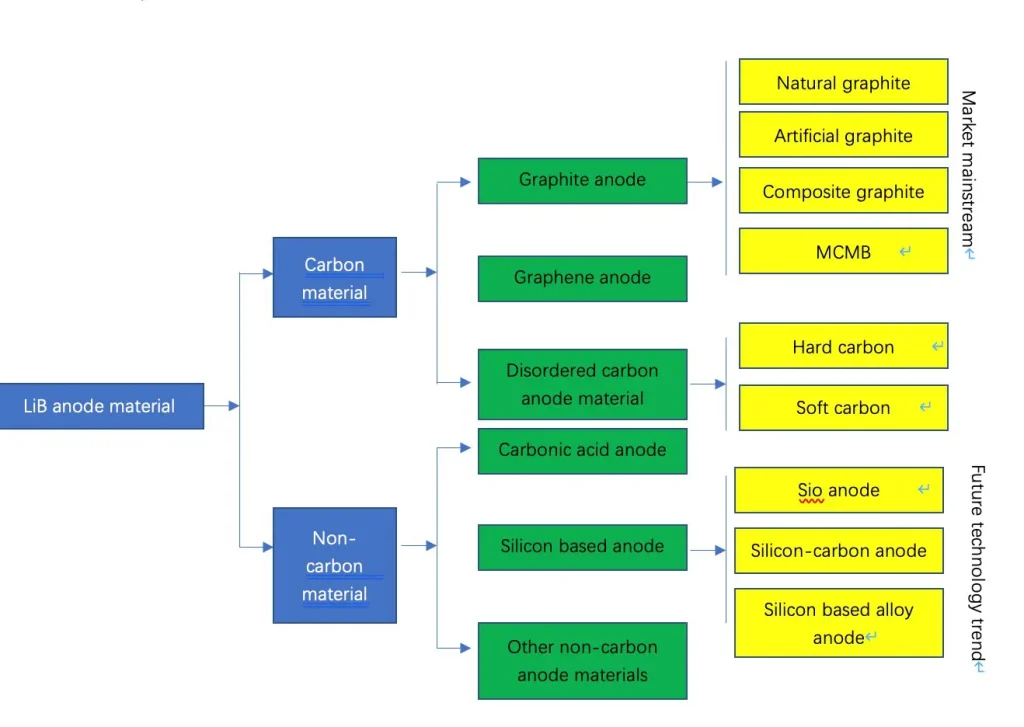
양극 재료는주로 탄소 재료와 비탄소 재료의 두 가지 범주로 나뉩니다. 탄소는 주로 메조카본 미세구, 인공 흑연, 천연 흑연 및 경탄소를 포함하는 탄소 기반 시스템을 의미합니다. 현재 가장 널리 사용되는 탄소 재료는 흑연 양극 재료이며, 그 중 인공 흑연과 천연 흑연은 대규모 산업 응용 프로그램을 가지고 있습니다. 비탄소 재료는 주로 실리콘 기반 재료, 주석 기반 재료 및 리튬 타이타네이트 등을 포함합니다. 그 중 실리콘 기반 양극 재료는 현재 주요 양극 재료 제조업체의 주요 연구 대상이며, 향후 대규모로 응용될 가능성이 가장 높은 새로운 양극 재료 중 하나입니다.
천연 흑연 가공
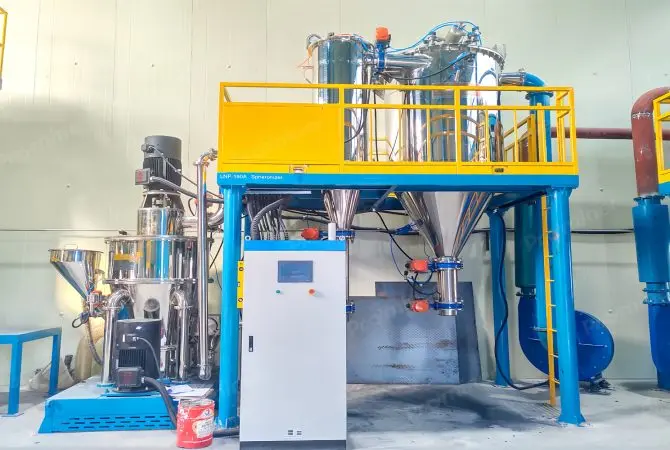
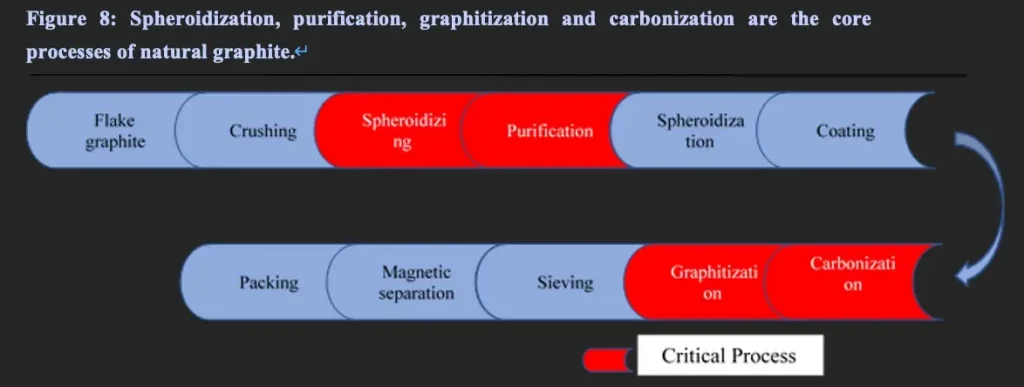
천연 흑연 양극 재료는 자연 플레이트 흑연을 원료로 하여 후...분쇄, 등급화, 구형화,정제, 표면 처리 및 기타 공정을 양극재료에서 준비합니다.
인공지능 흑연 음극재료의 준비 과정
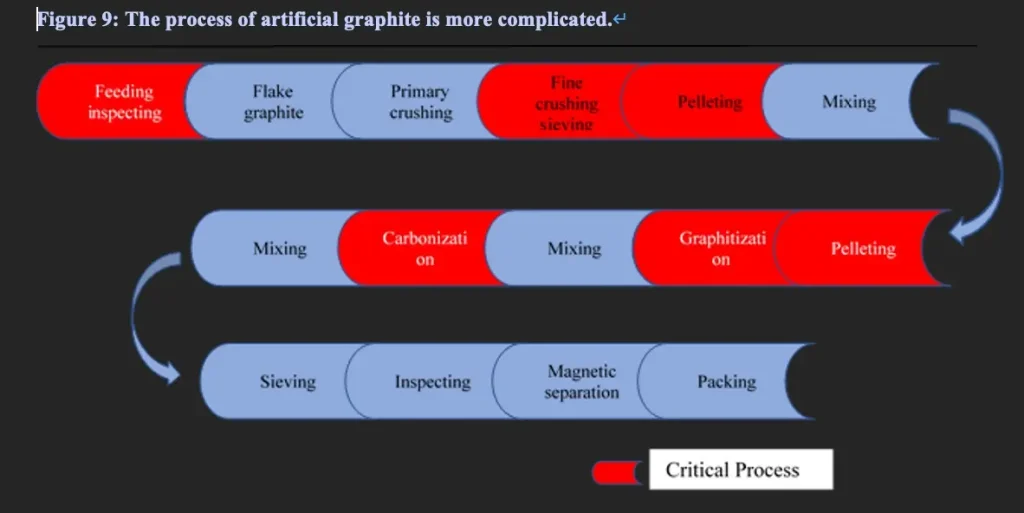
Artificial graphite manufacturing process can be divided into four steps, more than ten small procedures, granulation and graphitization is the key.
인공지능 흑연 음극 재료의 생산 과정은 네 단계로 나눌 수 있습니다:
1) 전처리
2) 입자화
3) 그래파이트화
4) 볼 밀링 및 선별.
Among the four steps, crushing and screening are relatively simple, and granulation and graphitization are the two links that reflect the technical threshold and production level of the anode industry.
Specific to the production process, firstly, one or more of the coke and conductive particles, carbon nanotubes, carbon black, acetylene black are premixed, and then the mixed material and carbon are sintered and coated once, and the prepared particles are graphitized. Graphitized materials and resin materials for secondary coating; Surface treatment with solvent, centrifugation, precipitation and other methods to separate solid particles from the solvent, and then carbonization, 5-20um particles, to obtain a high rate of carbon anode material. In this method, by mixing and fabricating particles, the particles are coated twice to fill the inner shell of the material, so that the internal structure of the material is stable, so that the carbon anode material has the advantages of high rate performance, high pressure compaction, high specific capacity and so on.
(1) 전처리
Graphite raw material (needle coke or petroleum coke) is mixed with binder for air milling (crushing).According to the different products, the graphite raw materials and adhesive (graphitization) according to different proportions, the mixing ratio is 100 :(5~20), the material through the vacuum feeding machine into the hopper, and then the hopper into the air flow mill for air 분쇄, 분쇄 5~10mm diameter of the raw and auxiliary materials to 5-10 microns. After air 분쇄, cyclone dust collector is used to collect the required particle size materials, the dust collection rate is about 80%, the tail gas is filtered by the filter core filter and discharged, the dust removal efficiency is more than 99%. The material of the filter element is the filter cloth with pores less than 0.2 micron, which can intercept all the dust above 0.2 micron. The fan control system is in negative pressure state.
차이점: pretreatment mill is divided into mechanical mill and jet mill, now the mainstream is jet mill. There are more kinds of adhesives, such as petroleum asphalt, coal asphalt, phenolic resin or epoxy resin.
(2) 입자화/재입자화
입자화 is a key step in artificial graphite processing. 입자화 is divided into pyrolysis process and ball milling process.
열분해 과정: the intermediate material 1 is put into the reaction reactor and electrically heated according to a certain temperature curve in inert gas atmosphere and under a certain pressure. It is stirred at 200-300 ℃ for 1-3h and then heated to 400-500℃ to obtain the material with a particle size of 10-20mm. The material is cooled and discharged, namely the intermediate material
2. Ball mill and sieve division of labor: vacuum feeding, conveying intermediate material 2 to the ball mill for mechanical ball 분쇄, 분쇄 10~20mm material into 6~10 micron particle size material, and screening to get intermediate material
3. The material on the screen is transported back to the ball mill by vacuum pipe for ball 분쇄.
The size, distribution and morphology of graphite particles affect many properties of anode materials. In general, the smaller the particle size, the better the rate performance and cycle life, but the first efficiency and compaction density (affecting the volume energy density and specific capacity) are worse, and vice versa. Reasonable particle size distribution (mixing large particles with small particles, later process) can improve the specific capacity of the negative electrode. The particle morphology also has a great influence on the rate and low temperature performance.
이차 과립화: small particles have large specific surface area, more channels and shorter paths for lithium ion migration, good rate performance, and large particles have high compaction density and large capacity. How to take into account the advantages of large and small particles, and achieve high capacity and high rate at the same time? The answer is to take secondary granulation. Using the base material such as small grain petroleum coke and needle coke, by adding coating materials and additives, under the condition of high temperature agitation, by controlling the material proportion, temperature rise curve and agitation speed, the small grain base material can be granulated twice, and the product with larger grain size can be obtained. Compared with the product of the same particle size, the secondary granulation can effectively improve the liquid retention performance of the material and reduce the expansion coefficient of the material (there are concave holes between small particles and small particles), shorten the diffusion path of lithium ions, improve the rate performance, but also improve the high and low temperature performance and cycling performance of the material.
차이점: The secondary granulation process has high barriers, many types of coating materials and additives, and is prone to problems such as uneven coating or coating shedding, or poor coating effect, etc. It is an important process for high-end artificial graphite.
(3) 그래파이제이션
그래파이트화 is the orderly transformation of thermodynamically unstable carbon atoms from chaotic layer structure to graphite crystal structure by thermal activation. Therefore, high temperature heat treatment (HTT) is used in the graphitization process to provide energy for atomic rearrangement and structural transformation. In order to improve the graphitization degree of refractory carbon materials, catalysts can also be added.
더 나은 그래파이제이션 효과를 얻기 위해서는 세 가지 측면에서 작업이 필요하다:
1. 저항 재료와 재료를 용광로에 적재하는 방법(수평 적재, 수직 적재, 변위 및 혼합 적재 등)을 숙지하고, 저항 재료의 다양한 성능에 따라 재료 간의 거리를 조정할 수 있어야 한다;
2. according to the different capacity and product specifications of the graphitization furnace, different power curve is used to control the rate of rise and fall in the process of graphitization;
3, in specific circumstances, in the ingredients to add catalyst, improve the degree of graphitization, that is, “catalytic graphitization”.
차이점: Different qualities of artificial graphite have different heating and cooling rates, holding time, catalysts, etc. It is expected that the types of graphitization furnaces used are different, resulting in relatively large differences in performance and cost. 그래파이트화 separated from the front-end and back-end processes, especially the heating and cooling process, is basically programmed, but the graphitization time is long and the equipment investment is large, so more outsourced processing is required, and there is no risk of technology leakage.
(4) 코팅 카본화
코팅 카본화: 코팅 카본화 uses a graphite-like carbon material as a “core”, and coats a layer of uniform amorphous carbon material on its surface to form particles similar to a “core-shell” structure. The precursors of commonly used amorphous carbon materials include low-temperature pyrolysis carbon materials such as phenolic resin, pitch, and citric acid. The interlayer spacing of amorphous carbon materials is larger than that of graphite, which can improve the diffusion performance of lithium ions in it. SEI film, improve the first effect, cycle life, etc.
차이점: Different manufacturers choose different precursors and different heating procedures, so that the thickness and uniformity of the coating layer are also different, so the product cost and performance will also be different.
(5) 스크리닝/도핑
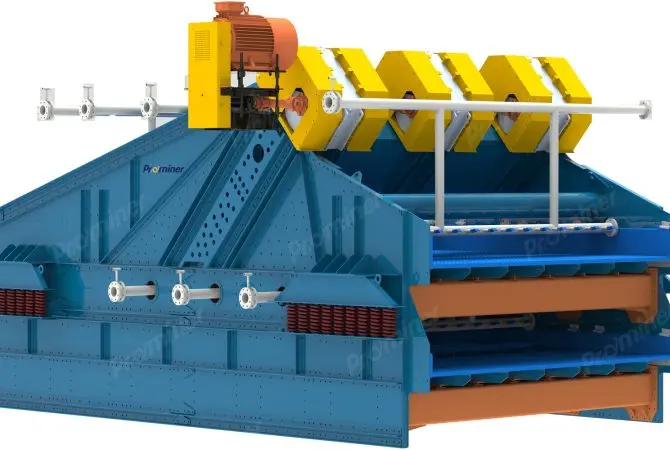
그래파이트 재료는 진공을 통해 볼 밀로 운반되며, 이후 물리적 혼합 및 볼 밀링을 진행합니다. 270 메쉬 분자 체로 선별하고, 체를 통과한 재료는 검사, 측정, 포장 및 저장합니다. 체 위의 재료는 입자 크기 요구사항을 충족하기 위해 추가로 볼 밀링 한 후 체로 쳐냅니다.

제품 및 솔루션에 대해 더 알아보시려면 아래 양식을 작성해 주시면, 저희 전문가 중 한 명이 곧 연락드리겠습니다.
Fax: (+86) 021-58779592
주소: 중국 상하이 푸동 신구 목천지구 롱 777, 묘천로, 2단계, D3동 606호, 슈안샤 비즈니스 센터
저작권 © 2023. 프로마이너(상하이) 채굴 기술 유한회사