
Why HPGR + Ball Mill Circuits Slash Ilmenite Grinding Costs by 28%?
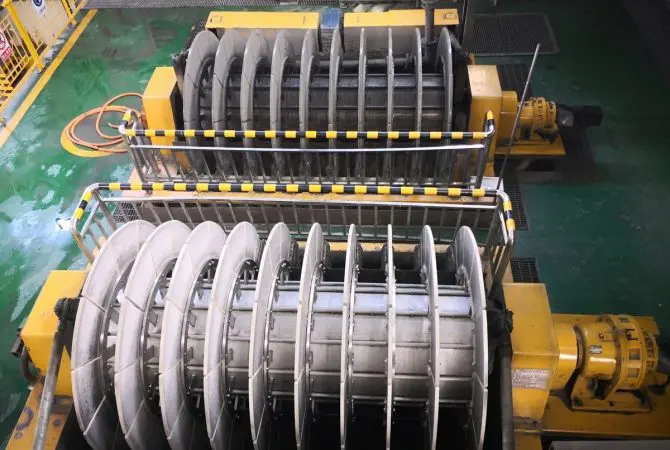
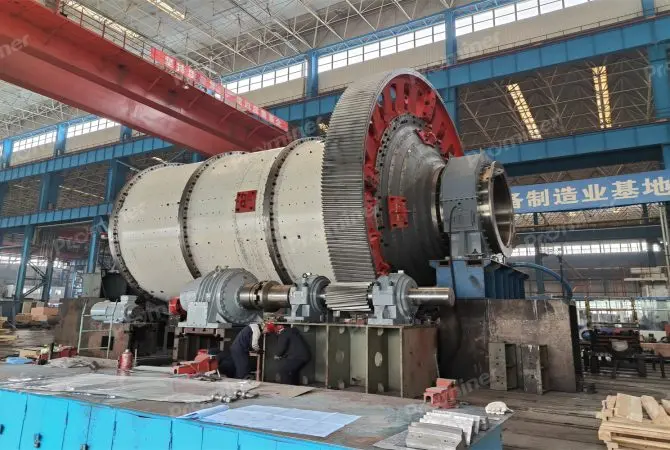
High Pressure Grinding Rolls (HPGR) combined with ball mill circuits have demonstrated significant cost savings in grinding processes such as ilmenite ore milling due to several efficiency-improving factors. Below are some key reasons why these circuits reduce costs by an estimated 28%:
1. Energy Efficiency
- HPGR operates by compressing the material between two counter-rotating rolls under high pressure, causing micro-cracks and weakening the mineral structures. This process is far more energy-efficient than the traditional grinding methods (e.g., SAG mills) typically used before ball mills.
- Using HPGR reduces the energy required to achieve the desired particle size in the ball mill stage because the pre-treated material is weaker and more grindable.
2. Reduced Steel Media Consumption
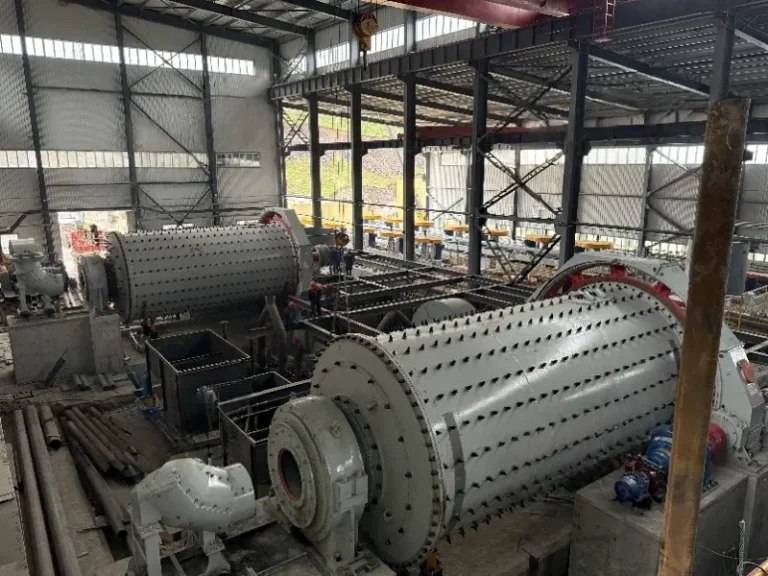
- HPGR circuits require significantly less grinding media (e.g., steel balls) because much of the material size reduction happens during the compression phase in the HPGR, rather than relying on impact and abrasion in the ball mill. Lower media consumption leads to cost savings on replacement media.
3. Lower Grinding Costs Due to Finer Feed
- HPGR yields a finer product with a more consistent particle size distribution. This finer feed reduces the workload for the ball mill, enabling it to use less energy for milling while improving throughput. Consequently, operating costs are reduced.
4. Improved Mineral Liberation
- The micro-cracking induced by HPGR facilitates better liberation of ilmenite during the ball milling stage, which enhances recovery rates during downstream processing. Efficient mineral liberation can reduce costs further, especially if fewer stages of grinding or separation are needed.
5. Reduced Maintenance and Wear
- HPGRs are designed to have lower wear rates compared to SAG mills or crushers commonly used before ball mills. This translates to lower maintenance costs and reduced downtime, contributing to overall cost savings.
6. Higher Throughput
- The synergistic operation of HPGR and ball mills boosts throughput by effectively pre-treating the material and allowing faster processing in the ball mill. Higher throughput decreases unit processing costs.
7. Lower Water Usage
- HPGR requires less water than traditional wet milling setups since the pre-grinding crushing process does not rely on slurry formation. Reduced water consumption decreases operating costs and environmental impact.
결론:
The combination of HPGR and ball milling creates a high-efficiency grinding circuit, yielding significant reductions in energy consumption, operational costs, media consumption, and maintenance requirements. In the context of ilmenite grinding, these benefits directly lead to cost savings of approximately 28% compared to conventional grinding methods.
자주 묻는 질문
A: 광물의 특성은 동일한 광맥 내에서도 상당히 다를 수 있습니다. 전문적인 테스트(화학 분석, XRD, SEM 등)는 흐름도가 귀하의 특정 광석 등급과 해방 크기에 최적화되도록 보장합니다. 이는 비용이 많이 드는 장비 불일치를 방지하고 귀하의 프로젝트에 대해 가능한 가장 높은 회수율을 보장합니다.
A: 우리는 핵심 소모품(예: 크러셔 라이너, 스크린 메시, 연마 매체)의 상시 재고를 유지합니다. 해외 고객을 위해 초기 구매 시 추천 “2년 예비 부품 목록”을 제공합니다. 기술 지원은 연중무휴 24시간 원격 비디오로 제공되며, 복잡한 유지보수 요구 사항에 대해 현장 방문도 조정할 수 있습니다.
A: 네. 우리는 장비의 설치, 시운전 및 하중 테스트를 감독하기 위해 현장에 고위 기계 및 전기 엔지니어 팀을 보냅니다. 또한 귀하의 현지 운영자를 위한 포괄적인 현장 교육을 제공하여 원활한 장기 운영을 보장합니다.
A: 확실히. 우리는 EPCM(엔지니어링, 조달, 건설 관리) 서비스를 제공하는 전문가입니다. 이에는 초기 광석 테스트와 광산 설계부터 장비 제조, 물류, 그리고 전체 규모의 플랜트 통합까지 모든 것이 포함되어 있으며, 이는 녹지에서 생산으로의 원활한 전환을 보장합니다.