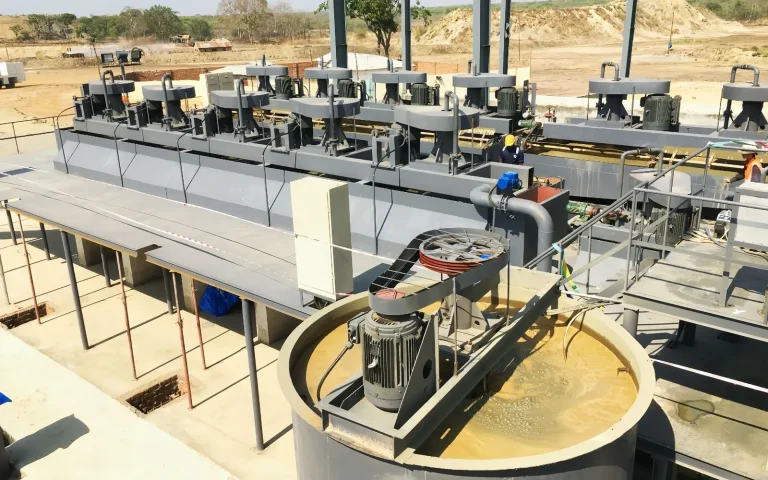
원광의 고형물 함량이 높으면 금 플로테이션의 효율성과 효과성에 상당한 영향을 미칠 수 있으며, 이는 채굴 작업에서 농축 과정의 중요한 단계입니다. 다음은 이것이 금 플로테이션에 어떤 영향을 미치는지에 대한 자세한 설명입니다:
1. 광물 해방 방해
문제진흙(세밀한 입자, 종종 점토나 실트)은 귀중한 광물 표면, 특히 일반적으로 작고 이러한 간섭에 취약한 금 입자를 덮을 수 있습니다.
영향이 코팅은 집합체 시약과의 상호작용에 사용할 수 있는 표면적을 감소시켜 금이 광석에서 방출되는 것을 방해하고, 금과 불순물 광물의 분리를 어렵게 만들 수 있습니다.
용액: 플로타션 전에 미세 입자를 제거하기 위해 탈슬러링 또는 컨디셔닝(예: 중력 농축 또는 스파이럴 농축기 사용)과 같은 전처리가 종종 필요합니다.
2. 부유 효율 감소
문제진흙 입자는 일반적으로 비금속이며 펄프에서 안정적인 서스펜션을 형성할 수 있어 점도를 증가시키고 공기 방울이 상승하기 어렵게 만듭니다.
영향이것은 공기 공급이 원활하지 않게 하고, 거품의 안정성을 낮추며, 금을 포함한 목표 광물의 회수율을 낮출 수 있습니다. 또한, 미세 슬라임은 시약을 흡착할 수 있어 금 입자에 대한 가용성을 감소시킬 수 있습니다.
용액최적의 펄프 pH 유지, 적절한 시약 투여량, 미세 입자에 효과적인 폴리머 안정제나 집합제를 사용하는 것이 이 문제를 완화하는 데 도움이 될 수 있습니다.
3. 시약 소비 증가
문제진흙은 수집제(예: 잔테이트)의 상당 부분을 흡수할 수 있어, 목표 광물에 대해 덜 효과적이게 만듭니다.
영향이는 회수율의 비례적인 증가 없이 시약 소비가 증가하여 운영 비용이 증가하는 결과를 초래합니다.
용액: 미세 입자에 대해 강한 선택성과 효율성을 가진 시약을 사용하고 시약의 용량을 최적화하는 것이 필요할 수 있습니다.
4. 안정적인 슬라임의 형성
문제어떤 경우에는 미세한 진흙 입자가 금이나 다른 광물과 응집체 또는 클러스터를 형성하여 부유하거나 침전하기 어려운 안정적인 슬라임을 형성할 수 있습니다.
영향이로 인해 거품 구조에 문제를 일으킬 수 있으며, 예를 들어 기포 크기 분포가 좋지 않거나 부유 과정의 효율이 감소할 수 있습니다.
용액적절한 분쇄 제어, 슬라임 형성을 억제하는 시약의 사용 및 효과적인 거품 관리는 필수적입니다.
5. 거품 분리의 어려움
문제높은 슬러지 함량은 두껍고 밀도가 높은 거품이 형성되고 농축 유체 내에서 더 높은 슬러지 함량을 초래할 수 있습니다.
영향: 이는 테일링에서 청정 농축액을 분리하는 데 어려움을 초래하여 금의 품위와 회수율을 낮출 수 있습니다.
용액거품 세척 단계를 최적화하고, 농축물의 농도를 증가시키거나, 원하지 않는 물질을 제거하기 위해 추가 세척 단계를 사용하는 것이 도움이 될 수 있습니다.
6. 환경 및 장비 문제
문제과도한 진흙은 플로타이온 셀에서 슬러리 축적을 초래할 수 있으며, 이는 유지보수 및 가동 중지 시간을 증가시킵니다.
영향: 이는 공장 처리량을 낮추고 기계 고장이나 운영 비효율의 위험을 증가시킬 수 있습니다.
용액기계적 옵션으로는 하이드로사이클론, 센트리퓨즈 또는 독립형 제리밍 회로가 종종 사용되어 플로테이션 프로세스에 들어가기 전에 과잉 미세 물질을 제거합니다.
요약 표:
높은 머드 함량의 효과
설명
광물 해방에 대한 간섭
점토가 금 입자를 덮어 가상물질에서 분리하기 harder 합니다.
부유 효율성 감소
펄프 점도를 증가시키고, 기포 상승을 방해하며, 회수를 감소시킵니다.
시약 소비 증가
슬라임은 시약을 흡수할 수 있어 비용을 증가시키고 선택성을 감소시킵니다.
안정적인 슬라임의 형성
응집을 유발하여 비효율적인 거품과 농축물이 발생합니다.
거품 분리의 어려움
더 두꺼운 거품과 오염된 농축액이 최종 금 함량을 낮춥니다.
환경 및 장비 문제
장비 마모와 저하된 설비 성능으로 이어집니다.
영향을 완화하기 위한 권장 사항:
탈진 회로: 미세한 입자를 제거하기 위해 하이드로사이클론, 나선형 농축기 또는 스크린을 사용하십시오.
최적의 시약 관리펄프 특성에 따라 집합체 및 반응제의 투입량을 조절하십시오.
연삭 제어적절한 입자 크기 분포를 보장하여 과도한 분쇄를 피하십시오.
펄프 조절적절한 pH를 유지하고 미네랄 표면 속성을 개선하기 위해 전처리를 사용하십시오.
거품 세척: 농축액에서 슬라임을 줄이기 위해 세척 단계의 효율성을 높이십시오.
결론적으로, 원광의 높은 머드 함량은 바람직하지 않지만, 적절한 공정 설계 및 제어로 관리할 수 있습니다. 주요 도전 과제는 부유 공정이 미세 슬라임이 있는 상태에서도 효율적이고 선택적으로 유지되도록 하는 것이며, 이는 일반적으로 기계적, 화학적 및 공정 최적화 전략의 조합을 필요로 합니다.
프로미너(상하이) 광업 기술 유한회사는 전 세계적으로 완벽한 광물 처리 및 고급 소재 솔루션을 제공하는 데 전문화되어 있습니다. 우리의 핵심 사업 분야는 다음과 같습니다: 금 처리, 리튬 광석 선광, 산업 광물, 음극재 생산 및 흑연 처리 전문 분야입니다.
제품은 다음과 같습니다: 분쇄 및 분급, 분리 및 건조, 금 정제, 탄소/흑연 처리 및 침출 시스템입니다.
엔지니어링 설계, 장비 제작, 설치 및 운영 지원을 포함한 종합적인 서비스를 제공하며, 24시간 연중무휴 전문가 상담을 제공합니다.