

Vat leaching is a good option for the project owner to start at initial stage to save investment




Optimizing rock gold ore processing is not about choosing the “best” method in general. It is about choosing the right method for the specific ore body, gold occurrence, grade, mineral associations, operating budget, water availability, and environmental requirements.
In hard rock gold processing, the three most common recovery routes are gravity separation, flotation, and cyanidation. Each has its own strengths, limitations, and ideal application range. In many cases, the most effective plant does not rely on just one method, but on a well-designed combination of two or even all three.
Before selecting any processing route, the ore must be properly characterized. This is the foundation of optimization.
Key questions include:
A complete ore study normally includes:
Without these data, process selection becomes guesswork, and recovery losses can be significant.
Gravity separation is most effective when the gold is relatively coarse and has a significant difference in specific gravity from the surrounding gangue minerals.
Common gravity equipment includes:
Gravity is often the first recovery step because it is simple, cost-effective, and chemical-free.
Gravity recovery offers several important benefits:
When coarse liberated gold is present, gravity can recover gold early and prevent overgrinding, which may otherwise make recovery more difficult.
Despite its benefits, gravity separation has clear limitations:
If the deposit contains substantial fine or refractory gold, gravity alone will likely leave significant value in the tailings.
Flotation is typically used when gold is associated with sulfide minerals such as pyrite, arsenopyrite, chalcopyrite, or pyrrhotite. Instead of directly recovering free gold, flotation concentrates the sulfide fraction that carries the gold.
This method is widely used for:
The flotation concentrate may then be:
Flotation can be highly effective in the right ore conditions because it:
Flotation is especially valuable when gold particles are too fine for gravity separation and not fully exposed for direct leaching.
Flotation also presents challenges:
If the flotation circuit is poorly designed or reagent conditions are unstable, gold losses can increase rapidly.
Cyanidation is one of the most widely used methods for extracting gold from hard rock ores, especially where gold is fine, liberated, and amenable to leaching.
Typical cyanidation routes include:
Cyanide dissolves gold into solution, after which the gold is recovered using activated carbon or zinc precipitation.
Cyanidation is often chosen because it can offer:
For many free-milling ores, cyanidation provides the highest total recovery compared with gravity or flotation alone.
Cyanidation is not universally effective. Its main limitations include:
Ores with preg-robbing carbon or strong sulfide encapsulation often require pretreatment before cyanidation can work effectively.
The best process depends on how the gold occurs in the ore.
A practical rule of thumb is:
However, many ores do not fit neatly into one category. That is why blended flowsheets are common in modern gold plants.
In real operations, the most efficient solution often combines methods to target different forms of gold.
Examples include:
This staged approach can improve total recovery while reducing reagent use and operating cost.
To optimize a rock gold processing plant, operators should evaluate more than just metallurgical recovery.
Important factors include:
A process that gives slightly lower recovery may still be the better choice if it is much simpler, cheaper, or more reliable to operate.
Laboratory and pilot-scale testing are essential before finalizing a flowsheet. Good test work can reveal:
This helps avoid overdesign, underperformance, and expensive plant modifications later.
A practical optimization strategy often follows these steps:
The goal is not just maximum recovery on paper, but maximum economic return in real operating conditions.
There is no universal answer to whether gravity, flotation, or cyanidation is best for rock gold ore processing. The right choice depends entirely on ore characteristics and project goals.
If you want to truly optimize rock gold ore processing, start with detailed ore testing, then build the flowsheet around the mineralogy rather than forcing the ore into a standard process. That is the most reliable path to higher recovery, lower cost, and more stable plant performance.
If you’d like, I can also turn this into a SEO-optimized blog post, a technical white paper style article, or a website landing page version.
A: The choice depends entirely on your ore’s mineral characteristics:
Gravity Separation: Best for coarse-grained minerals with large density differences (e.g., placer gold).
Flotation: Ideal for fine-grained base metals (e.g., copper oxide) or removing impurities from non-metallic minerals (e.g., quartz sand).
Cyanidation (CIP): Necessary for fine, encapsulated precious metals (e.g., rock gold) to maximize chemical extraction.
A: This approach prevents over-grinding (creating excessive ultra-fine particles), which ruins flotation efficiency. By grinding in stages and immediately separating recovered minerals or waste at each stage, you significantly reduce energy consumption, minimize steel media wear, and protect valuable minerals from turning into unrecoverable slime.
A: Fine particles have low mass and high surface areas, making them hard to float. Key solutions include:
Advanced Reagents: Using highly selective collectors and flocculants to aggregate fine particles.
Micro-bubble Technology: Utilizing flotation columns that generate smaller bubbles to increase particle-bubble collision rates.
Desliming: Removing harmful ultra-fine slimes before the flotation stage to clear the process environment.
A: Relying on a single method is rarely enough. The key is a combined metallurgical flowsheet:
For High-Purity Quartz: Integrate scrubbing, magnetic separation (to remove iron), flotation (for feldspar), and acid leaching for the ultimate purity.
For Precious Metals: Combine gravity separation (to catch coarse gold early) with flotation and CIP (to extract fine gold), ensuring zero valuable minerals are wasted.
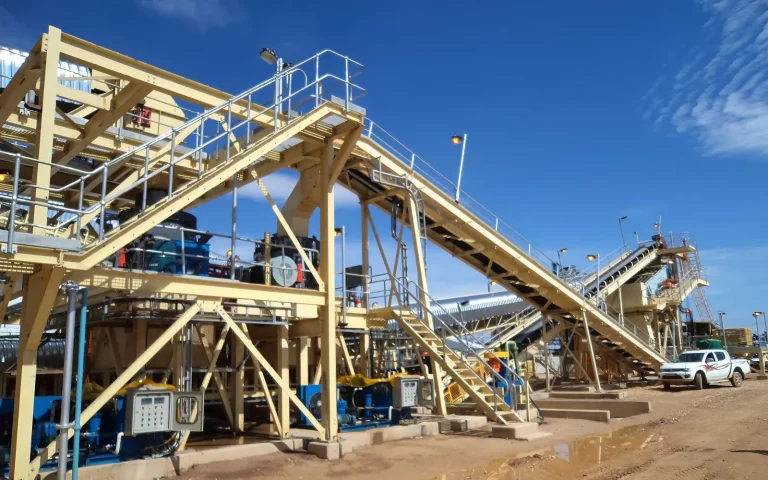
Vat leaching is a good option for the project owner to start at initial stage to save investment
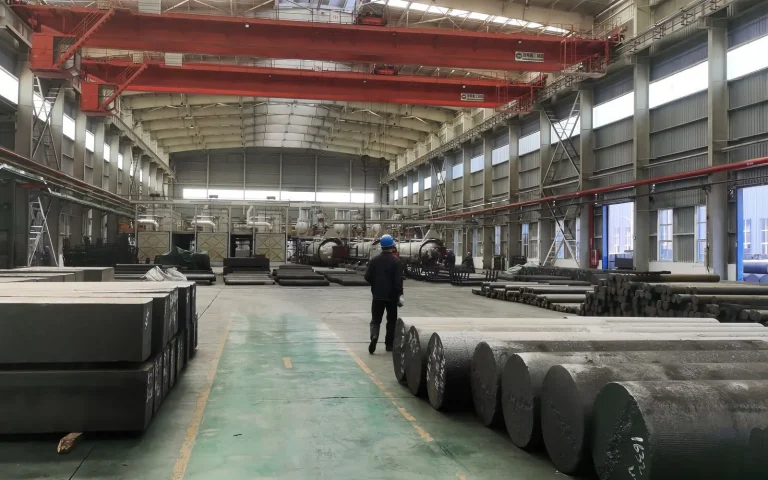
UHP graphite electrode is mainly used for ultra high power electric arc furnaces in steel smelting industry
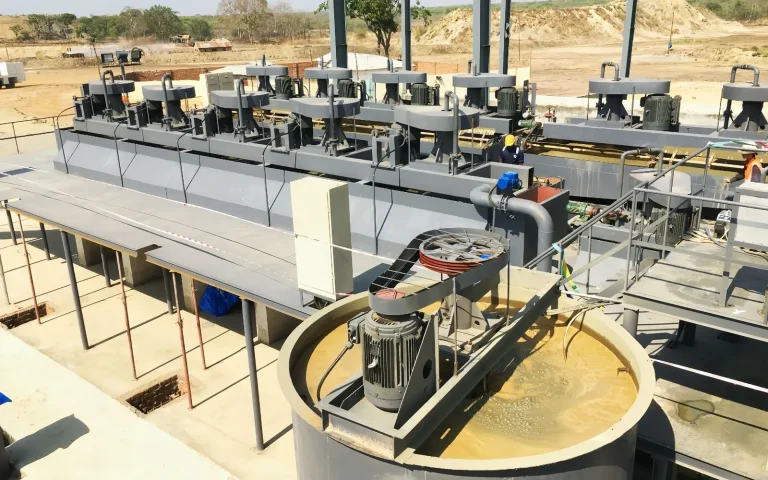
There are two types natural graphite ore include crystalline graphite and amorphous graphite

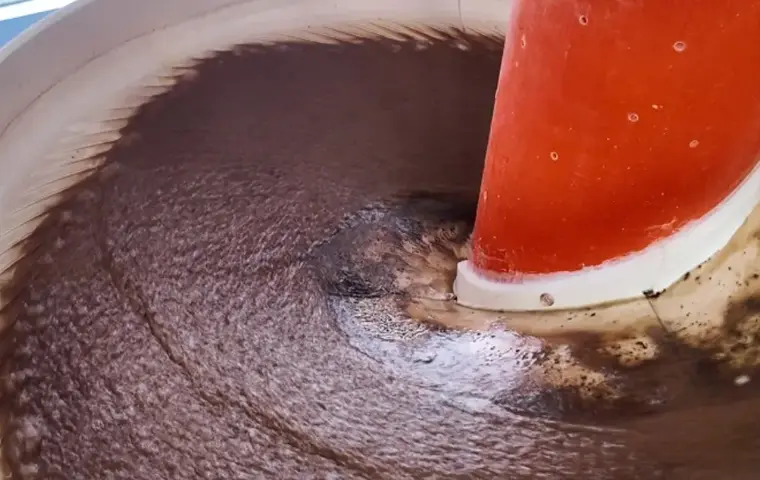
Raw Material: Iron ore tailings Processing Capacity: 800 tons per day
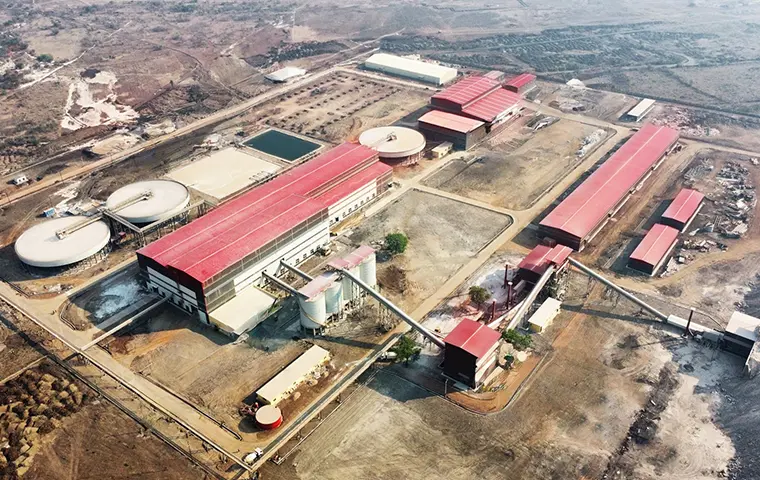
Raw Ore: Multi-metal sulfide ore (Cu, Zn, Au) Ore Grade: Cu 1.2%, Zn 2.5%, Au 1.5 g/t
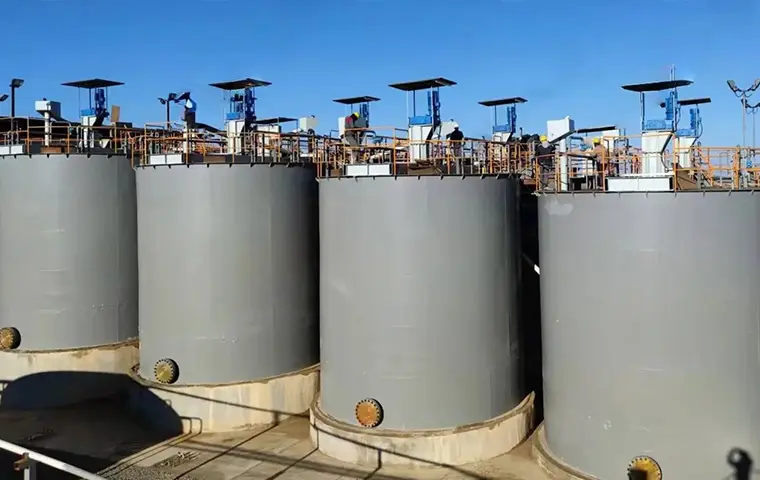
Raw Ore: Sulfide-Type Gold Ore (Pyrite and Arsenopyrite bearing) Gold Grade: 4.2 g/t Final Product: Gold Dore Bar
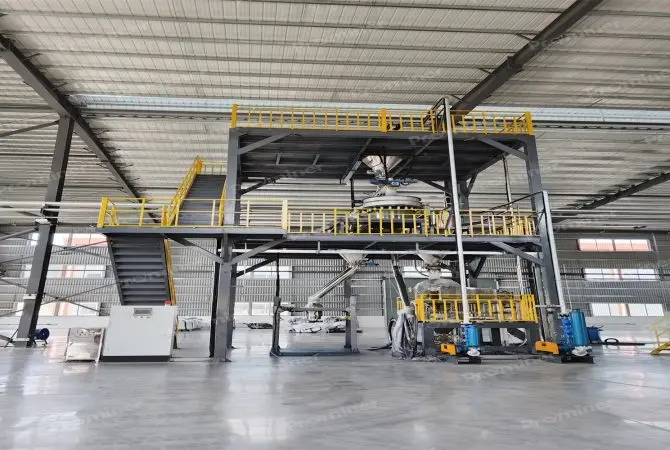
Raw Material: Artificial graphite anode, Natural graphite anode
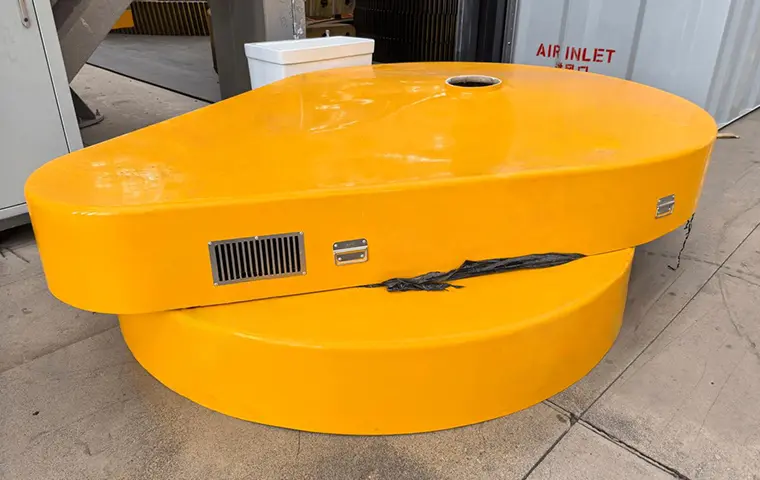
Raw Ore: Suitable for sulfide/oxide gold, copper, lithium, zinc, lead, and other non-ferrous metals
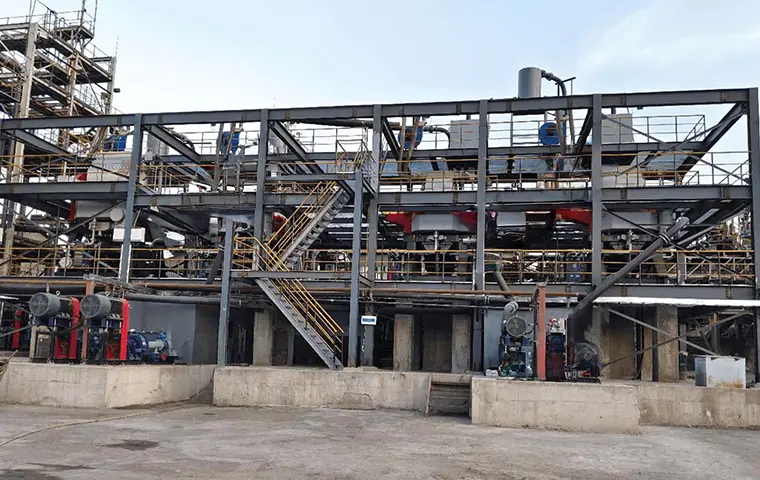
Raw Ore: South African Chrome Ore Original Cr₂O₃ Grade: 38% Upgraded Concentrate Grade: 46%
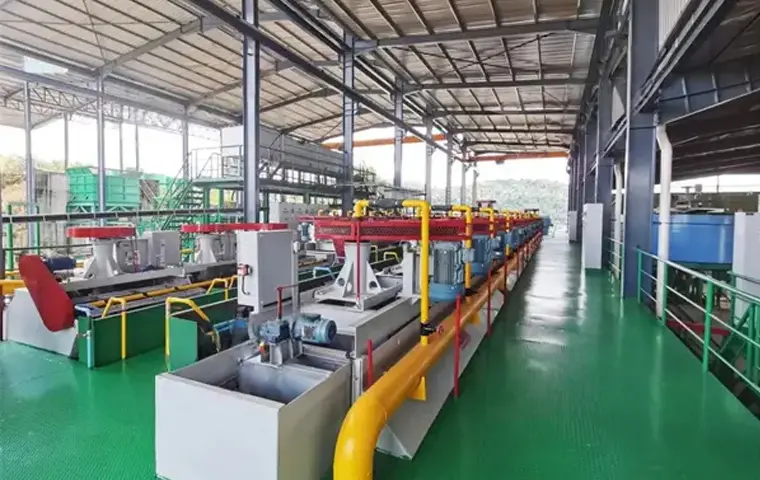
Raw Ore: Alluvial Coltan (Tantalite-Columbite) with Cassiterite Ore Grade: Ta₂O₅: 0.025-0.04%; Nb₂O₅: 0.02-0.035%; SnO₂: 0.1-0.3%
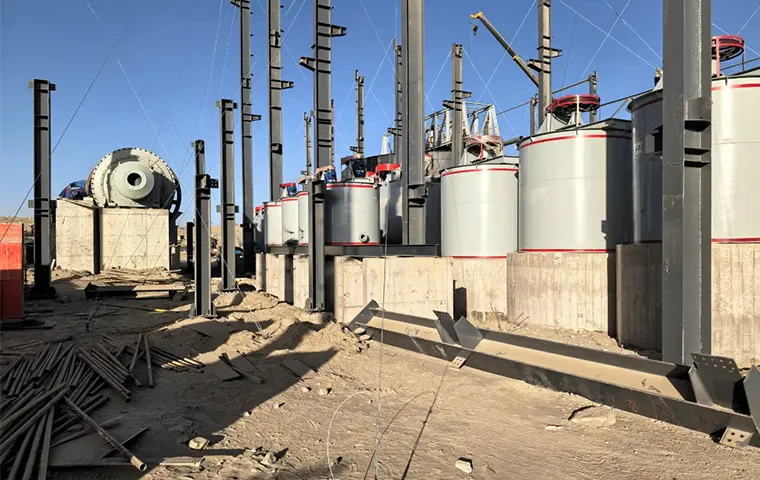
Raw Ore: Transitional & Oxide Gold Ore (with minor sulfides) Feed Gold Grade: 2.5 g/t Final Product: Gold Doré Ingot
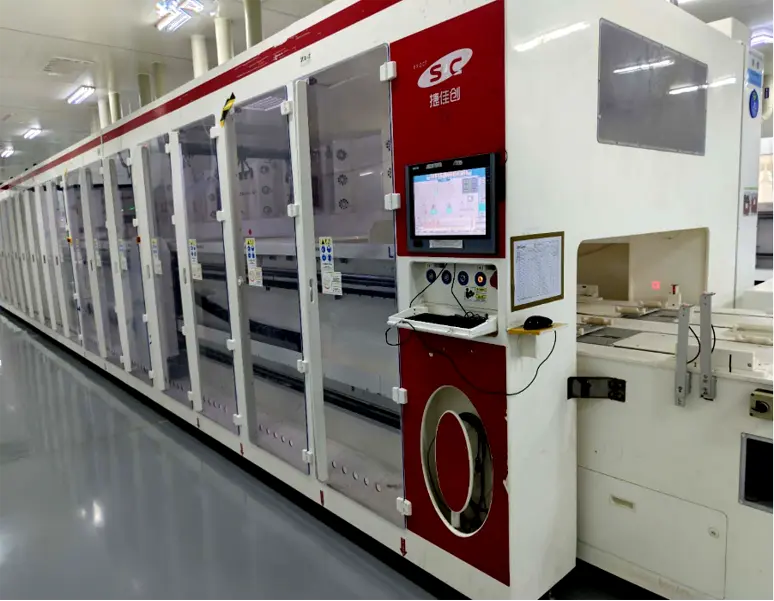
Such as: Boron diffusion furnace, BSG removal, Alkali polishing machine, PE-POLY…
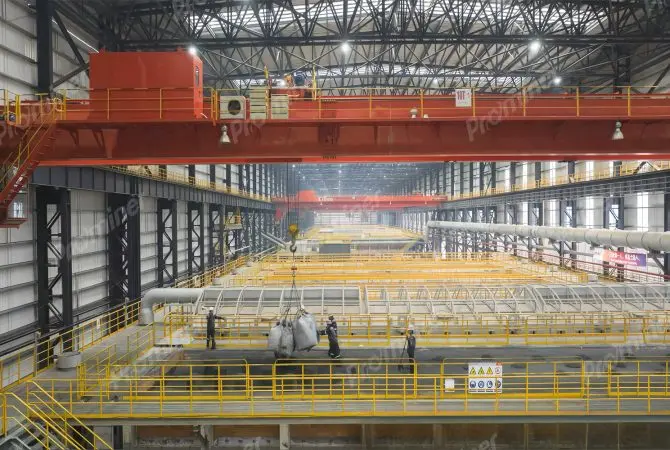
We can provide different type graphitization furnace for changing carbon material
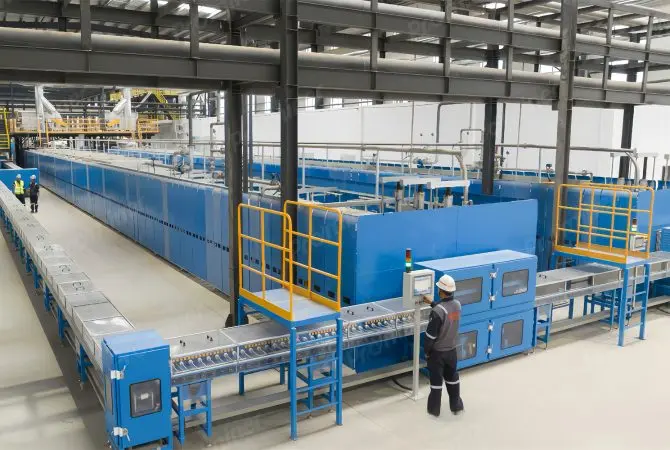
We can provide the complete solution for high temperature carbonization treatment system
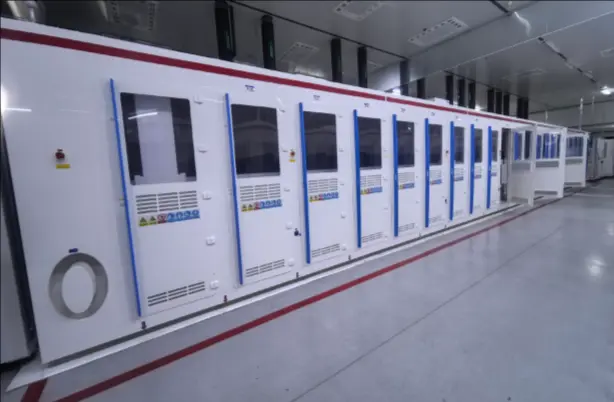
Include: Monocrystalline Batch Texturing Equipment, Batch Texturing Loader/Unloader, Low-Pressure…
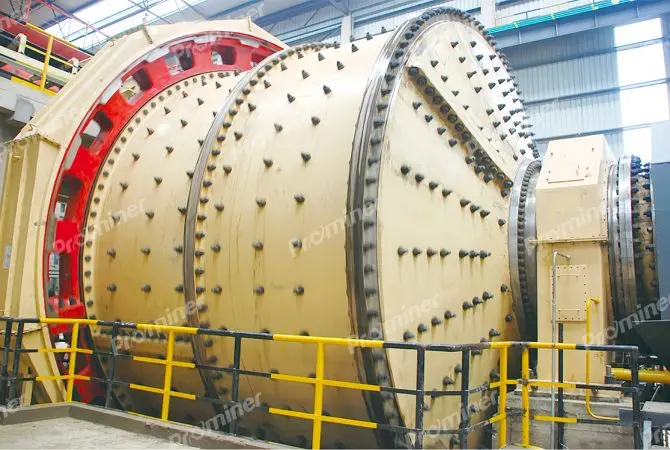
AG/SAG is short for autogenous mill and semi-autogenous mill, it combines with two functions of crushing
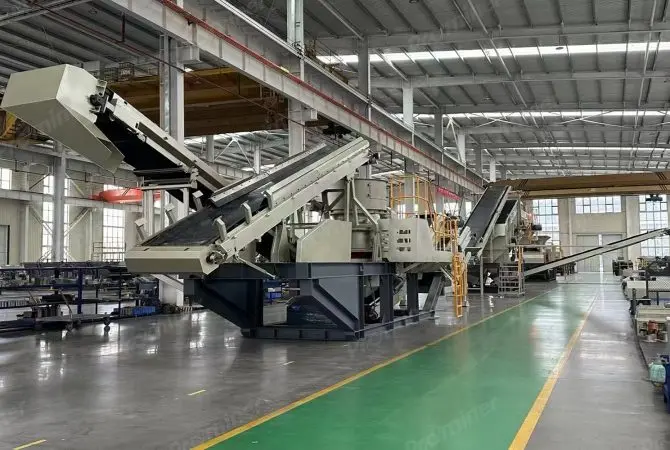
Skid mounted Portable Crusher, based on market requirements of easier moving from one site
To find out more about our products and solutions, please fll out the form below and one of our experts will get back to you shortly
3000 TPD Gold Flotation Project in Shandong Province
2500TPD Lithium Ore Flotation in Sichuan
Fax: (+86) 021-58779592
Address: Room 606, Building D3, Phase II, Chuansha Business Center, 777 Long, Miaochuan Road, Pudong New Area, Shanghai,China
Copyright © 2023. Prominer (Shanghai) Mining Technology Co.,Ltd.


